ONE TRACKER. ONE CRITICAL DETAIL. AND NOW THE PARENTS’ STORY IS UNDER SCRUTINY.
ONE TRACKER. ONE CRITICAL DETAIL. AND NOW THE PARENTS’ STORY IS UNDER SCRUTINY. 🚨
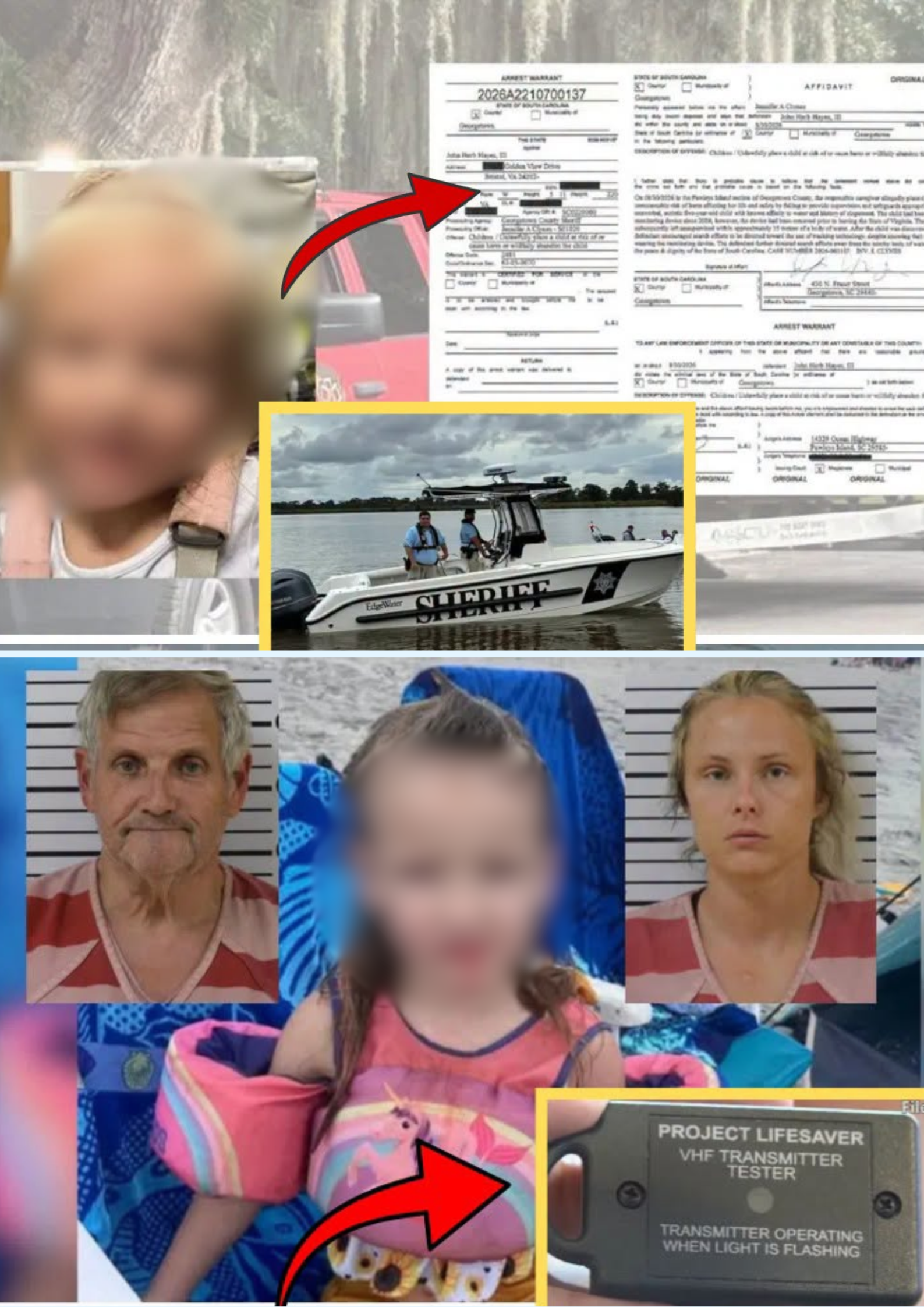
The search for 5-year-old Saylor Hayes began with an urgent belief: she was wearing a Project Lifesaver tracking device.
That belief sent search teams looking for a signal.
But investigators later discovered something deeply troubling.
The transmitter was not with Saylor.
It was back in Virginia — inside a vehicle at the family’s home.
And according to investigators, her parents knew it was not with her when she disappeared in South Carolina.
 HUNDREDS SEARCHED FOR A SIGNAL THAT WASN’T THERE
Saylor disappeared from a rental home in Pawleys Island on August 30.
She was known to wander and was enrolled in Project Lifesaver, a program designed to help locate vulnerable people who may go missing.
After she was reported missing, South Carolina authorities requested information about her transmitter and began using Project Lifesaver equipment during the search.
But no signal could be detected.
Virginia authorities were eventually asked to check Saylor’s home.
They found the transmitter inside a vehicle.
It had never made the trip with her.
 THEN CAME ANOTHER DISTURBING DETAIL
According to arrest-warrant allegations, investigators say the search was also affected by information about the water surrounding the rental property.
Saylor was ultimately found dead in a waterway near Hagley Landing, close to where she had disappeared.
People.com reported that investigators allege the parents failed to provide appropriate supervision despite Saylor’s known tendency to wander and attraction to water.
The parents have been charged with unlawfully placing a child at risk and willfully abandoning a child.
Those are allegations, not convictions.
THE DEVICE MAY HAVE CHANGED THE SEARCH
Authorities have stressed how important the tracker could have been if Saylor had actually been wearing it.
Instead, searchers were dealing with a device that was transmitting from hundreds of miles away.
By the time Saylor was found, the search had involved multiple agencies, drones, divers, helicopters, K-9 teams and volunteers.
The tragedy has now raised a painful question:
What might have happened if rescuers had known from the beginning that Saylor was not wearing the tracker?
A preliminary autopsy found pulmonary edema, which is consistent with drowning. A final report is still pending.
Saylor’s parents remain entitled to the presumption of innocence.
But one fact is no longer in dispute:
The tracker was supposed to help find Saylor.
Instead, investigators say it was left behind.
And that single detail has become one of the most important pieces of the case.