Their Son Died at 15. Now Every Gold Bow Gives His Family Another Chance to Say His Name
Across parts of South Carolina this September, gold bows are appearing on mailboxes, front doors and lampposts.
To most people passing by, they may look like simple decorations marking Childhood Cancer Awareness Month.
To the Evans family, each one means something far more personal.
Every bow is another chance to talk about their son.
Another chance to explain who Parker Kenneth Evans was.
Another chance to say his name.
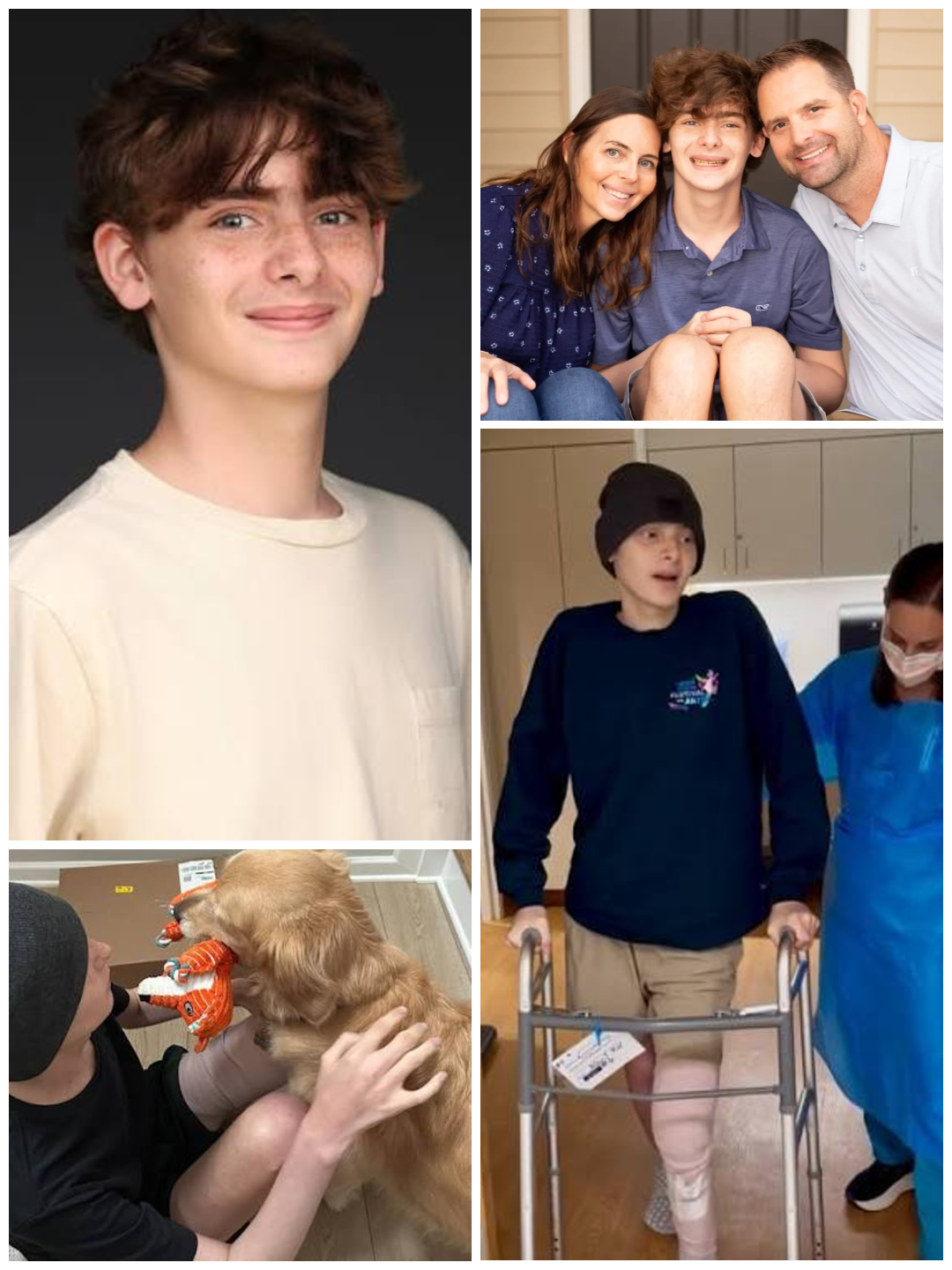
Parker, a 15-year-old from Easley, South Carolina, died on February 19, 2026, after a devastatingly short battle with osteosarcoma, an aggressive form of bone cancer. This September marks his family’s first Childhood Cancer Awareness Month without him. Rather than allowing the month to become only a reminder of what they lost, they have joined forces with the pediatric osteosarcoma nonprofit MIB Agents to spread gold bows throughout their community, raise awareness and support research.
For Parker’s family, the bows create conversations.
“Every bow we place is an invitation,” the family told FOX Carolina. “When someone asks what it means, we get to tell them. We get to say his name.”
That simple act has become one way of carrying Parker forward.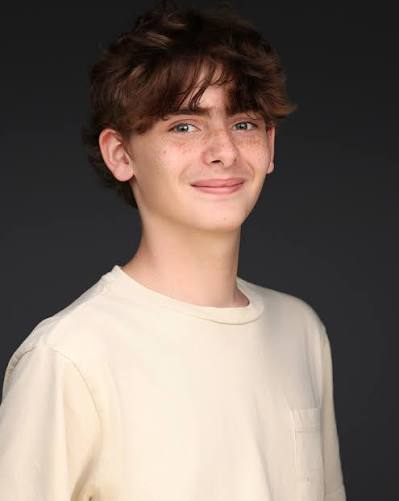
From “Growing Pains” to a Cancer Diagnosis
Before cancer entered his life, Parker’s family described him as an ordinary teenager with a distinctive personality.
He loved Disney, video games, theater, his family and friends, and making people laugh. His family remembered him as someone whose energy made others feel noticed and welcomed.
Then came the leg pain.
At first, it seemed like the kind of discomfort easily explained away in a growing teenager.
In November 2025, the Evans family learned it was something much more serious.
Parker was diagnosed with high-grade osteosarcoma in his left femur. By the time it was discovered, the cancer had already spread to his lungs.
Osteosarcoma is a rare but aggressive bone cancer that disproportionately affects children, adolescents and young adults. MIB Agents, which focuses specifically on osteosarcoma, says roughly 800 to 1,000 people are diagnosed in the United States each year. The organization has repeatedly emphasized the need for new treatments and greater investment in research.
For Parker, the course of the disease moved with shocking speed.
His family said he underwent chemotherapy, surgery, hospital stays and countless appointments.
But only 112 days separated the moment they heard their child had cancer from the day they had to say goodbye to him.
Parker died peacefully on February 19.
He was 15.
Remembering More Than the Illness
The family’s public tributes make clear that they do not want Parker to be remembered only as a teenager who had cancer.
His obituary described him as a “friend to all,” someone whose humor, kindness and warmth shaped the people around him. He was remembered as sensitive as well as courageous, and as someone who continued to smile even during extraordinarily difficult treatment.
He was the oldest son of Bryan and Ashley Lunceford Evans and had two younger brothers, Easton and Tripp.
That family identity — son, brother, friend — is central to what his parents are doing now.
Cancer became part of Parker’s story.
His parents are determined that it will not become the whole story.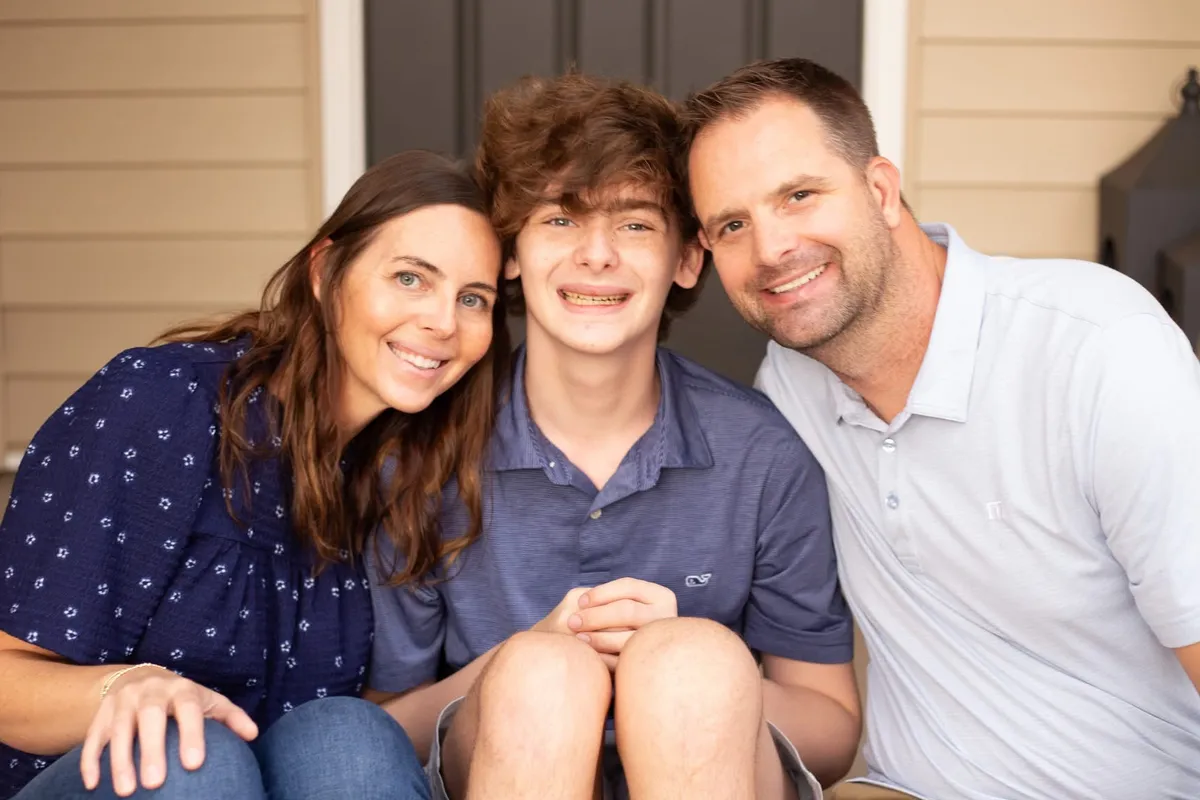
The First September Without Him
September is recognized as Childhood Cancer Awareness Month, and gold is widely used as its symbolic color.
For families affected by pediatric cancer, the month can carry very different meanings depending on where they are in the journey.
Some are celebrating children who have completed treatment.
Some are still spending days in oncology clinics and hospital rooms.
Others are entering September for the first time after losing a child.
That is where the Evans family finds itself in 2026.
FOX Carolina reported on September 10 that the family is marking its first Childhood Cancer Awareness Month without Parker by working with MIB Agents to distribute gold bows around the community. The campaign honors children who are still undergoing treatment as well as those who have died.
MIB Agents describes each bow as a visible symbol of hope, courage and solidarity with families affected by osteosarcoma. Its annual campaign encourages people to display the bows on homes, businesses, schools and other public spaces.
But for the Evans family, the symbolism is deeply specific.
A bow can make a stranger stop.
A neighbor may ask why it is there.
A friend may share a photograph.
And suddenly Parker’s story is being told again.
His name is spoken again.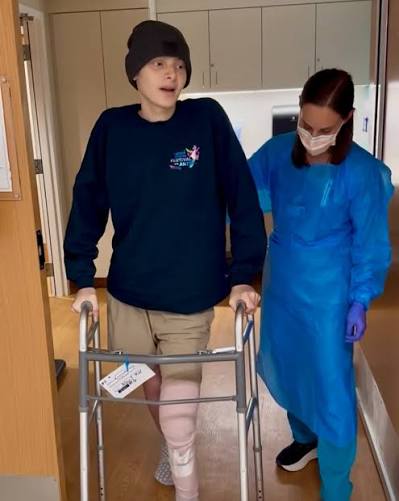
Turning Awareness Into Research
The gold bows are not only memorials.
They also help fund the work of MIB Agents.
The nonprofit supports families affected by osteosarcoma while funding research aimed at finding more effective and less toxic treatments. The organization says it has directed more than $2.9 million toward osteosarcoma research since 2017.
In September 2026, MIB Agents also opened applications for its next round of OutSmarting Osteosarcoma research grants. The program supports investigators studying new approaches to treating the disease.
For Parker’s parents, that scientific mission is not abstract.
Their family experienced how few options can exist when osteosarcoma has already spread.
On the Parker Evans Osteosarcoma Fund page created through MIB Agents, they wrote that witnessing metastatic disease firsthand convinced them of the need for more research, new treatments and better outcomes for future children.
The fund was established in Parker’s memory to continue that work.
It is one way his family has attempted to turn an experience they could not change into something that might alter the future for someone else.
Parker’s Fight Pals
The gold bows are not the family’s only effort.
After Parker died, his family also created Parker’s Fight Pals.
During treatment, Parker found comfort in Squishmallows — the soft plush toys that gave him something familiar to hold during long hospital stays and difficult days.
At his funeral, instead of focusing exclusively on flowers, the family invited people to bring new Squishmallows. Those toys would then be given to other children undergoing cancer treatment.
The idea has continued as a mission in Parker’s name.
The family describes the goal simply: offer another child some of the comfort Parker received when he needed it most.
It is a smaller gesture than funding cancer research.
But the two efforts address different sides of the same experience.
One tries to change the future of osteosarcoma treatment.
The other tries to make a child’s difficult day slightly easier right now.
Both carry Parker’s name.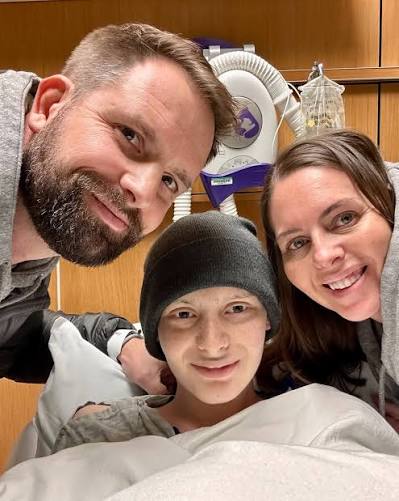
What a Gold Bow Can Hold
For someone untouched by childhood cancer, a gold ribbon may be easy to pass without noticing.
For the Evans family, it carries the weight of an entire year.
November: the diagnosis.
The weeks of chemotherapy, surgery and hospital care.
February: the goodbye.
And now September: the first Childhood Cancer Awareness Month in which Parker is no longer physically present.
No campaign can reverse that timeline.
No number of ribbons can return a 15-year-old to his parents or his brothers.
But the family has found something the bows can still do.
They can prompt a question.
They can lead someone to learn what osteosarcoma is.
They can help fund research.
They can remind another cancer family that the community sees them.
And, perhaps most importantly to the Evans family, they create a moment in which someone asks about the boy behind the gold.
Then his parents get to answer.
They get to talk about the teenager who loved Disney and theater, video games and laughter.
They get to remember the son they had for 15 years rather than only the disease that took him.
They get to say his name:
Parker.