SERIAL KI//ER OR POSSIBLE MISCARRIAGE OF JUSTICE? THE LUCY LETBY DEBATE CONTINUES
SERIAL KILLER OR POSSIBLE MISCARRIAGE OF JUSTICE? THE LUCY LETBY DEBATE CONTINUES
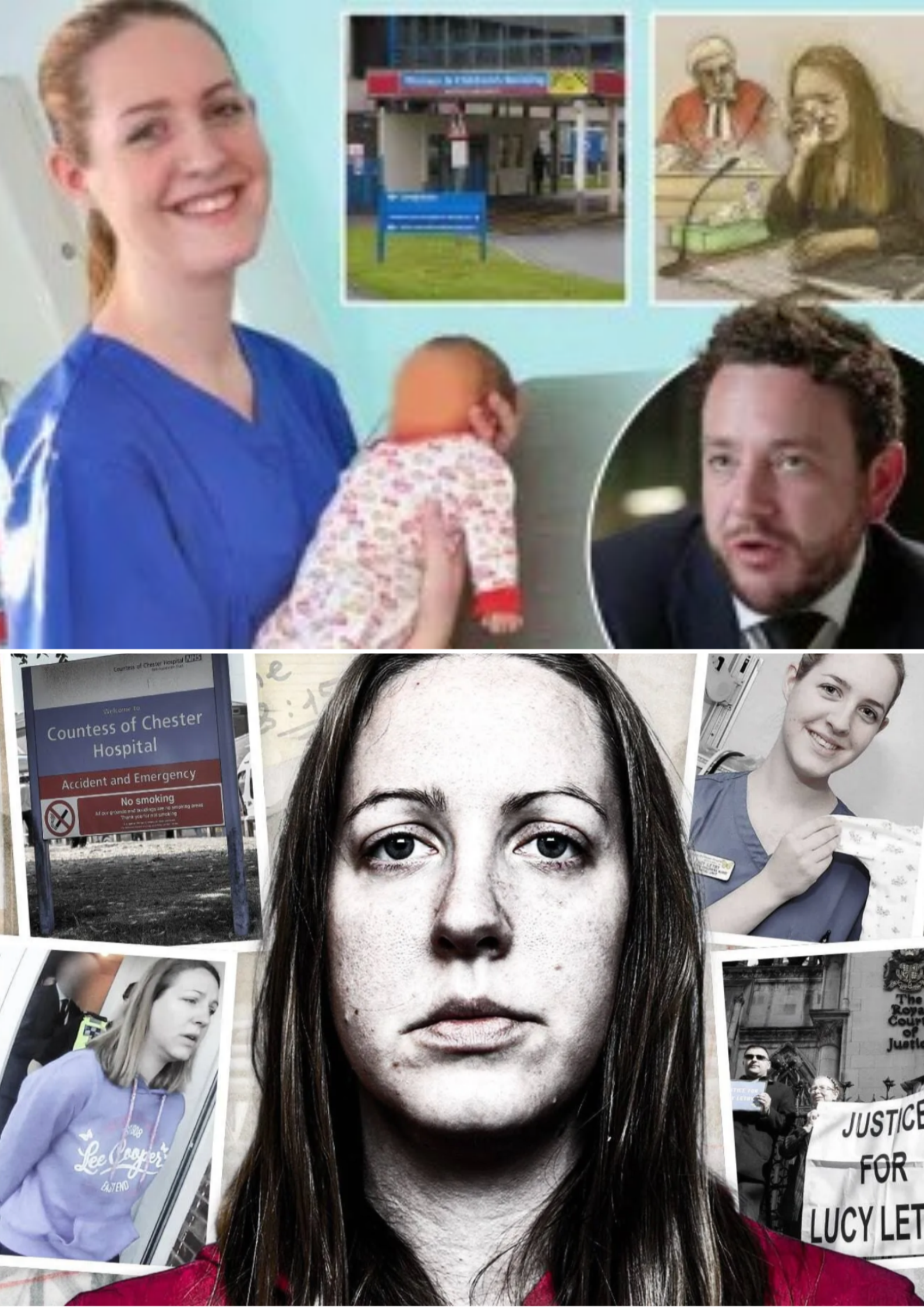
LONDON, UK — Lucy Letby remains one of the most closely scrutinised criminal cases in Britain, even after her convictions for murdering seven babies and attempting to murder seven others.
The former neonatal nurse is serving 15 whole-life prison terms following convictions at two trials in 2023 and 2024.
But the case continues to generate intense debate after medical and scientific experts questioned aspects of the evidence used during her trials, while an independent review of her convictions remains under way.
At the same time, a major public inquiry has uncovered serious failures in management, safeguarding and governance at the Countess of Chester Hospital during the period when the babies collapsed and died.
Those findings have added another layer to a case that remains deeply contested — but they do not overturn Letby’s convictions.
 WHAT WAS LETBY CONVICTED OF?
Letby was convicted in 2023 of murdering seven babies and attempting to murder six others.
At a retrial in 2024, she was convicted of another attempted murder charge, bringing the total to seven murder convictions and seven attempted-murder convictions.
Prosecutors argued that she deliberately harmed babies in her care using several methods, including injecting air and administering excessive amounts of milk or insulin.
Letby has maintained her innocence.
Her previous attempts to overturn the convictions through the courts have not succeeded. She is currently serving her whole-life sentences.
 WHY HAS THE EVIDENCE BECOME SO CONTROVERSIAL?
A significant part of the continuing debate concerns the medical and scientific evidence presented during the trials.
Experts supporting Letby’s legal challenge have questioned whether some of the babies’ collapses and deaths were correctly interpreted as evidence of deliberate poisoning or other deliberate harm.
Particular attention has focused on the two cases in which prosecutors alleged that babies were poisoned with insulin.
Two experts who previously produced a report for Letby’s defence — chemical engineer Helen Shannon and bioengineering professor Geoff Chase — said in September that they continued to believe it was very unlikely that two babies had been poisoned with insulin.
However, they also withdrew from Letby’s defence team after saying that they could not support some other arguments being advanced on her behalf because they considered them inconsistent with available evidence and established physiology.
That development illustrates how complicated the scientific debate has become.
There are experts challenging parts of the prosecution case, but there is not a unified scientific position that Letby’s convictions have been disproved.
THE CCRC IS NOW REVIEWING THE CASE
The Criminal Cases Review Commission (CCRC) is examining an application made on Letby’s behalf.
The independent body said in February 2026 that its review was under way after receiving further submissions and expert reports.
The CCRC stressed that its role is not to decide whether Letby is innocent or guilty.
Instead, it considers whether new evidence or arguments create a real possibility that a conviction would not be upheld if the case were referred back to an appeal court.
As of the latest available information, the CCRC has not announced that Letby’s convictions have been overturned or referred back to the Court of Appeal.
THE THIRLWALL INQUIRY FOUND SERIOUS HOSPITAL FAILURES
Another major development came on September 15, 2026, when Lady Justice Kathryn Thirlwall published the findings of the public inquiry into events at the Countess of Chester Hospital.
The inquiry found profound failures in management, governance and safeguarding.
It said there had been a “complete failure to protect babies” and concluded that some collapses and deaths could have been avoided if safeguarding procedures had been followed.
The report also found that senior nurses did not accept doctors’ concerns about Letby and that there was a prolonged delay before police were called.
The inquiry was highly critical of the hospital’s response to concerns raised by doctors.
Parents were also kept in the dark for years about concerns that their babies may have been deliberately harmed.
BUT THE INQUIRY DID NOT RE-TRY LETBY’S CASE
An important distinction has sometimes been lost in the wider debate.
The Thirlwall Inquiry was not an appeal court.
It did not decide whether Letby was guilty or innocent, and its findings did not overturn her convictions.
The inquiry examined what happened at the hospital, how concerns were handled and why safeguarding mechanisms failed.
Its work was conducted on the basis of Letby’s existing convictions rather than as a fresh criminal trial examining alternative explanations for every baby’s death.
That means the inquiry’s criticism of the hospital cannot, by itself, establish that Letby was wrongly convicted.
NEW CLAIMS CONTINUE TO EMERGE
The debate has nevertheless intensified.
A recent documentary and other reporting have presented claims from doctors, scientists and former investigators who argue that some medical evidence should be examined again.
Among the issues raised are the interpretation of blood-glucose results, the alleged insulin poisoning of two babies and the medical explanation for some of the collapses.
These claims remain part of an ongoing dispute over the evidence, rather than findings by a court that the convictions are unsafe.
The prosecution case and the defence case therefore continue to be interpreted very differently by different experts.
A CASE STILL WITHOUT A FINAL NEW VERDICT
For now, the legal position remains clear.
Lucy Letby is convicted of seven murders and seven attempted murders and remains in prison under whole-life orders.
At the same time, her legal team continues to challenge the convictions, and the CCRC is examining the new material submitted on her behalf.
The scientific arguments surrounding the case remain disputed.
The hospital’s failures have now been officially documented in a major public inquiry.
And the question of whether any new evidence could ultimately affect Letby’s convictions remains with the legal review process.
For the families of the babies who died or were harmed, the case continues to carry enormous consequences.
For the wider public, the continuing dispute has raised difficult questions about medical evidence, expert testimony, hospital safeguarding and the possibility of miscarriages of justice.
The convictions remain in place. The review continues. And the debate over the evidence is far from over.