LUCY LETBY CASE FACES FRESH QUESTIONS AS NEW MEDICAL EVIDENCE AND HOSPITAL FAILURES COME UNDER SCRUTINY
LUCY LETBY CASE FACES FRESH QUESTIONS AS NEW MEDICAL EVIDENCE AND HOSPITAL FAILURES COME UNDER SCRUTINY
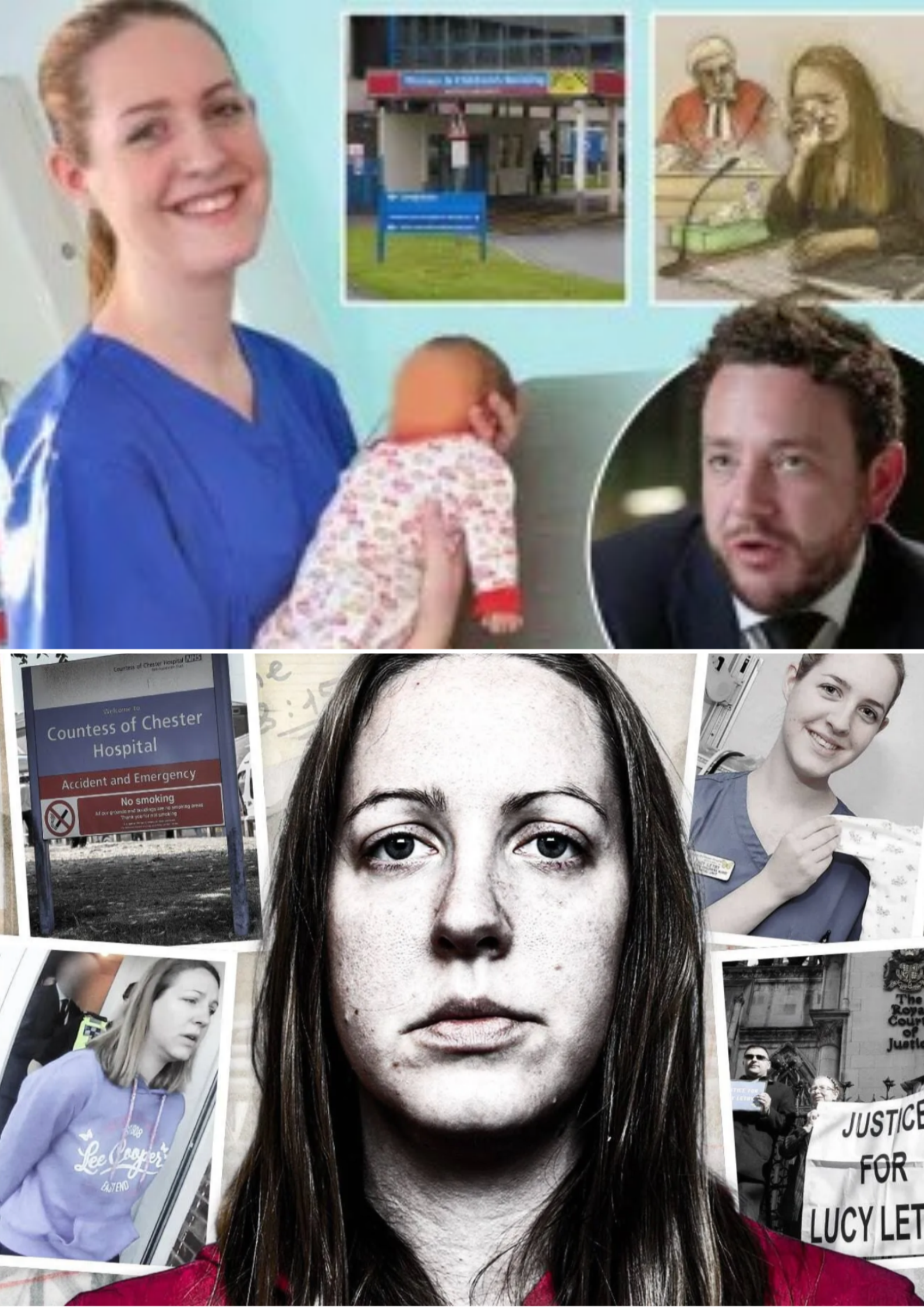
Fresh questions are being raised over the evidence used to convict former neonatal nurse Lucy Letby, as new medical arguments are examined by Britain’s miscarriage-of-justice watchdog and a major public inquiry exposes serious failures at the hospital where babies died.
Letby is serving 15 whole-life orders after being convicted of murdering seven babies and attempting to murder seven others while working at the Countess of Chester Hospital in Cheshire.
She has always maintained her innocence.
Her legal team is now seeking to have the convictions reconsidered, with the Criminal Cases Review Commission (CCRC) examining new material submitted on her behalf. The CCRC has confirmed that its review is ongoing and stressed that it does not decide whether a person is innocent or guilty.
 NEW MEDICAL EVIDENCE UNDER REVIEW
One of the most significant developments concerns medical evidence surrounding some of the babies whose deaths and collapses were attributed to deliberate harm.
An international group of medical experts assembled by Canadian neonatologist Dr Shoo Lee has challenged aspects of the medical reasoning presented at Letby’s trials.
The experts have argued that some of the babies could have died or deteriorated because of natural causes, infections or problems with medical care rather than deliberate attacks.
The Independent reported that the panel reviewed thousands of pages of medical evidence and challenged the prosecution’s interpretation of alleged air embolisms and other symptoms.
However, these are defence-side expert opinions currently being considered, not findings by an appeal court that Letby’s convictions were unsafe.
QUESTIONS OVER THE INSULIN EVIDENCE
Another major area of dispute involves two babies whom prosecutors said Letby poisoned with insulin.
Two experts who previously worked with Letby’s defence team — chemical engineer Helen Shannon and bioengineering professor Geoff Chase — produced a report challenging the scientific basis for the insulin allegations.
The pair later withdrew from the defence team after raising concerns about other arguments being advanced in the case.
Importantly, they continued to maintain that it was “very unlikely” that the two babies had been poisoned with insulin, while saying they could not support some other defence arguments on scientific grounds.
Recent reporting has also raised questions about glucose results that were not presented during the original proceedings.
The Sun reported that 14 normal glucose readings relating to one baby were not included in an original police report or prosecution blood-glucose log. Experts interviewed by the newspaper argued that the wider clinical picture should be reconsidered.
Those claims remain disputed and are part of the broader material being examined rather than established findings that invalidate the convictions.
A MAJOR INQUIRY FOUND SERIOUS HOSPITAL FAILURES
Separately, the Thirlwall Inquiry published its long-awaited report on September 15, 2026.
The inquiry found what Lady Justice Kathryn Thirlwall described as a “complete failure to protect babies” at the Countess of Chester Hospital.
It identified dysfunctional management and governance, a major divide between hospital leadership and clinicians, and serious failures in safeguarding.
Doctors had raised concerns about unusual deaths and collapses on the neonatal unit, but the inquiry found that senior management failed to respond appropriately and that police involvement was delayed.
The report also found that some babies’ deaths or collapses could potentially have been avoided had proper safeguarding procedures been followed.
BUT THE INQUIRY DID NOT OVERTURN LETBY’S CONVICTIONS
The distinction is important.
The Thirlwall Inquiry was not an appeal hearing and did not determine whether Letby was guilty or innocent.
Its purpose was to examine what happened at the Countess of Chester Hospital, including how management, doctors and other staff responded to concerns about the babies.
The inquiry’s findings therefore do not themselves establish that Letby was wrongly convicted.
Meanwhile, the CCRC continues to examine the new material submitted by Letby’s legal team.
If the commission eventually concludes that there is a real possibility that one or more convictions may not be upheld, it can refer the case to the Court of Appeal.
EXPERTS HAVE ALSO CHALLENGED THE AIR-EMBOLISM THEORY
A separate scientific dispute concerns the prosecution’s theory that Letby injected air into babies, causing fatal air embolisms.
Dr Shoo Lee, whose earlier research was cited during the prosecution case, has since argued that his work was misinterpreted and that the medical evidence does not establish the mechanism described at trial.
Other specialists have also questioned whether the post-mortem findings expected in fatal air embolism were present in the cases used against Letby.
The Sun recently reported that a team including a vascular surgeon, neonatologist and diving-medicine specialists had reviewed the evidence and disputed the prosecution’s interpretation.
Again, these are new expert challenges to evidence, not a judicial finding that the original verdicts were wrong.
THE HOSPITAL INVESTIGATION IS STILL CONTINUING
Cheshire Police are separately investigating whether senior leadership at the Countess of Chester Hospital could face criminal liability.
Operation Duet began as an investigation into potential corporate manslaughter and was later expanded to include possible gross negligence manslaughter.
Three former senior leaders were arrested in June 2025 on suspicion of gross negligence manslaughter and remain on bail, according to police. A separate arrest relating to suspected perverting the course of justice also took place in April 2026.
The investigation remains ongoing.
The Crown Prosecution Service has also confirmed that, following a review, it would not bring six additional attempted-murder charges relating to other babies. That decision was upheld in August 2026.
WHAT HAPPENS NEXT?
For now, there is no court ruling overturning Lucy Letby’s convictions.
But her case is undergoing renewed scrutiny.
The CCRC is examining new medical evidence, experts continue to dispute aspects of the original prosecution case, and the Thirlwall Inquiry has documented serious failures in the hospital’s management and safeguarding systems.
Those developments do not by themselves prove that Letby was framed or that an alternative cause of death has been legally established.
The next major development will depend on what the CCRC concludes after completing its review.
For the families involved, meanwhile, the continuing dispute over the medical evidence comes more than a decade after the deaths and collapses that first raised alarm at the neonatal unit.
And for Lucy Letby, the question remains whether the new evidence will ultimately be sufficient to bring her convictions back before the Court of Appeal.