LUCY LETBY: SERIAL KI//ER OR POSSIBLE MISCARRIAGE OF JUSTICE? THE QUESTIONS STILL SURROUNDING HER CONVICTIONS
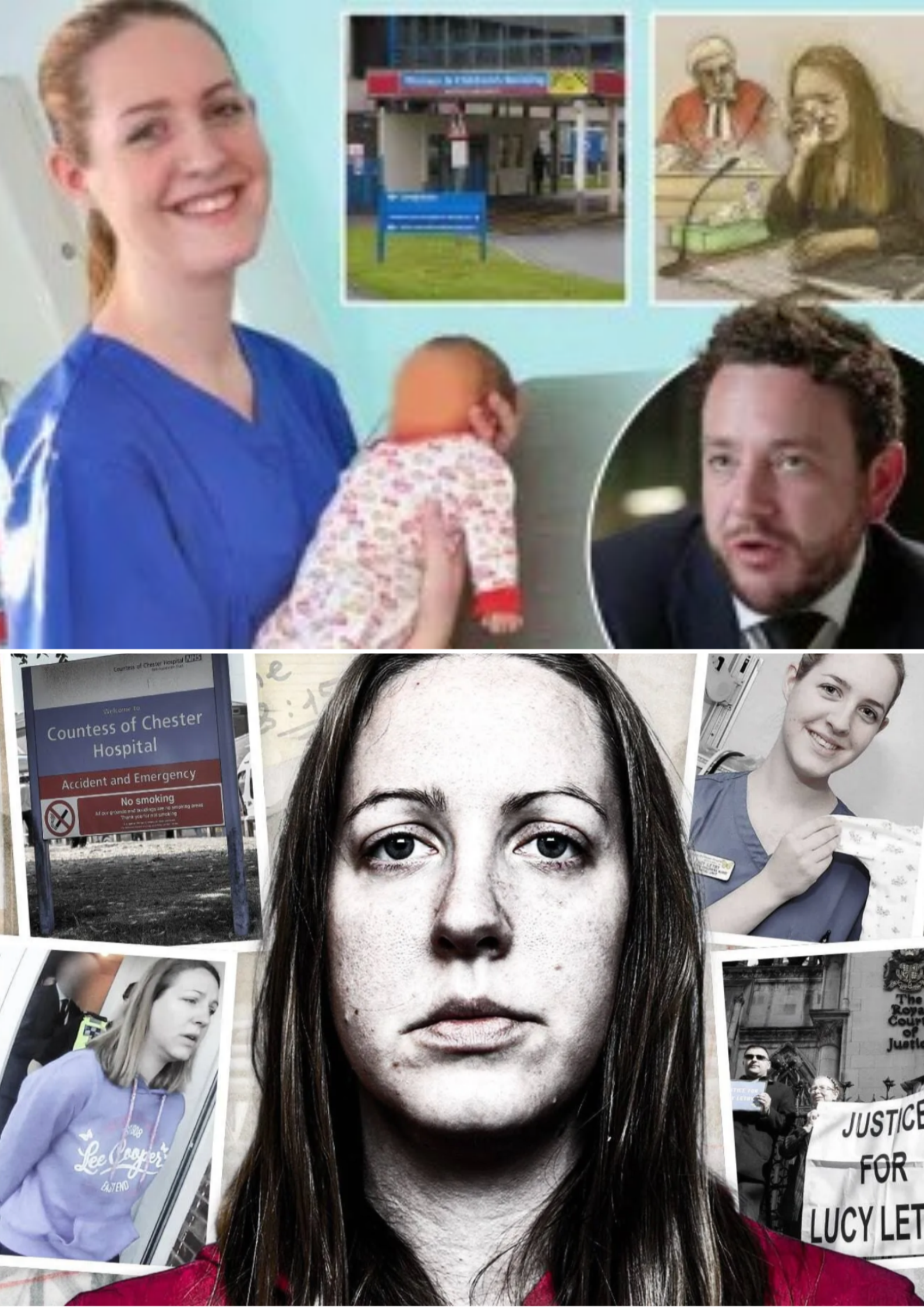
LUCY LETBY: SERIAL KILLER OR POSSIBLE MISCARRIAGE OF JUSTICE? THE QUESTIONS STILL SURROUNDING HER CONVICTIONS
The case of Lucy Letby remains one of the most closely watched criminal cases in Britain, more than three years after the former neonatal nurse was first convicted of murdering babies at the Countess of Chester Hospital.
Letby was convicted in 2023 of murdering seven babies and attempting to murder six others. A second trial in 2024 resulted in another attempted-murder conviction, bringing the total to seven murder convictions and seven attempted-murder convictions.
She was given 15 whole-life sentences and remains in prison. Letby continues to maintain that she is innocent. Her convictions remain in force.
Yet the scientific evidence behind parts of the prosecution case is now being examined again.
 QUESTIONS OVER THE SCIENTIFIC EVIDENCE
The most significant challenge currently being considered concerns two babies whose attempted-murder convictions involved allegations that they had been poisoned with insulin.
Two experts who previously worked with Letby’s defence team — British chemical-engineering expert Helen Shannon and New Zealand bioengineering professor Geoff Chase — produced a 100-page report questioning the scientific basis of those convictions.
The pair have maintained their assessment that it was “very unlikely” that the two babies had been poisoned with insulin.
Their work forms part of a much wider body of expert evidence submitted to the Criminal Cases Review Commission (CCRC), which is reviewing Letby’s convictions.
However, the story became more complicated in September 2026.
Shannon and Chase withdrew from Letby’s defence team after raising concerns about other arguments being advanced on her behalf.
They said they could not support some of those arguments because, in their view, they had fundamental problems and were inconsistent with available evidence, science and established physiology.
Their withdrawal therefore did not amount to a withdrawal of their doubts about the two insulin convictions. Instead, they said they continued to stand by their original assessment while distancing themselves from other defence arguments.
 LETBY’S LAWYER REJECTS THE IDEA THAT THE CASE HAS BEEN UNDERMINED
Letby’s barrister, Mark McDonald, rejected suggestions that the withdrawal of the two experts had seriously damaged the defence case.
He argued that the defence had evidence from a broader international group of specialists and that the case did not depend on the opinion of any single expert.
According to McDonald, experts in areas including insulin, endocrinology and laboratory medicine had identified what he described as fundamental problems with the scientific evidence relied upon at trial.
These remain defence arguments, however, rather than findings that have overturned any conviction.
THE CCRC IS STILL REVIEWING THE CASE
The Criminal Cases Review Commission is the independent body responsible for investigating possible miscarriages of justice in England, Wales and Northern Ireland.
Letby’s preliminary application was received in February 2025, with further expert reports, submissions and defence material provided over the following months.
In February 2026, the CCRC confirmed that its review of Letby’s convictions was underway.
It also stressed an important point: the CCRC does not decide whether someone is innocent or guilty. Its role is to determine whether there is a real possibility that a conviction may not be upheld or that a sentence should be reduced, and, where appropriate, refer a case to an appeal court.
As of September 2026, the CCRC has not overturned Letby’s convictions or referred them back to the Court of Appeal.
THE THIRLWALL INQUIRY ADDS ANOTHER LAYER
The controversy intensified when the Thirlwall Inquiry published its long-awaited report on September 15, 2026.
The inquiry examined what happened at the Countess of Chester Hospital between 2015 and 2018, including how hospital management responded when doctors raised concerns about unexpected collapses and deaths in the neonatal unit.
Its findings were highly critical of the hospital’s management and safeguarding arrangements.
The report found a prolonged delay by senior management in contacting police after concerns were raised. It also found that doctors who raised concerns were not properly listened to and that internal reviews failed to adequately address whether deliberate harm could have been taking place.
The inquiry also criticised the way parents were treated.
Some parents were not informed for years that concerns had been raised about the possibility that their babies may have been deliberately harmed.
BUT THE INQUIRY DID NOT DECIDE WHETHER LETBY WAS GUILTY
One of the most important distinctions in the case is that the Thirlwall Inquiry was not an appeal against Letby’s convictions.
Its purpose was to examine the hospital’s systems, management, governance, safeguarding and response to concerns.
The inquiry did not determine whether Letby was guilty or innocent.
Lady Justice Kathryn Thirlwall made clear that the inquiry was not intended to interfere with the work of the criminal courts or the CCRC, which is separately examining the material submitted on Letby’s behalf.
Therefore, the inquiry’s findings about serious hospital failures do not, by themselves, invalidate Letby’s convictions.
STAFFING AND MEDICAL CONDITIONS
Supporters of Letby’s case have also pointed to other possible explanations for the collapses and deaths, including the vulnerability of premature and seriously ill babies, medical complications and conditions inside the neonatal unit.
Those issues have formed part of the wider debate among medical experts and campaigners questioning aspects of the prosecution case.
But they remain matters of competing interpretation and expert evidence.
The existence of staffing or management failures does not itself establish that the babies’ deaths were caused by natural events, just as hospital failures do not by themselves prove that Letby committed the crimes for which she was convicted.
That distinction remains central to understanding the continuing controversy.
WHAT HAPPENS NEXT?
For now, Lucy Letby remains convicted and imprisoned under 15 whole-life sentences.
At the same time, the CCRC continues to examine the new evidence submitted by her legal team.
The recent withdrawal of Shannon and Chase has added another complication to the debate: the two experts continue to question the insulin evidence involving two babies, while simultaneously warning that some other arguments being advanced by the defence are scientifically problematic.
The Thirlwall Inquiry has separately exposed profound failures in hospital management and safeguarding.
Neither development has overturned Letby’s convictions.
The next major legal question is whether the CCRC concludes that the new evidence creates a real possibility that any of her convictions should not be upheld.
Until such a decision is made — and unless an appeal court rules otherwise — Letby remains legally convicted of murdering seven babies and attempting to murder seven others.
For the families of the babies, the case continues to carry an immeasurable human cost.
And for the British justice system, the unresolved scientific questions surrounding the convictions ensure that the Lucy Letby case remains under intense scrutiny.