“EVERYBODY LOOKS AT THEIR PHONE” — 11-YEAR-OLD JAIDEN SHEHATA KILLED BY TRAIN WHILE WATCHING EIGHT-SECOND VIDEO
“EVERYBODY LOOKS AT THEIR PHONE” — 11-YEAR-OLD JAIDEN SHEHATA KILLED BY TRAIN WHILE WATCHING EIGHT-SECOND VIDEO
An 11-year-old boy was walking to school when he stopped paying attention to the railway around him. Seconds later, he was struck and killed by a train. An inquest has now heard that he was watching an eight-second video on his phone — while investigators also found serious safety issues at the crossing.
Jaiden Shehata was just 11 years old.
A Year 7 student at Riddlesdown Collegiate in South Croydon, he had been using the Bourneview footpath crossing near Kenley as part of his journey to school since September 2024.
He normally walked with his older brother.
But on the morning of January 23, 2025, Jaiden was alone.
At approximately 8:03 a.m., a passenger train travelling toward London approached the crossing.
Jaiden stepped onto the railway.
And within moments, his life was over.
 THE EIGHT-SECOND VIDEO
The inquest heard that Jaiden was looking at his mobile phone immediately before the collision.
He had received an eight-second video from a friend through WhatsApp.
Forward-facing CCTV from the approaching train showed the young boy holding what investigators described as a “glowing object” in his hands.
He was not wearing headphones.
The evidence indicated that the object was his mobile phone.
The train driver saw Jaiden entering the crossing and immediately sounded the warning horn and applied the emergency brakes.
Jaiden looked up after hearing the horn.
But it was too late.
The train was travelling at approximately 50 mph (80 km/h), according to the official RAIB investigation.
There was not enough time for him to move clear of the railway.
HIS FAMILY HAD NO IDEA THAT MORNING WOULD BE DIFFERENT
Jaiden had been using the route regularly for several months.
The crossing was part of his normal journey to school.
According to evidence heard at the inquest, he would usually walk alongside his older brother.
But that morning, he was by himself.
The tragedy happened in just seconds.
A journey he had made many times before suddenly became fatal.
The first police officer reached the scene shortly afterward.
Jaiden was found at approximately 8:18 a.m.
Paramedics arrived minutes later.
He was pronounced dead at 8:52 a.m.
His medical cause of death was recorded as severe neck injuries.
“HE WAS ONLY 11 YEARS OLD”
At the conclusion of the inquest on September 24, 2026, senior coroner Sarah Ormond-Walshe addressed Jaiden’s family.
She acknowledged the role his phone played in the moments before the collision.
But she also urged the family not to blame him.
“Everybody, everybody, looks at their phone,” she said.
The coroner described Jaiden as doing something that was “very much normal behaviour by all of us.”
She then told his family:
“So please, let that go because every single person in this room does that, and he was only 11 years old.”
Her words came as the inquest examined not only Jaiden’s actions, but also the safety of the railway crossing itself.
THE CROSSING HAD NO ACTIVE WARNING SYSTEM
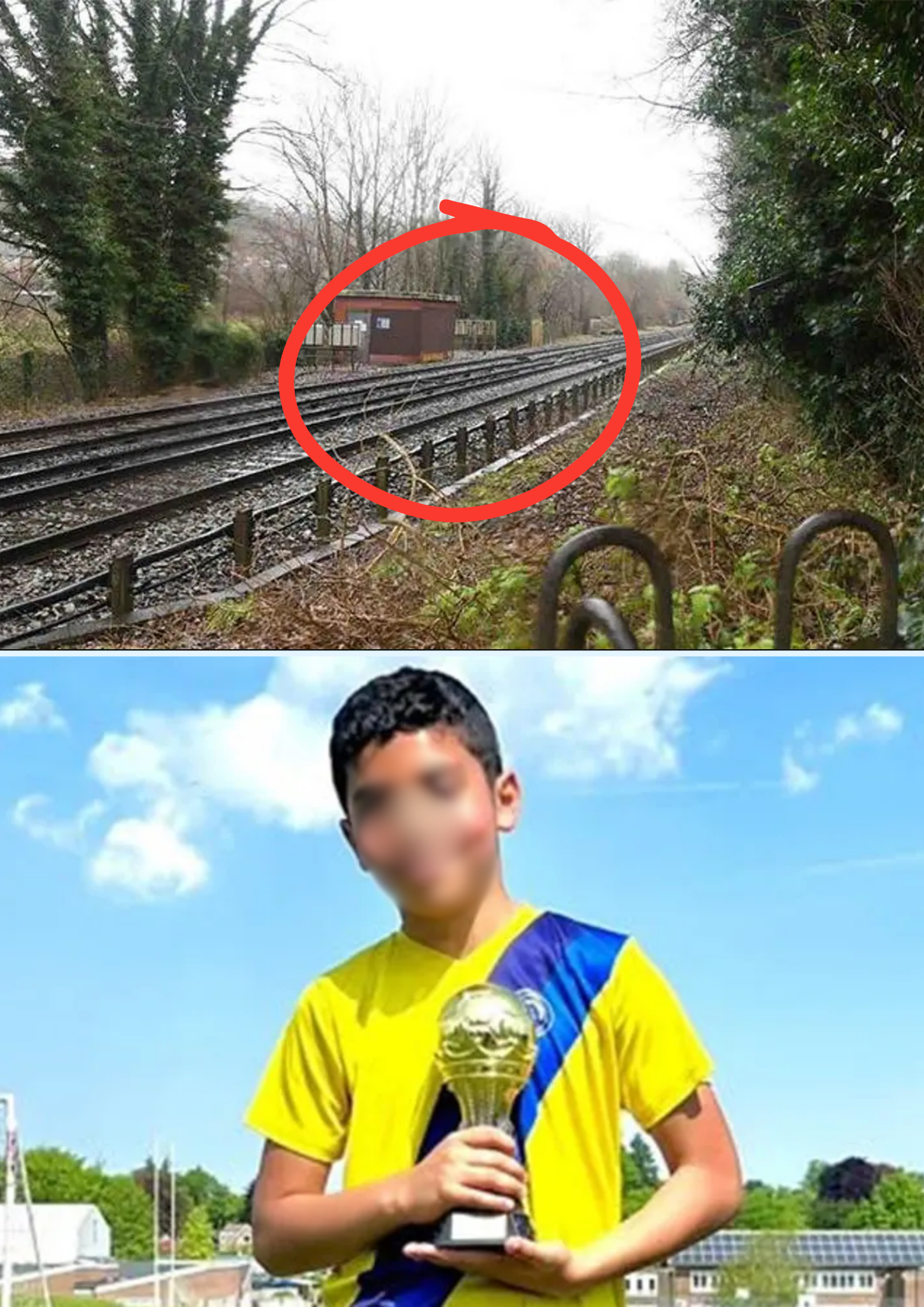
Bourneview was what is known as a passive footpath crossing.
At the time of the accident, it did not have an active system providing pedestrians with visual and audible warnings when a train was approaching.
The jury identified that absence of warning systems as a contributing factor in Jaiden’s death.
The official RAIB investigation had reached a similar conclusion.
Its report said the accident happened because Jaiden did not perceive the risk posed by the approaching train, probably because he was distracted by his mobile phone.
RAIB also identified the lack of active warning systems as a probable causal factor.
It said the crossing’s design could also have made it more obvious to pedestrians that they were entering a hazardous area.
THERE HAD ALREADY BEEN NEAR MISSES
The safety concerns did not begin with Jaiden.
A Network Rail risk assessment completed in May 2023 recorded previous incidents at Bourneview.
The assessment documented six near misses between November 2018 and February 2023.
There had also been a fatality at the crossing in March 2020, which Network Rail recorded as resulting from a deliberate act.
The 2023 assessment classified Bourneview as a C4 crossing, described during the inquest as reasonably high risk.
Changes were identified as necessary to improve safety.
But they were not scheduled to be completed until March 2026.
That was almost three years after the May 2023 risk assessment — and more than a year after Jaiden’s death.
WHY DID THE CHANGES TAKE SO LONG?
The delay became another important issue during the inquest.
Evidence was heard about the timeline between the risk assessment and the planned safety improvements.
RAIB examined the issue as part of its investigation and concluded that the period allowed for the recommended changes was considered acceptable within the relevant arrangements.
The investigation did not assign blame or liability.
Instead, RAIB focused on identifying what could be learned from the tragedy and how similar accidents might be prevented.
Its report ultimately made three recommendations.
One called for schools and railway infrastructure managers to work together on targeted railway-safety lessons for pupils.
Another called for Network Rail and the Rail Safety and Standards Board to consider ways of making hazardous areas at level crossings more noticeable, particularly to people whose attention may be distracted.
A third called for further consideration of the specific risk profile of younger people at level crossings.
THE TRAIN DRIVER TRIED TO STOP
The evidence also made clear that the driver reacted once Jaiden’s presence became apparent.
The train’s forward-facing CCTV showed the approaching train and the boy entering the crossing.
The driver sounded the horn.
Emergency braking was applied.
Jaiden looked up.
But the train was already too close.
The official RAIB report says he “did not have time to react and move clear of the train before it reached the crossing.”
It was a tragedy measured in seconds.
A JURY CONCLUDED HIS DEATH WAS ACCIDENTAL
After hearing the evidence, the jury concluded that Jaiden’s death was accidental.
The foreperson said Jaiden probably did not perceive the danger of the approaching train because he was distracted by his mobile phone.
The jury also identified the lack of active warning systems at Bourneview as another probable cause.
The findings therefore did not place the entire explanation on one factor.
There was the phone.
There was the passive crossing.
There was the absence of active visual and audible warnings.
And there was the wider question of how young pedestrians interact with railway crossings designed around assumptions about attention and risk awareness.
JAIDEN’S DEATH HAS LED TO A NEW SAFETY REPORT
The coroner has confirmed that she will issue a Prevention of Future Deaths report following the inquest.
Such reports are intended to identify circumstances in which further deaths might occur and recommend action to reduce the risk.
The aim is therefore not simply to document how Jaiden died.
It is to ask how another child can be prevented from suffering the same fate.
RAIB’s own investigation similarly stressed that its purpose was to improve railway safety and prevent future accidents, rather than assign blame.
A JOURNEY THAT SHOULD HAVE ENDED AT SCHOOL
Jaiden had started secondary school only months before his death.
He knew the route.
He had crossed the railway before.
His family had no reason to believe that an ordinary walk to school would become the final journey of his life.
On that January morning, an eight-second video appeared on his phone.
For those few seconds, his attention was somewhere else.
The train was coming.
The driver sounded the horn.
Jaiden looked up.
But there was no time left.
“HE WAS ONLY 11”
The most haunting part of the inquest was perhaps not the technical evidence about trains, crossings or risk assessments.
It was the reminder that Jaiden was a child.
The coroner did not describe his phone use as extraordinary.
She described it as something ordinary — something almost everyone does.
But for an 11-year-old walking alone across a railway, the consequences of a few distracted seconds were catastrophic.
And the jury found that the crossing itself also lacked warning systems that could have provided an additional layer of protection.
Jaiden’s family must now live with a loss that cannot be reversed.
But his death has also left a series of questions for those responsible for railway safety.
Could the crossing have been made more noticeable?
Could active warnings have been installed sooner?
Could children using the route have received more targeted safety education?
And could a different combination of safeguards prevent another family from receiving the phone call that Jaiden’s family received?
The coroner’s forthcoming report will seek answers to some of those questions.
Because Jaiden was not just a name in a safety assessment.
He was an 11-year-old boy walking to school.
And on the morning of January 23, 2025, an ordinary journey ended in a tragedy that has now prompted renewed scrutiny of how Britain’s railway crossings protect the people who use them.