MISSING BRITISH TOURIST LORNA MCSORLEY: FAMILY DEMANDS MURDER INVESTIGATION AS ‘WITCHCRAFT’ THEORY DEEPENS
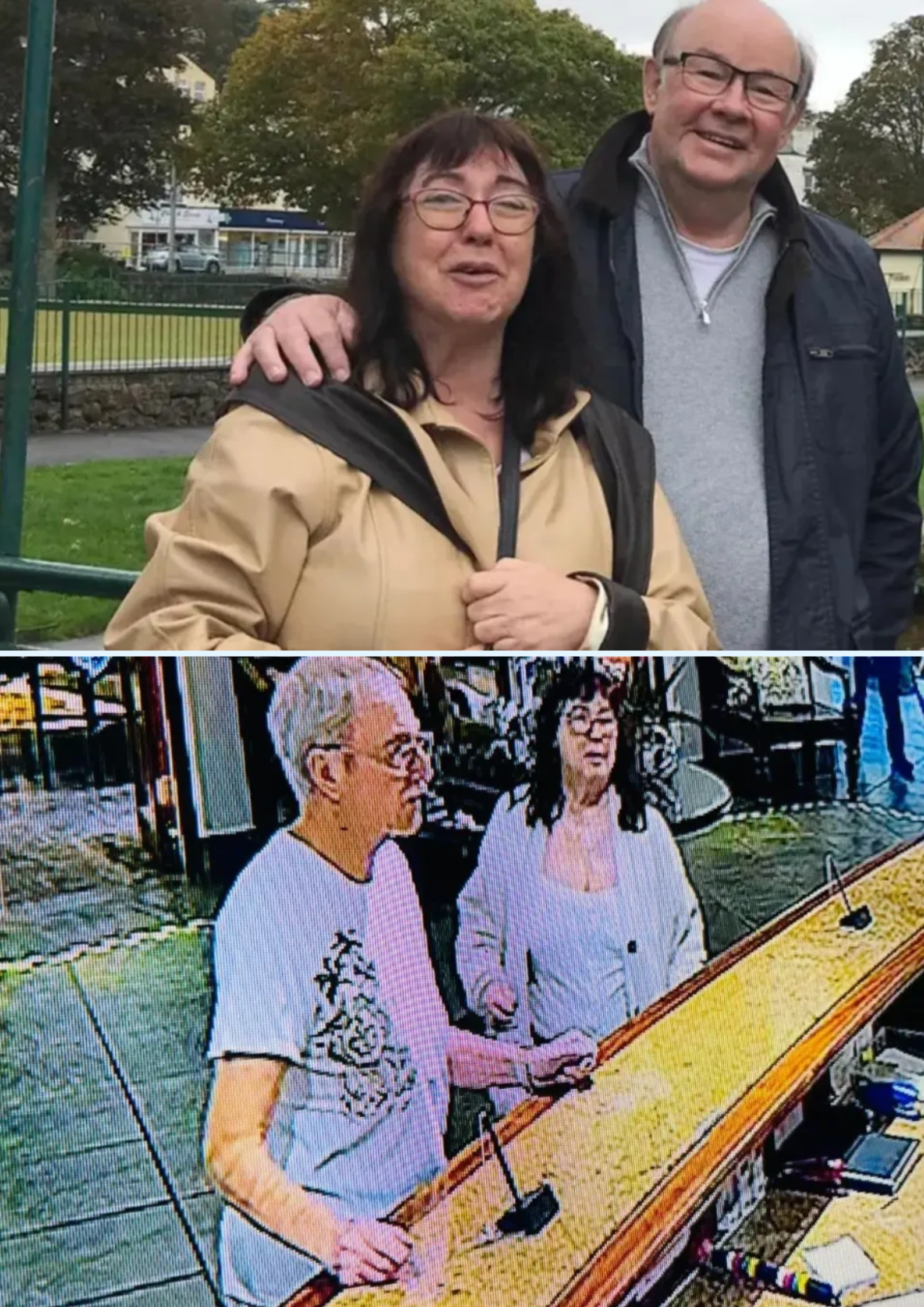
MISSING BRITISH TOURIST LORNA MCSORLEY: FAMILY DEMANDS MURDER INVESTIGATION AS ‘WITCHCRAFT’ THEORY DEEPENS
THE 71-YEAR-OLD VANISHED DURING A WALK IN SOUTH AFRICA — AND ONLY A CRUMPLED MAP WAS EVER FOUND
More than a year after British tourist Lorna McSorley disappeared during a holiday in South Africa, her family is still waiting for an answer.
Lorna, 71, from Devon, vanished on September 27, 2025, while walking near the Ghost Mountain Inn in Mkuze, northern KwaZulu-Natal.
She had been enjoying a two-week package holiday with her long-term partner, Leon Probert, when the couple decided to take a walk through the surrounding countryside.
What should have been a short afternoon outing became the beginning of a mystery that remains unresolved.
Lorna has never been seen again.
And after months of searching, investigators have found almost nothing that explains what happened to her.
Her family now wants authorities to investigate the disappearance as a possible murder, rather than treating it solely as a missing-person case.
 THE LAST AFTERNOON
Lorna and Leon, who had been together for around three decades, arrived at the Ghost Mountain Inn as part of a TUI-organised holiday.
Hotel CCTV showed the couple leaving at approximately 2:30 p.m. on September 27 with a printed map for a roughly three-mile circular walk toward a nearby lake.
The area is known for its wildlife, including crocodiles.
But after walking for a short time, Leon decided to return because of the heat.
Lorna continued alone.
It was the last time he saw her.
Around 3:15 p.m., a local farmer named Koos Prinsloo encountered Lorna near his property.
She had apparently lost her way and stopped to ask for directions.
Prinsloo later said she appeared relaxed and declined his offer of a lift back toward the hotel.
He pointed out her location on the map before returning to his lunch.
No confirmed sighting of Lorna has been reported after that encounter.
 THEN SHE VANISHED
By approximately 5:30 p.m., Lorna had still not returned.
A search was launched.
Police officers, farm workers, volunteers and rangers searched the surrounding countryside. Dogs were deployed, while drones, boats, helicopters and aircraft were also used during the operation.
The search continued for days.
But there was no Lorna.
No clothing.
No personal belongings.
No confirmed remains.
And, remarkably, the only significant physical clue discovered was the crumpled map she had been carrying.
Her bank card was also never used after her disappearance.
The official search was eventually scaled back, leaving investigators with an unanswered question:
How could a 71-year-old woman simply disappear from an area that had been searched so extensively?
CROCODILE ATTACK — OR SOMETHING FAR MORE SINISTER?
One early possibility was that Lorna had fallen victim to wildlife.
The surrounding region contains crocodile-inhabited waterways, and investigators considered the possibility that she may have wandered close to the water.
But no remains were found.
The lack of physical evidence has helped fuel other theories, including the possibility that she was abducted.
And in the months following her disappearance, an especially disturbing theory began to emerge.
Locals and investigators began discussing the possibility of a “muti” killing.
“Muti” is a term associated with traditional medicine in southern Africa. Most traditional medicine does not involve human remains, and established traditional-healer organisations have condemned the use of human body parts.
However, investigators and researchers have documented criminal cases in which human body parts were allegedly sought for illegal ritual practices.
The theory surrounding Lorna remains unproven.
There is no publicly established evidence showing that she was killed in a ritual.
But the disappearance has attracted renewed attention because of reports of other unexplained disappearances and alleged muti-related killings in the wider KwaZulu-Natal region.
NEW PHONE DATA RAISES MORE QUESTIONS
A private investigation later examined mobile-phone data from the area.
According to reporting by The Times, analysts identified several devices whose movements appeared unusual on the day Lorna disappeared.
One analysis identified three phones converging near the location where Lorna’s map was eventually discovered, remaining in the area for a period before moving away.
A later investigation by intelligence and risk firm TopicWorx identified four individuals whose movements stood out around the time of Lorna’s disappearance.
According to the investigation, two were positioned in places from which they could potentially observe Lorna and Leon leaving the hotel and later see Leon return alone.
Another appeared along Lorna’s route, while another was reportedly moving through sugar-cane fields close to where the map was found.
The findings have been passed to South African authorities.
However, unusual phone movements are not by themselves proof of kidnapping or murder.
They are part of a private investigative theory that authorities would need to corroborate through further evidence.
HER FAMILY WANTS ANSWERS
For Lorna’s family, the uncertainty has become almost as painful as the possibility of learning that she was killed.
Her brother, Geoff Sheward, has called for the case to be treated as a possible murder investigation.
He has said the family remains trapped in limbo because they do not know what happened to Lorna and have been unable to properly grieve or settle her affairs.
The family has also been confronted with the possibility that Lorna may have been abducted for her body parts.
Geoff previously described the possibility of a muti killing as the “worst” outcome the family could imagine.
Leon has also spoken about his regret over turning back from the walk.
He told The Times that he carries guilt over the decision, believing that if he had remained with Lorna, events might have unfolded differently.
POLICE HAVE NOT CONFIRMED A MURDER
Despite the increasingly detailed theories surrounding the disappearance, it is important to distinguish investigation from proof.
South African police have not publicly confirmed that Lorna was murdered.
Police have also declined to provide a running commentary on private investigative findings while the case remains active.
The Times reported in June that the disappearance had been upgraded to a national police inquiry following its reporting and the new intelligence analysis. A forensic specialist consulted by the newspaper said the evidence should be considered in the context of a murder investigation.
That is an assessment from an expert consulted by the newspaper, not a court finding or a public determination by police that Lorna was murdered.
The British government’s Foreign, Commonwealth & Development Office has confirmed that it is supporting Lorna’s family and remains in contact with local authorities.
A COMMUNITY WITH A TROUBLING HISTORY
Lorna disappeared in an area where fears surrounding alleged muti-related crimes have existed for years.
The Times has reported accounts from local residents concerning other unexplained disappearances and mutilated bodies in the wider region.
One previously reported case involved British couple Tony and Gillian Dinnis, who disappeared from their remote KwaZulu-Natal property in 2023. Their remains were never found.
Two men reportedly admitted killing them for muti during police interviews, but were later released after a court found insufficient evidence to prosecute them.
These cases have contributed to fears among some residents that organised criminal networks may be involved in the illegal trade in human body parts.
But they do not establish what happened to Lorna.
Her disappearance remains its own investigation.
A MYSTERY WITHOUT A BODY
More than a year later, Lorna’s disappearance has left investigators with a disturbing lack of physical evidence.
A woman left a hotel carrying a map.
She became lost.
A farmer saw her and spoke with her.
She declined a lift.
Then she disappeared.
The subsequent search produced no confirmed trace of her — only the map.
Now, new analysis of phone movements and reports from the surrounding community have raised the possibility that she may have been targeted rather than simply becoming lost.
Her family wants authorities to pursue that possibility as a murder investigation.
But until physical evidence, forensic findings or other corroborating evidence establishes what happened, the theory remains just that — a theory.
For Lorna’s family, however, the uncertainty continues.
A year after she walked away from the Ghost Mountain Inn, they still do not know where she is, what happened to her, or whether she will ever be found.