DOCTOR WHO HELPED CONVICT LUCY LETBY NOW SAYS HE IS “NO LONGER CERTAIN” SHE COMMITTED THE CRIMES
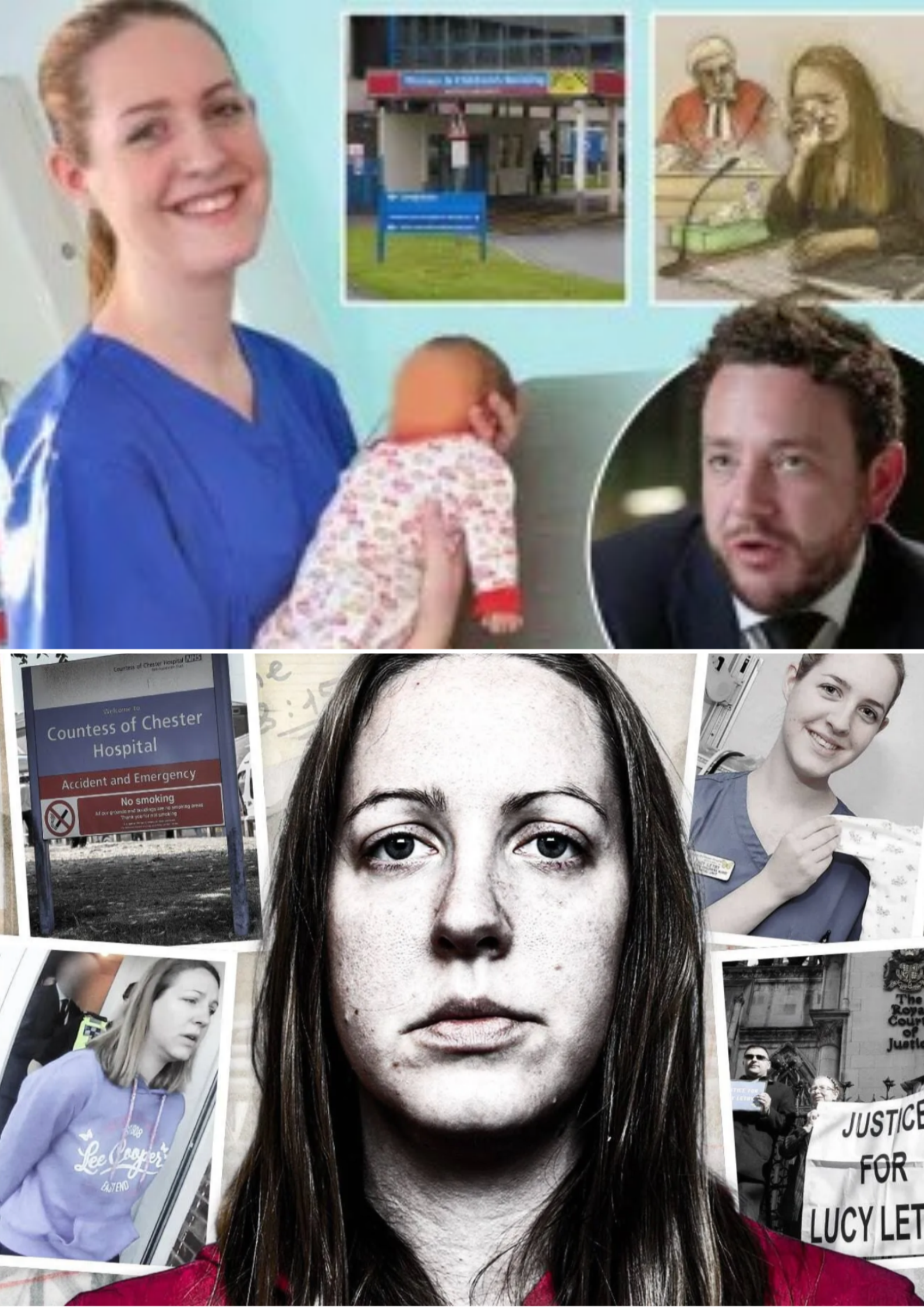
DOCTOR WHO HELPED CONVICT LUCY LETBY NOW SAYS HE IS “NO LONGER CERTAIN” SHE COMMITTED THE CRIMES
A retired paediatrician whose evidence played a role in the conviction of Lucy Letby has publicly questioned his own certainty about the case, saying he believes a retrial could now be appropriate.
Dr John Gibbs, one of three consultants whose evidence helped prosecutors build the case against the former neonatal nurse, has said he is “no longer certain” that Letby was responsible for the deaths and attempted killings of babies at the Countess of Chester Hospital.
His comments have reignited debate around one of Britain’s most closely watched criminal cases.
Letby was convicted in 2023 of murdering seven babies and attempting to murder six others. Following a second trial in 2024, she was also convicted of another attempted murder. She is serving 15 whole-life orders, and her convictions remain in place.
 “I AM NO LONGER CERTAIN”
Dr Gibbs recently told The Sun that he would no longer describe himself as certain that Letby committed the crimes.
When asked whether he remained convinced that Letby had murdered the babies, he answered “No.”
He said he now has a “very small concern” that there may not have been deliberate harm at all.
Gibbs also said that if Letby were imprisoned for crimes she did not commit, that would be an extremely serious injustice.
However, he did not state that he believed another individual had harmed the babies.
Instead, he said the central question should remain why so many babies collapsed on the neonatal unit in Chester during 2015 and 2016.
 WHY HAS HIS VIEW CHANGED?
Gibbs’ comments come after months of renewed scrutiny surrounding the evidence presented during Letby’s trials.
A major development was the publication of the Thirlwall Inquiry report on September 15, 2026.
The independent inquiry examined what happened at the Countess of Chester Hospital between 2015 and 2018 and investigated the hospital’s response to concerns surrounding the neonatal unit.
Its report identified serious failures in management and governance and examined missed opportunities to respond to concerns about the deaths and collapses of babies.
The inquiry was not a retrial of Lucy Letby, and its purpose was not to overturn or re-decide her criminal convictions.
The report has nevertheless become an important part of the renewed public discussion surrounding the case.
HOSPITAL FAILURES UNDER SCRUTINY
The Thirlwall Inquiry found significant failures within the hospital’s leadership and safeguarding processes.
It concluded that hospital management failed to properly respond to concerns raised by doctors and that there were serious problems with the way information was handled.
The findings have prompted renewed questions about what was happening inside the neonatal unit during the period when several babies became seriously ill or died.
Cheshire Police have also said they will review the inquiry’s findings as part of an ongoing investigation into the hospital’s senior leadership and decision-making.
But the inquiry’s findings do not establish that Letby was innocent, nor do they overturn the criminal convictions against her.
NEW SCIENTIFIC QUESTIONS
There has also been disagreement among experts over some of the scientific evidence used in the case.
In September, two experts who had previously contributed to Letby’s defence withdrew from her legal team over concerns about some of the arguments being advanced in her case.
Helen Shannon and Professor Geoff Chase said they continued to stand by their assessment that it was very unlikely two babies had been deliberately poisoned with insulin.
However, they said they could not support other arguments being advanced by the defence because they believed those arguments were inconsistent with available scientific evidence and established physiology.
Letby’s barrister Mark McDonald has disputed that interpretation, arguing that new evidence from experts in insulin, endocrinology and laboratory medicine fundamentally challenges the scientific evidence used at trial.
The Criminal Cases Review Commission (CCRC) is currently considering material submitted on Letby’s behalf.
GIBBS SAYS A RETRIAL COULD BE APPROPRIATE
Against that backdrop, Gibbs has said that a retrial may now be the appropriate course.
He acknowledged that renewed debate about Letby’s guilt is deeply distressing for the families of the babies involved.
But he argued that the emotional consequences should not prevent consideration of new evidence if that evidence could genuinely undermine the convictions.
He said there appeared to be an increasing number of experts willing to advance arguments supporting Letby’s innocence, while also stressing that he did not agree with every argument being made.
That distinction is important: Gibbs has not declared Letby innocent. Rather, he has publicly acknowledged that he is no longer certain of her guilt and believes the possibility of a retrial deserves consideration.
LETBY’S CONVICTIONS HAVE NOT BEEN OVERTURNED
Despite the renewed controversy, Lucy Letby’s legal position has not changed.
Her convictions remain valid.
She continues to serve 15 whole-life orders, and previous appeals have not overturned those convictions. The CCRC’s review is ongoing and does not itself mean that a retrial has been ordered.
The Thirlwall Inquiry was also separate from the criminal proceedings.
Therefore, Dr Gibbs’ comments represent a new public expression of doubt from a former prosecution witness, rather than a legal finding that Letby was wrongly convicted.
A CASE THAT CONTINUES TO RAISE QUESTIONS
The controversy surrounding Lucy Letby has now entered another chapter.
A retired doctor whose evidence helped establish the prosecution case has acknowledged that he is no longer certain she committed the crimes.
At the same time, the hospital inquiry has exposed serious institutional failures, while experts continue to disagree over aspects of the scientific evidence.
For the families of the babies, however, the renewed debate comes with enormous emotional consequences.
For Letby’s legal team, the focus remains on whether new evidence is strong enough to justify further legal proceedings.
And for the justice system, the central question is whether the evidence supporting the convictions remains sufficiently reliable when examined in light of the new material.
For now, Lucy Letby’s convictions remain in force.
But the extraordinary change in position from one of the doctors whose evidence helped convict her has placed the case back under intense public scrutiny.