LUCY LETBY CASE FACES FRESH SCRUTINY AS EXPERTS CHALLENGE MEDICAL EVIDENCE — NEW RECORDS AND STATISTICAL QUESTIONS PUT HER CONVICTIONS BACK UNDER THE SPOTLIGHT
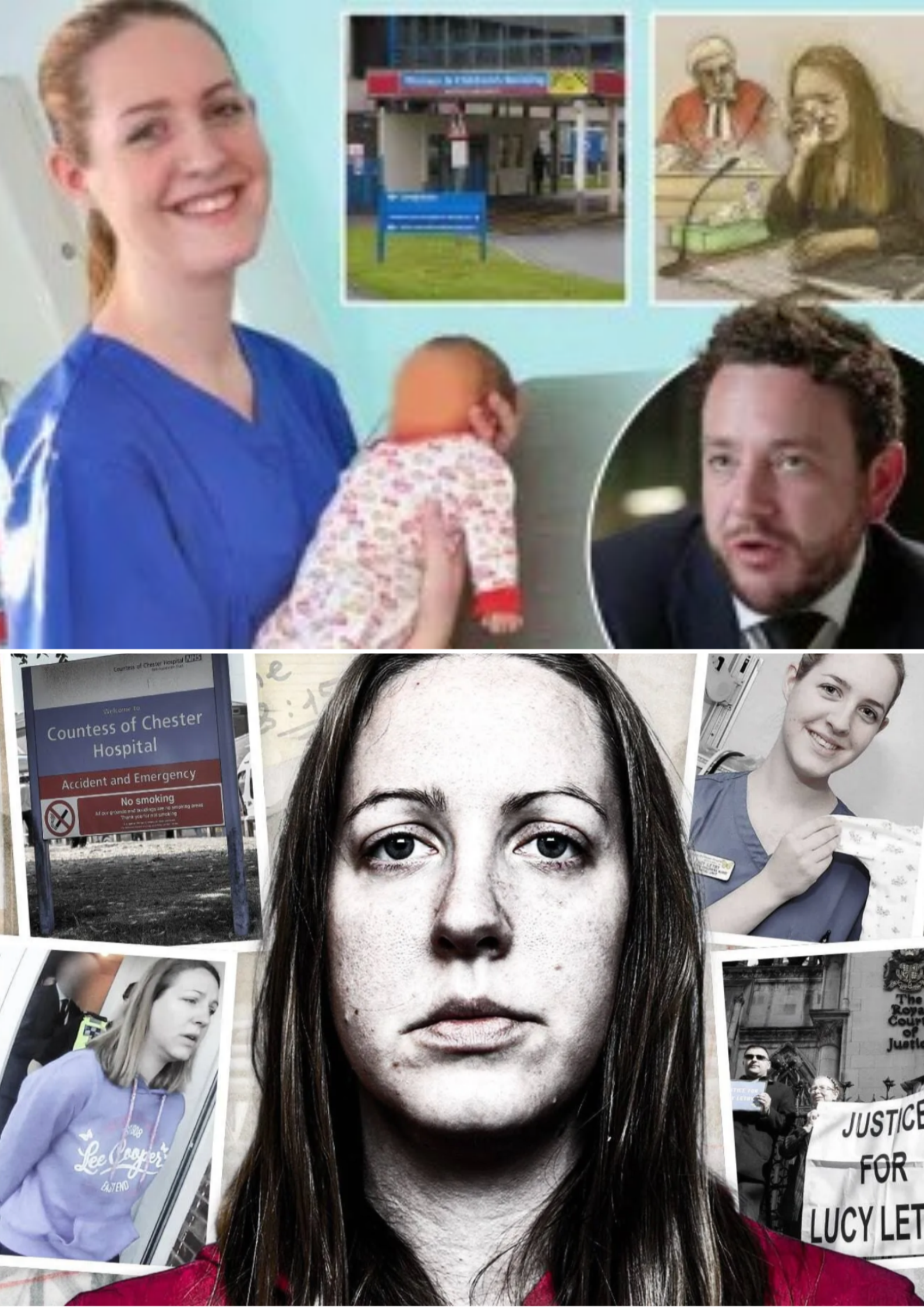
LUCY LETBY CASE FACES FRESH SCRUTINY AS EXPERTS CHALLENGE MEDICAL EVIDENCE — NEW RECORDS AND STATISTICAL QUESTIONS PUT HER CONVICTIONS BACK UNDER THE SPOTLIGHT
Former neonatal nurse Lucy Letby remains in prison serving 15 whole-life orders, but her convictions have come under renewed scrutiny after a group of international medical experts challenged important parts of the evidence used against her.
Letby was convicted in two trials of murdering seven babies and attempting to murder seven others at the Countess of Chester Hospital between 2015 and 2016.
She has always maintained her innocence.
Her legal team is now asking the Criminal Cases Review Commission (CCRC) to examine new evidence that they say could justify another appeal. The CCRC has been reviewing a dossier containing dozens of expert reports.
The latest developments do not mean that Letby’s convictions have been overturned. Her previous attempts to obtain permission to appeal have been unsuccessful, and the convictions remain legally in force.
But the case has entered another intense period of scrutiny.
 INTERNATIONAL EXPERTS CHALLENGE THE MEDICAL EVIDENCE
One of the most significant challenges has come from Canadian neonatologist Dr Shoo Lee, whose earlier research on air embolism was cited during Letby’s trials.
Lee subsequently reviewed the evidence with a panel of 14 experts from six countries, including neonatologists, a paediatric surgeon, an infectious-disease specialist and neonatal nursing specialists.
According to reporting by The Independent, the panel concluded that it found no evidence of deliberate harm in the cases it reviewed and instead identified possible natural causes or problems with medical care.
Lee has also questioned how his earlier research was interpreted during the prosecution.
He has said that after examining the court transcripts, he believed the way his research had been presented did not accurately reflect what his original work showed.
The experts have particularly challenged the theory that several babies died because air was deliberately injected into their bloodstream.
They have also questioned whether skin discolouration observed in some babies could reliably be interpreted as evidence of an air embolism.
These arguments are now part of the wider material being considered in Letby’s potential appeal.
However, there is also disagreement among experts supporting her defence.
 TWO EXPERTS WITHDRAW FROM HER DEFENCE TEAM
In September, two experts who had previously worked with Letby’s defence — chemical engineering expert Helen Shannon and bioengineering professor Geoff Chase — withdrew from the team.
They said they continued to stand by their assessment that it was highly unlikely that two babies had been poisoned with insulin in the manner alleged by prosecutors.
However, they said they could not support some other arguments being advanced by the defence because, in their view, those arguments were inconsistent with available evidence and established scientific principles.
Letby’s barrister Mark McDonald rejected the suggestion that the withdrawal undermined the wider defence case.
He said the defence now had evidence from experts in several disciplines that, in his view, fundamentally challenged the scientific evidence relied upon at trial.
The disagreement illustrates how divided the scientific debate surrounding the case has become.
QUESTIONS OVER STATISTICS
Another major issue concerns the statistical evidence used during the original investigation.
Prosecutors presented a chart showing the shifts worked by nurses during periods when babies collapsed or died.
Letby’s presence on the neonatal unit was highlighted as part of the prosecution’s case.
Some statisticians have since argued that the chart could lead to a form of “prosecutor’s fallacy” — essentially treating an unusual association as evidence of guilt without adequately considering alternative explanations.
Documents reported by The Guardian also showed that police had previously approached statistician Professor Jane Hutton about analysing the probability of Letby’s presence during the incidents.
Hutton reportedly warned that a proper statistical analysis should examine all possible explanations rather than focus on one member of staff from the outset.
The police later did not proceed with the analysis at that stage. In 2021, after Letby had been charged, an officer reportedly told colleagues that prosecutors did not agree with pursuing the statistical line of inquiry.
The revelation has prompted questions about disclosure and the way statistical evidence was handled.
But describing this as a proven “deliberately buried statistical error” would go beyond what the available evidence establishes.
MATERNITY RECORDS BECOME ANOTHER FLASHPOINT
In July 2026, the BBC reported another potentially significant disclosure.
Maternity records belonging to babies involved in Letby’s cases had been seized by Cheshire Police but were not provided to the defence before trial, according to the BBC’s investigation.
The records contained information about the mothers’ pregnancies, labour and births.
The prosecution’s chief medical expert, Dr Dewi Evans, said he had not seen the full obstetric records.
The Crown Prosecution Service’s position was that the records were not considered relevant because the prosecution had not relied upon them in building its case.
Other medical experts disputed that reasoning.
Professor Phil Bennett, an obstetrics and gynaecology specialist, told the BBC that understanding both maternity and neonatal care is normally important when determining why a premature or seriously ill baby deteriorated.
The issue is now part of the broader debate about whether all relevant medical information was adequately considered.
ANOTHER ERROR INVOLVED HOSPITAL DOOR RECORDS
There was also a documented problem involving electronic door-swipe records used during Letby’s first trial.
The records were initially interpreted in the wrong direction, meaning entries and exits through a secure door between the neonatal unit and labour ward were reversed.
The error was acknowledged during the later retrial.
The Crown Prosecution Service has maintained that the mistake did not have a meaningful impact on the prosecution case and pointed out that the defence did not consider it significant enough to form part of Letby’s unsuccessful appeal application.
That distinction is important.
The existence of an error in evidence does not by itself establish that a conviction is unsafe. A court would have to determine whether the error materially affected the verdict.
THE THIRLWALL INQUIRY FOUND SERIOUS HOSPITAL FAILURES
Separate from the question of whether Letby’s convictions are safe, the Thirlwall Inquiry published its long-awaited report on September 15, 2026.
The independent inquiry was established to examine what happened at the Countess of Chester Hospital and how concerns about babies’ deaths and collapses were handled.
Lady Justice Kathryn Thirlwall found serious failures in management, governance and safeguarding.
The inquiry concluded that hospital leaders failed to properly respond after doctors raised concerns about the number of babies deteriorating or dying.
It found that senior nurses did not accept that the doctors’ concerns might be justified and that there was a prolonged delay before police were contacted.
The report also criticised internal and external reviews that had been commissioned after concerns about Letby emerged.
According to the inquiry, those reviews did not properly address whether deliberate harm might have occurred.
Importantly, however, the inquiry was not an appeal court and did not overturn Letby’s criminal convictions.
CPS STILL STANDS BY THE CONVICTIONS
The Crown Prosecution Service has continued to maintain the position that Letby’s convictions remain valid.
In January 2026, prosecutors announced that Letby would face no additional criminal charges relating to a number of other suspected incidents after reviewing further evidence.
A subsequent independent review requested under the Victims’ Right to Review scheme upheld that decision in August.
The CPS has also previously pointed to the fact that Letby’s convictions were reached by two separate juries and that the Court of Appeal rejected her previous challenge.
That means the new expert evidence does not automatically reopen her case.
The CCRC must first decide whether the material provides a sufficient basis for referring the convictions back to the Court of Appeal.
SO, COULD THE CONVICTIONS ACTUALLY BE OVERTURNED?
That remains uncertain.
The CCRC can refer a case to the Court of Appeal if it considers there is a real possibility that the conviction would not be upheld.
But a referral would not itself mean Letby had been declared innocent.
The Court of Appeal would then have to consider the legal and evidential arguments.
For now, Lucy Letby’s 15 whole-life orders remain in force.
The competing expert opinions, questions about medical records, concerns over statistical evidence and documented errors in some trial material have nevertheless ensured that the case remains under intense examination.
What happens next will depend on the CCRC’s assessment of the new evidence and, if the case is referred, the Court of Appeal’s determination.
For the families of the babies involved, meanwhile, the renewed debate comes years after their children died or suffered serious medical collapses.
The Thirlwall Inquiry has already concluded that there were profound failures in the hospital’s management and safeguarding systems.
The separate legal question — whether those failures, along with the newly challenged medical and statistical evidence, are sufficient to undermine any of Letby’s convictions — remains unresolved.