DAME ESTHER RANTZEN’S FINAL FAREWELL — FAMILY SAYS “SHE WAS OUR SUNSHINE” AFTER HER DEATH AT 86
DAME ESTHER RANTZEN’S FINAL FAREWELL — FAMILY SAYS “SHE WAS OUR SUNSHINE” AFTER HER DEATH AT 86
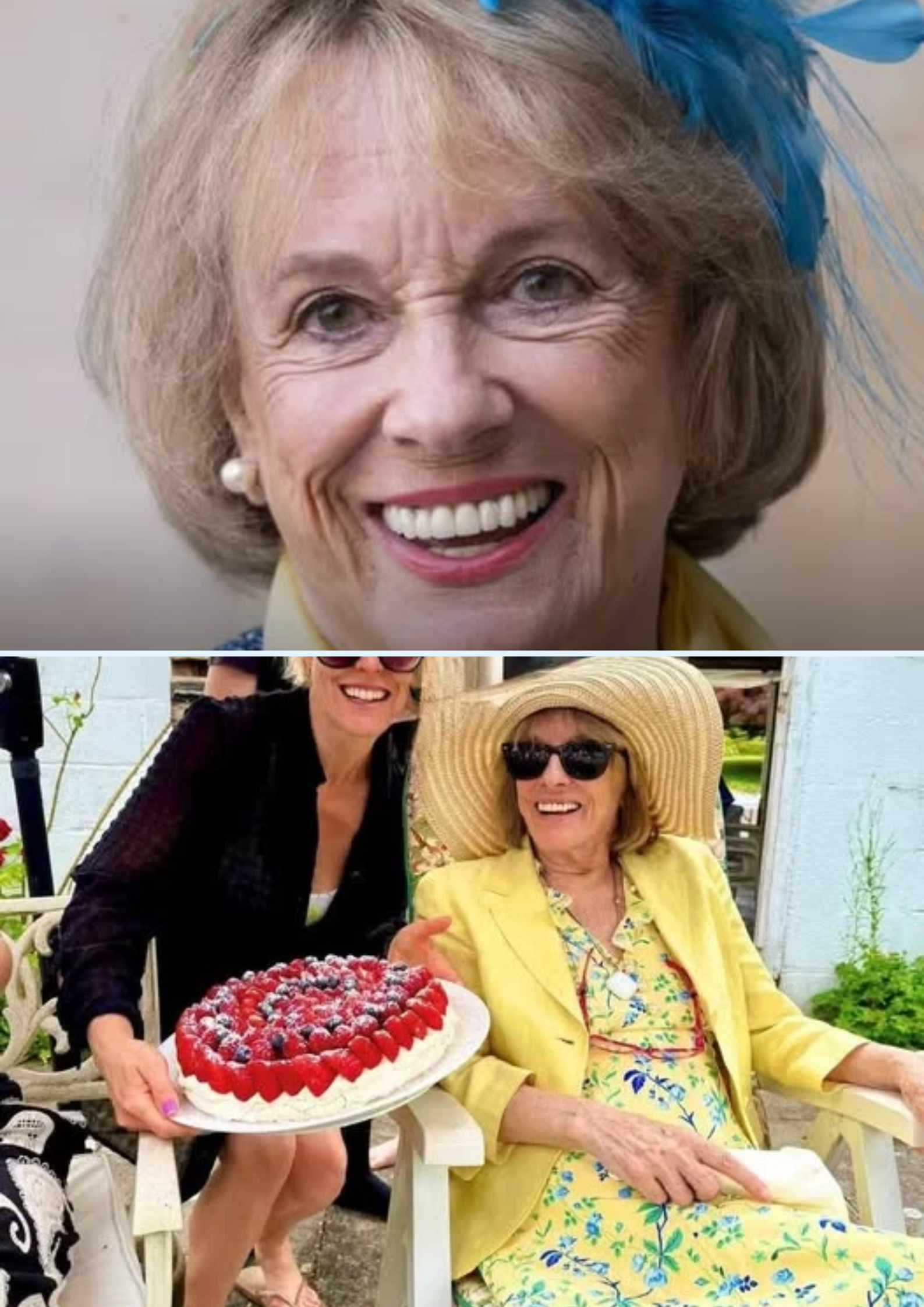
LONDON — Dame Esther Rantzen, the beloved British broadcaster, campaigner and founder of Childline, has died at the age of 86, her family announced Wednesday.
Her three children released an emotional statement remembering their mother as “the most wonderful mother” and a “cherished grandmother” whose compassion, humour and extraordinary ability to comfort others touched countless lives.
“Our adored mother Dame Esther Rantzen died today,” they said.
“Her legacy of compassion and understanding will live on in her charities Childline and the Silverline, and through those of us who were lucky enough to love and be loved by her.”
The family said they were grateful Esther was now at rest with her beloved husband, television producer Desmond Wilcox, who died in 2000.
“But we will miss her immeasurably. She was our sunshine,” they said.
They remembered her “endless capacity for joy,” her ability to comfort people through heartbreak, her gift with words and the guidance she provided throughout their lives.
Esther was the mother of three children and grandmother to five grandchildren.
Her family said they had been fortunate to have had her for so long, but acknowledged that no amount of time would ever have felt sufficient.
 HER FINAL MESSAGE
After Esther’s death, her children also released a personal message she had prepared before she died.
In the letter, Esther apologised that she could not personally thank everyone who had supported her throughout her life.
She wrote that she had been “immensely lucky” to have experienced friendship and professional advice that allowed her to live such a long and happy life.
She also asked people who wished to honour her memory to consider making charitable donations.
Esther specifically mentioned Dignitas in Switzerland, the organisation associated with assisted dying, saying it was facing serious challenges.
She also thanked Oakhaven Hospice in Lymington, which had been “wonderful” to her, and mentioned Cats Protection.
Her final words were a farewell to the people who had shared her life and career.
“Sadly, all good things come to an end, as they say,” she wrote.
“So I particularly wanted to say goodbye and thank you so very, very much.”
She ended with the words:
“Perhaps I will see you eventually, on the other side. I do hope so.”
“With very good wishes, as ever, Esther.”
The message was released only after her death.
 A THREE-YEAR BATTLE WITH LUNG CANCER
Esther announced in 2023 that she had been diagnosed with stage-four lung cancer.
In the final years of her life, she became one of Britain’s most prominent public voices in the debate over assisted dying.
She had joined the Swiss organisation Dignitas and had hoped that she might eventually travel to Switzerland.
However, in September 2026 she revealed that her health had deteriorated to the point where she was too physically fragile to make the journey.
She explained that when she had first been strong enough to travel, her condition was not yet unbearable. By the time her illness became much more difficult, she was no longer physically capable of completing the journey.
Her campaign became one of the final major causes of her public life.
THE WOMAN BEHIND CHILDLINE
Esther’s influence extended far beyond television.
She became a household name as the presenter of the BBC consumer-affairs programme That’s Life!, which she hosted from 1973 until 1994.
The programme combined humour with investigations into serious social issues and at its height attracted audiences of more than 20 million viewers.
One investigation into child abuse became a turning point.
After the programme received an overwhelming response from children seeking help, Esther helped establish Childline in 1986, creating a confidential service where children and young people could seek support.
The organisation later became part of the NSPCC.
SHE ALSO FOUGHT LONELINESS AMONG OLDER PEOPLE
In 2012, Esther founded The Silver Line, a free telephone service designed to help older people experiencing loneliness and isolation.
The charity became another major part of her legacy.
Her family said her work supporting children, older people and terminally ill people meant everything to her.
They thanked everyone who had written to Esther, shared their experiences with her or worked alongside her over the decades.
“We hope the humour, ingenuity and audacity she brought to her work may continue to inspire you as it will do us,” her children said.
They also asked the public to respect their privacy while they grieve.
A CAREER THAT CHANGED BRITISH TELEVISION
Esther began her BBC career in the 1960s and gradually moved from behind-the-scenes production work into broadcasting.
Her breakthrough came through Braden’s Week, before she became the face of That’s Life!.
The programme was known for mixing comedy with hard-hitting investigations and stories about ordinary people.
It tackled subjects including child safety, addiction, mental health, stillbirth and organ donation.
One of its most memorable moments came when Esther interviewed Nicholas Winton, the British stockbroker who had helped rescue hundreds of predominantly Jewish children from Nazi-occupied Czechoslovakia before the Second World War.
The programme revealed that people Winton had helped save were sitting among the studio audience — a moment Esther later said was one of the few times in her professional career when emotion overwhelmed her.
TRIBUTES POUR IN
Tributes followed the announcement of Esther’s death.
Her decades of broadcasting and charitable work were praised by political leaders, broadcasters and organisations across Britain.
Prime Minister Andy Burnham said she had changed countless lives through her campaigning and through founding Childline and The Silver Line.
BBC Director-General Matt Brittin said her contribution to the BBC and public life was “immeasurable.”
But for Esther’s family, her most important legacy was not her awards, television career or public campaigns.
It was the woman they knew at home.
Their mother.
Their grandmother.
Their “sunshine.”
Dame Esther Rantzen died aged 86, leaving behind three children, five grandchildren and two charities that continue the work she devoted much of her life to.
Her final message was simple: goodbye, thank you — and perhaps, “see you on the other side.”