LUCY LETBY CASE ERUPTS INTO FRESH LEGAL BATTLE AS TWO EXPERTS QUIT DEFENCE TEAM
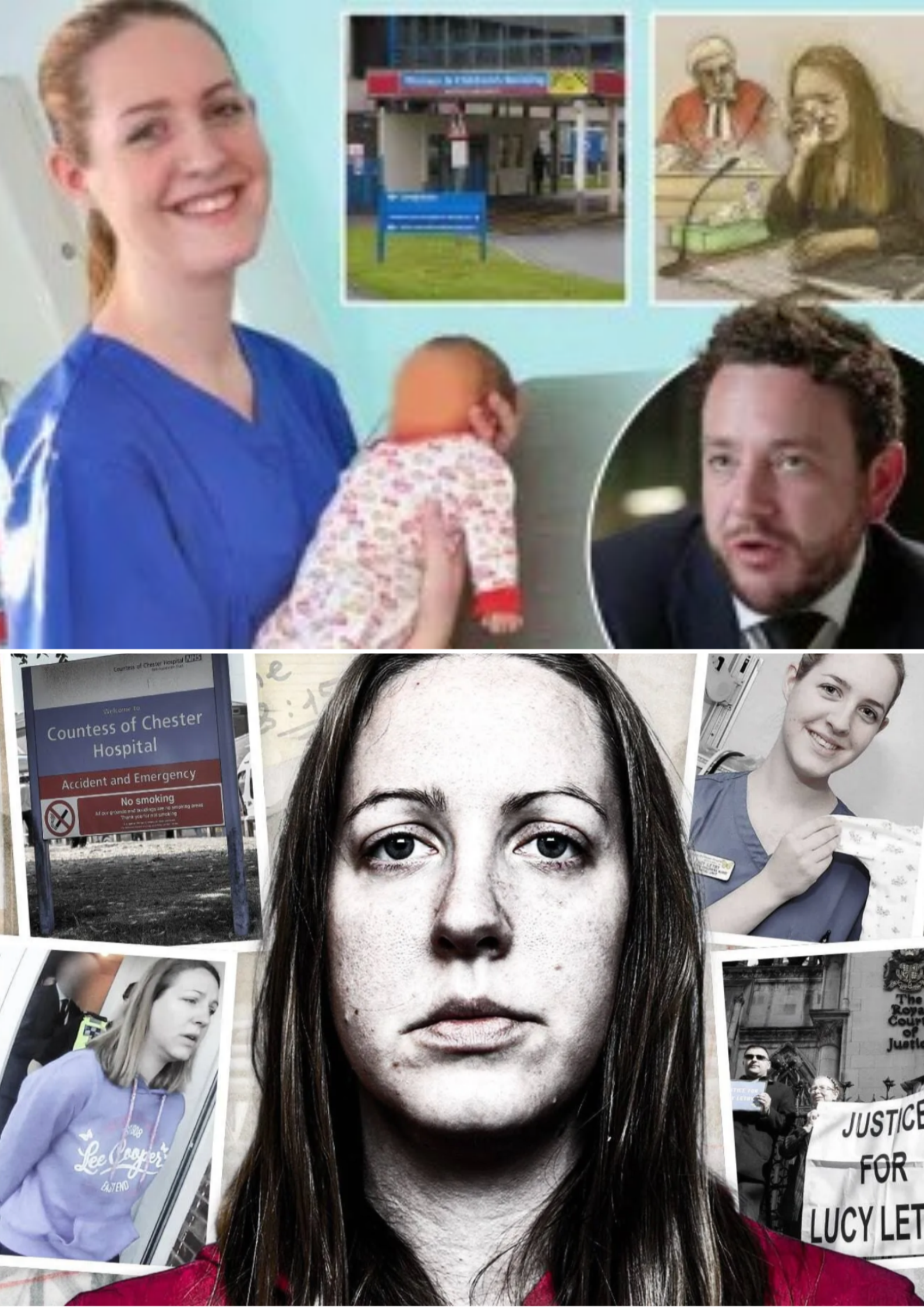
LUCY LETBY CASE ERUPTS INTO FRESH LEGAL BATTLE AS TWO EXPERTS QUIT DEFENCE TEAM
New medical arguments are being examined by the UK’s miscarriage-of-justice watchdog — but Letby’s convictions remain in place
The case of former neonatal nurse Lucy Letby has entered another extraordinary chapter after two experts withdrew from her defence team, raising concerns about the scientific credibility of some arguments being advanced in her ongoing legal challenge.
At the same time, new medical evidence submitted on Letby’s behalf is being examined by the Criminal Cases Review Commission (CCRC), the body responsible for investigating potential miscarriages of justice in England and Wales.
The developments have reignited debate over the medical evidence presented at Letby’s trials.
But there is an important distinction: the CCRC has not found that Letby is innocent, and her convictions have not been overturned.
Letby remains in prison serving 15 whole-life terms after being convicted of murdering seven babies and attempting to murder seven others at the Countess of Chester Hospital between 2015 and 2016.
 TWO EXPERTS WALK AWAY FROM THE DEFENCE TEAM
Engineering expert Helen Shannon and bioengineering professor Geoff Chase withdrew from Letby’s defence team in September 2026.
The pair had previously produced a substantial report challenging aspects of the prosecution’s evidence surrounding two babies whom Letby was convicted of attempting to murder with insulin.
Shannon and Chase have maintained their view that it was very unlikely those two babies were deliberately poisoned with insulin.
However, they said they could no longer support some of the other arguments being advanced by Letby’s legal team.
In correspondence with the CCRC, they expressed concerns about arguments they considered inconsistent with available evidence, science and established physiology.
Their withdrawal immediately attracted attention because the two scientists had previously been among the experts whose work was being used to challenge aspects of the original prosecution case.
 LETBY’S LAWYER REJECTS THE IDEA THAT THE CASE HAS COLLAPSED
Letby’s barrister Mark McDonald has strongly rejected suggestions that the departure of the two experts has undermined the broader appeal effort.
He said the experts did not know the full contents of the material submitted to the CCRC and argued that the defence case does not depend on the work of any single expert.
McDonald said other international specialists continue to support arguments challenging the scientific basis of some of the convictions.
According to the defence, the new evidence is significant because experts from several different medical and scientific disciplines have raised questions about conclusions reached at trial.
That disagreement now sits at the centre of the latest legal battle.
THE CCRC IS STILL REVIEWING THE CASE
The Criminal Cases Review Commission began receiving material relating to Letby’s case in early 2025.
The commission has since received multiple expert reports, legal submissions and defence material.
In February 2026, the CCRC confirmed that its review was underway and stressed that its role is not to decide whether Letby is guilty or innocent.
Instead, it must determine whether new evidence or new arguments create a real possibility that a conviction would not be upheld by an appeal court.
The CCRC also emphasized that it makes decisions independently and based on evidence.
QUESTIONS ABOUT MEDICAL RECORDS
One of the most significant developments came earlier in 2026, when a BBC investigation reported that maternity records relating to babies involved in the case had been seized by police but were not provided to Letby’s defence before her trials.
The records contained information about pregnancy, labour and birth.
Some medical experts told the BBC that understanding a baby’s condition before and during birth can be important when determining why a newborn later deteriorated.
One expert, Professor Phil Bennett, argued that maternity and neonatal records should be considered together when investigating unexplained collapses.
However, prosecution medical expert Dr Dewi Evans maintained that the maternity information did not alter his conclusions about the babies involved.
The dispute does not itself establish that the convictions were unsafe.
But it is among the issues now being examined as Letby’s defence challenges aspects of the original medical evidence.
ONE BABY’S CASE HAS BECOME PARTICULARLY CONTESTED
The BBC investigation also highlighted the case of a baby identified in court as Baby O.
The prosecution argued that the baby had been born in good condition and later suffered a sudden collapse consistent with deliberate harm.
However, Professor Bennett offered a different medical explanation, arguing that the baby may have suffered a liver injury connected to a difficult Caesarean delivery.
He said such an injury can sometimes result in a baby appearing well initially before deteriorating later.
Dr Evans disagreed with that interpretation and maintained that the baby had been born in good condition.
The competing medical explanations illustrate why the scientific evidence remains such an important part of Letby’s ongoing legal challenge.
THE “NATURAL CAUSES” ARGUMENT
Some of the experts supporting Letby’s legal challenge have argued that certain collapses or deaths may have resulted from medical complications, natural causes or failures in care rather than deliberate actions.
But those claims remain disputed medical interpretations, not established findings.
The prosecution case has already been tested through two jury trials, and Letby’s attempts to appeal were rejected by the Court of Appeal in 2024.
The CCRC is now considering whether the newer material changes that position sufficiently to justify referring the case back to the courts.
THE THIRLWALL INQUIRY DID NOT OVERTURN THE CONVICTIONS
Another major development has been the publication of the Thirlwall Inquiry report into what happened at the Countess of Chester Hospital.
The inquiry found serious failures in hospital leadership, governance and safeguarding.
It concluded that concerns raised by doctors about the unusual number of deaths and incidents on the neonatal unit were not acted upon quickly enough.
Lady Justice Kathryn Thirlwall said some babies might have survived or avoided harm if hospital leaders had acted sooner.
However, the inquiry was conducted on the basis that Letby had been convicted.
It was not an appeal hearing and did not determine whether her convictions were safe.
The CCRC has nevertheless indicated that it will consider the inquiry’s findings as part of its ongoing review.
ANOTHER DEVELOPMENT: NO FURTHER CHARGES
There has also been confusion surrounding other babies connected to the wider investigation.
In January 2026, the Crown Prosecution Service announced that it would bring no further criminal charges against Letby concerning allegations involving nine babies at the Countess of Chester Hospital and Liverpool Women’s Hospital.
The CPS said the evidential test for prosecution had not been met.
That decision did not mean the CPS had declared that the babies’ deaths or collapses had been caused by natural circumstances. It meant prosecutors concluded there was insufficient evidence to bring those additional cases before a criminal court.
LETBY’S CONVICTIONS STILL STAND
Despite the growing scientific debate, Letby’s legal position remains unchanged.
She was convicted across two trials of murdering seven babies and attempting to murder seven others.
She continues to serve 15 whole-life sentences.
Her convictions remain legally valid unless an appeal court overturns them.
The CCRC has not yet announced whether it will refer any of the convictions back to the Court of Appeal.
A CASE NOW CAUGHT BETWEEN SCIENCE AND THE LAW
The latest developments have created an unusual situation.
On one side are experts who believe important aspects of the medical evidence used against Letby deserve another examination.
On the other are experts and prosecutors who continue to stand by key conclusions from the original case.
And in the middle is the CCRC, which must assess a huge volume of medical, scientific and legal material before deciding whether there is a sufficient basis for further court action.
For the families of the babies involved, the continuing debate represents another difficult chapter in a case that has already lasted years.
For Letby, it represents another opportunity to challenge convictions she has consistently denied.
And for the British justice system, the case raises an important question:
When new scientific evidence challenges conclusions reached at trial, how should the courts determine whether those convictions remain safe?
For now, there is no final answer.
The CCRC review continues.
Letby’s convictions remain in place.
And the scientific dispute surrounding parts of the case is far from over.