“I NEVER THOUGHT FARMING WOULD BE MY FUTURE…” — BBC COUNTRYFILE STAR FRANK CARR’S FINAL WORDS REVEAL THE PRESSURES BEHIND HIS FAMILY’S FARM
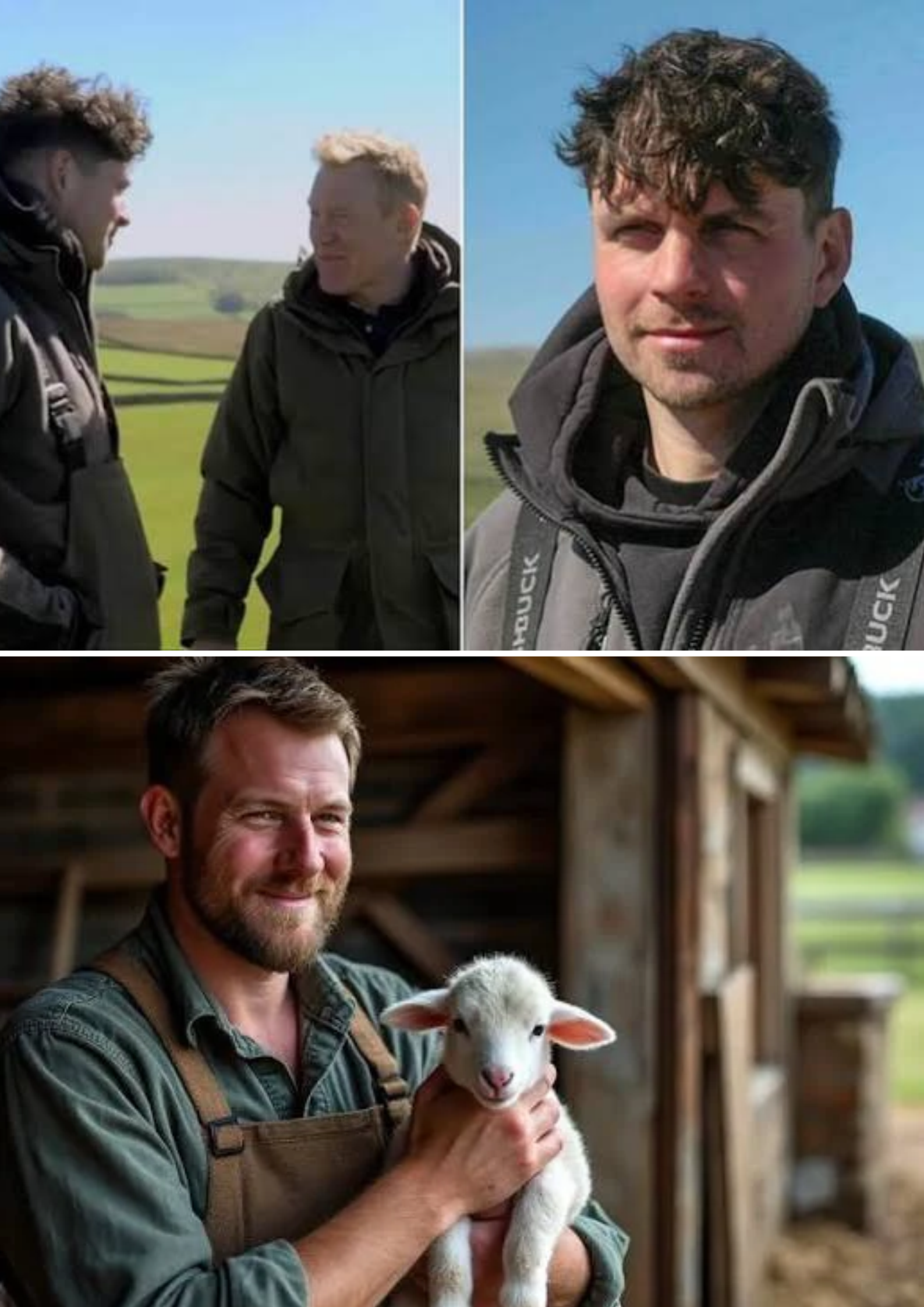
“I NEVER THOUGHT FARMING WOULD BE MY FUTURE…” — BBC COUNTRYFILE STAR FRANK CARR’S FINAL WORDS REVEAL THE PRESSURES BEHIND HIS FAMILY’S FARM
The fourth-generation farmer spoke candidly about family changes, mounting financial pressure and the uncertain future of British hill farming months before his death at just 35. His story has now prompted an outpouring of tributes from across the agricultural community.
NORTH YORKSHIRE, ENGLAND — Frank Carr was more than a familiar face on BBC’s Countryfile. He was a young farmer determined to preserve his family’s legacy, care for his livestock and keep a generations-old business moving forward in an increasingly challenging industry.
But in his final television appearance, Carr offered a revealing glimpse into the realities behind that determination. He spoke about how his parents’ divorce changed the future of the family farm, the decision that brought him back to farming after years of travelling, and the financial uncertainty facing agricultural businesses.
Carr died on September 25, 2026, at the age of 35. His death was confirmed by Farmers Guardian, prompting heartfelt tributes from colleagues, viewers and members of the farming community.
His passing has brought renewed attention to the challenges he discussed publicly — pressures that many farmers across Britain will recognize.
 A FAMILY CHANGE THAT ALTERED HIS FUTURE
Carr was the fourth generation of his family to farm at Lee Gate Farm in Malhamdale, North Yorkshire, in the Yorkshire Dales National Park.
Yet farming had not always been the future he imagined for himself.
During his appearance on Countryfile, Carr explained that when he was younger, he had viewed farming as a restrictive way of life. Determined to explore the world beyond the family business, he spent approximately two and a half years travelling through places including Asia, South America and Europe.
Then his family circumstances changed.
When his parents divorced, his father and uncle began considering what would happen to the farm. Carr explained that he was the only family member interested in continuing the business, leaving him with a difficult decision about whether to return and help preserve its future.
He ultimately chose to come back.
It was a decision that placed him at the heart of a demanding family enterprise — one that connected him to the work of previous generations while requiring him to navigate the realities of modern agriculture.
His story reflected a familiar dilemma for family farms: how to protect a long-established legacy while allowing the next generation to build a sustainable future.
 THE FINANCIAL PRESSURE BEHIND THE PICTURESQUE LANDSCAPE
From the outside, Lee Gate Farm looked like a traditional image of British country life, surrounded by the dramatic landscape of the Yorkshire Dales.
Behind that scenery, however, was a substantial agricultural business with considerable responsibilities.
Carr worked alongside his family managing more than 2,000 acres of owned and rented land. The farm operated a beef and sheep enterprise that included approximately 250 breeding cows and 1,300 breeding ewes, as well as cattle raised for finishing and sale.
Maintaining such an operation required constant work, investment and careful financial management.
In his final Countryfile appearance, Carr spoke openly about the challenges facing hill farmers, including changing regulations, government policy, weather conditions and uncertainty surrounding future agricultural payments.
Reports following his death also highlighted the significant debt carried by the family business.
For farmers working in exposed upland areas, unpredictable weather can affect livestock, grazing conditions and the cost of maintaining the land. Changes in markets and support schemes can add another layer of uncertainty to an already demanding profession.
Carr understood that passion alone could not guarantee a farm’s survival. The business also had to remain financially viable.
His willingness to discuss these realities helped viewers understand that farming is not simply a picturesque rural lifestyle. It is a business that depends on hard physical work, long-term planning and the ability to withstand factors beyond a farmer’s control.
A YOUNG FARMER DETERMINED TO CARRY ON HIS FAMILY’S LEGACY
Despite the difficulties, Carr remained deeply committed to the land and livestock entrusted to his care.
He had become a respected voice within the farming industry, contributing to Farmers Guardian and serving as an ambassador for its #Farm24 campaign, which highlights the people and work behind British food production.
His appearance on Countryfile, alongside presenter Adam Henson, brought his story to a wider audience.
Viewers saw him checking newborn lambs, working across the fields and explaining the particular demands of farming in the Yorkshire Dales.
He also spoke about the rewards of the profession, describing farming as an opportunity to keep learning even when the work became mentally challenging.
For Carr, returning to the family business was not simply about preserving an inheritance. It was about building on what previous generations had created and finding a way to pass that legacy forward.
His commitment made him an example of the determination required from younger farmers attempting to sustain traditional agricultural businesses in a rapidly changing economic environment.
HIS FINAL WEEKS ON THE FARM
In the weeks before his death, Carr continued sharing glimpses of life at Lee Gate Farm.
A post published by the farm on September 18 described a demanding day after an open gate allowed more than 1,000 ewes to mix together. The animals had to be gathered and separated into their appropriate groups.
It was a practical reminder of the unpredictable problems that can interrupt farm work, even when everything else is running to plan.
Just one week later, Carr died.
North Yorkshire Police confirmed that officers had received a report of a sudden death at a remote farm near Malham on September 25. Carr was formally identified, and police said the death was not being treated as suspicious. A file was prepared for the coroner.
Authorities have not publicly established a connection between the pressures Carr discussed in his television appearance and the circumstances of his death. It would therefore be wrong to suggest that his financial difficulties or family experiences caused his passing.
What is clear is that his death has left his family, friends and the wider farming community grieving the loss of a man who had devoted much of his life to the land.
“THE VERY BEST OF THE NEXT GENERATION”
Tributes from the agricultural community have described Carr as a talented farmer, a committed advocate for British agriculture and someone who was passionate about his family, livestock and the future of hill farming.
Katie Jones, editor of Farmers Guardian, remembered him as a representative of the very best of the next generation of farmers.
His willingness to speak honestly about the realities of the industry had helped bring attention to the pressures facing farming families — from financial uncertainty to the challenges of keeping businesses viable for the next generation.
For those who knew him through his work, his contribution extended beyond the farm itself. Through agricultural journalism and television, he helped audiences understand the people behind the food they buy and the difficult decisions involved in maintaining rural livelihoods.
His loss at 35 has been described as immeasurably sad.
At Lee Gate Farm, the work of caring for livestock and maintaining the land continues, but the loss of a family member and farming partner leaves a space that cannot easily be filled.
A STORY THAT GOES BEYOND ONE FARM
Frank Carr’s story highlights a difficult reality for family-run farms throughout Britain: preserving a legacy can demand enormous personal commitment, while financial pressures and uncertainty make the future increasingly difficult to predict.
His final television appearance gave viewers a glimpse of those challenges while also showing the pride he took in his work.
It would be unfair to reduce his life to the struggles he discussed. Carr was also a farmer who loved his land, cared for his animals and worked to continue what earlier generations had built.
His death has left his family and community mourning a life cut short, while his public advocacy has ensured that the realities of modern hill farming remain part of the conversation.
Frank Carr was just 35. He leaves behind a legacy of dedication to his family farm and a powerful reminder of the people working behind the scenes to keep British agriculture alive.