‘It’s a piranha!’: Boy’s unexpected catch sparks reminder about exotic pet releases
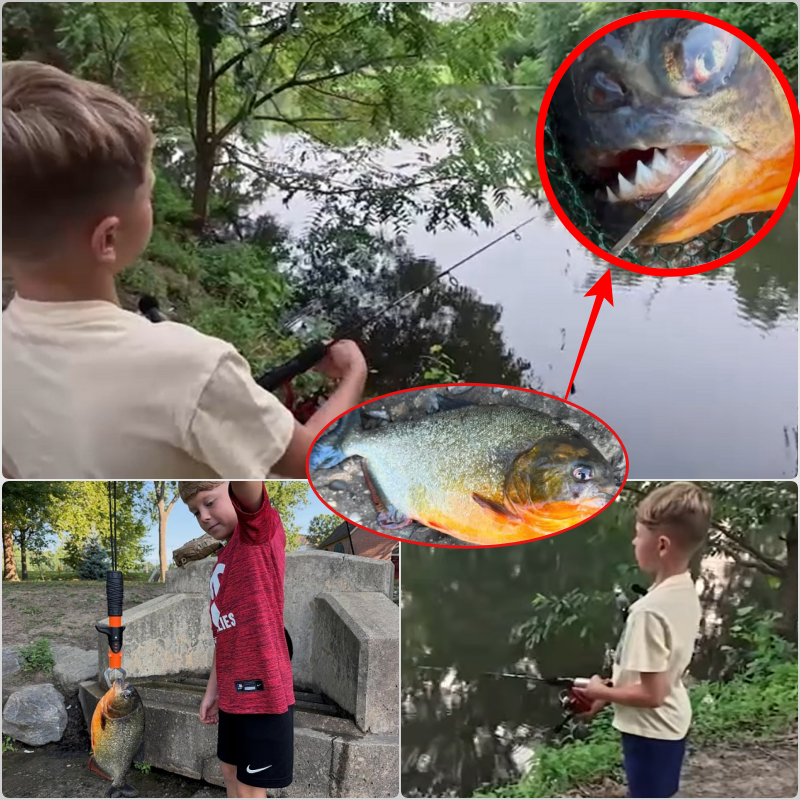
What started as a routine fishing trip quickly turned into a surprising discovery when a young boy reeled in a fish unlike anything he had expected to find. As onlookers gathered around to take a closer look, the reaction was immediate: “It’s a piranha!”
The unusual catch drew attention not only because of the fish’s sharp teeth and distinctive appearance, but also because piranhas are not commonly found in local waterways. The incident has since reignited concerns among wildlife officials and environmental experts about the growing problem of exotic pets being released into the wild.
Piranhas are native to South America and are sometimes kept as exotic pets by aquarium enthusiasts. However, when owners can no longer care for them, some choose to release the fish into rivers, lakes, or ponds rather than finding a responsible alternative. While such releases may seem harmless, experts warn that introducing non-native species into local ecosystems can have serious consequences.
Exotic animals released into the wild can compete with native species for food and habitat, spread diseases, and disrupt the natural balance of ecosystems. In some cases, invasive species become established and cause long-term environmental damage that is difficult and costly to reverse.
The boy’s unexpected catch serves as a reminder that even a single released pet can raise concerns about the health of local waterways and wildlife populations. Authorities often encourage pet owners to seek help from animal shelters, rescue organizations, aquarium clubs, or wildlife agencies if they can no longer care for their animals.
Fortunately, the discovery also highlights the importance of public awareness. By reporting unusual wildlife sightings and avoiding the release of exotic pets, communities can help protect native ecosystems and prevent non-native species from becoming a larger problem.
What began as an exciting day of fishing ended with an important lesson: responsible pet ownership doesn’t end when an owner can no longer keep an animal. Making the right choice can help protect wildlife, local habitats, and the environment for years to come.