MISSING BACKPACKER CELINE CREMER’S DE@TH FINALLY EXPLAINED AFTER MORE THAN 3 YEARS — CORONER REVEALS WHAT HAPPENED
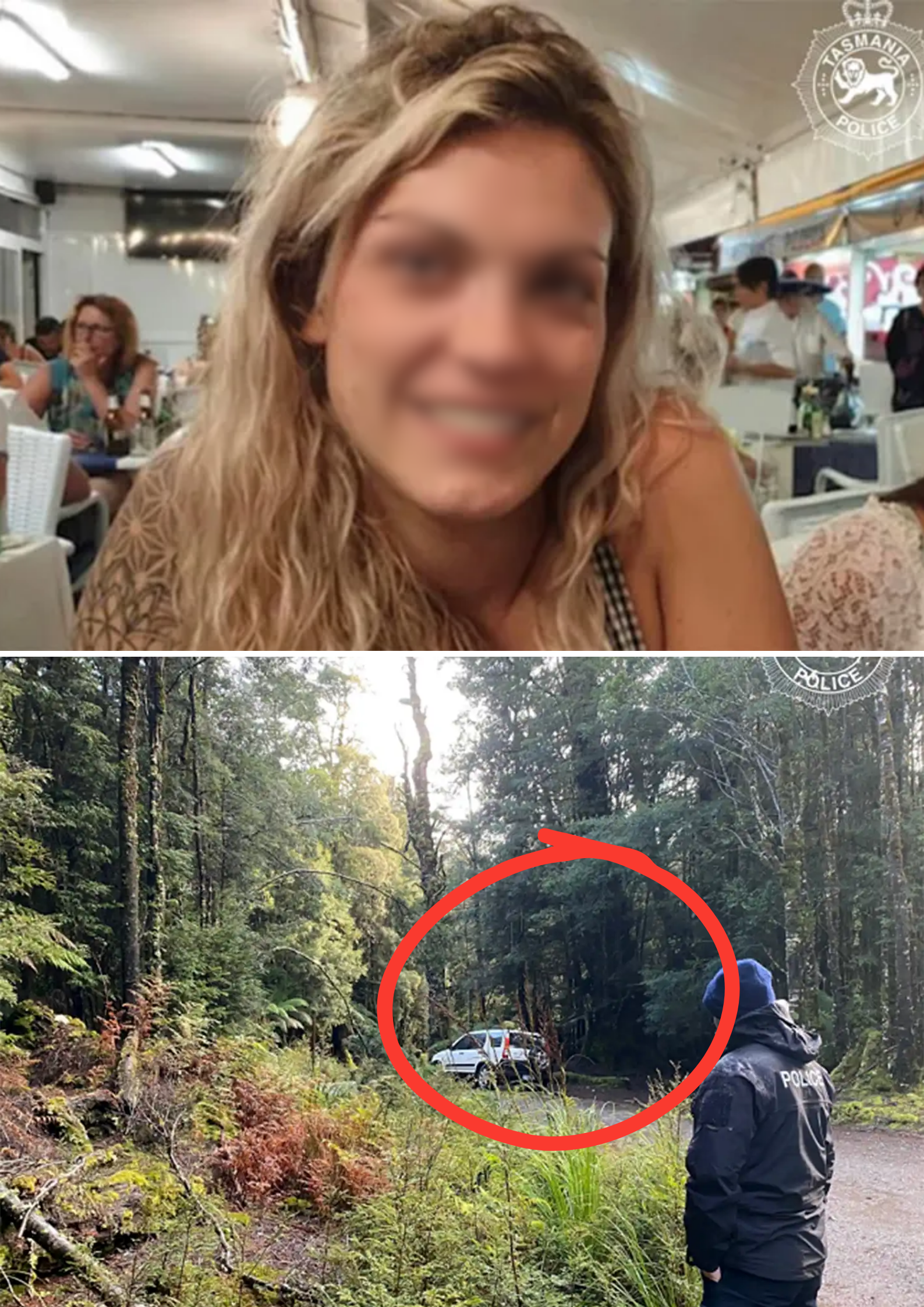
MISSING BACKPACKER CELINE CREMER’S DEATH FINALLY EXPLAINED AFTER MORE THAN 3 YEARS — CORONER REVEALS WHAT HAPPENED
More than three years after Belgian backpacker Celine Cremer vanished during a solo walk through the remote Tasmanian wilderness, a coroner has finally delivered a conclusion about what happened to her.
Cremer, 31, disappeared in June 2023 after setting out for a walk near Philosopher Falls in northwest Tasmania.
Her remains were not discovered until January 2026, ending one of Australia’s most haunting missing-person searches.
Now, Coroner Madeleine Wilson has ruled that Cremer’s death was accidental, saying it resulted from a “confluence of errors” rather than the involvement of another person.
But one critical mystery remains.
Because of the condition of her remains, the exact medical cause of death could not be determined.
:max_bytes(150000):strip_icc():focal(749x0:751x2):format(webp)/celine-cremer-search-121525-4-b8e0c2b30da34a88a7be2ff698bae1f2.jpg) A THREE-YEAR SEARCH FINALLY ENDS
A THREE-YEAR SEARCH FINALLY ENDS
Cremer had been traveling and working in Australia when she visited the Philosopher Falls area near Waratah in June 2023.
She was last seen on June 17.
Her vehicle was later found at the Philosopher Falls car park, where it appeared to have been left for several days.
Police launched an extensive search, but the difficult terrain and harsh winter conditions made the operation extremely challenging.
Despite searches involving police, rescue teams, helicopters, drones and specialist personnel, Cremer could not be located.
The official search was eventually suspended.
But her family refused to give up.
HER PHONE BECAME THE BREAKTHROUGH
Years after Cremer vanished, private investigators and volunteers continued trying to reconstruct her final movements.
In December 2025, searchers discovered her mobile phone in the wilderness.
The phone provided investigators with an important clue about where Cremer may have traveled after leaving the maintained walking track.
The discovery helped redirect the search toward areas that had previously received less attention.
Then came the breakthrough investigators had been waiting for.
In January 2026, volunteer searcher Jarrod Boys discovered human remains near the Arthur River.
Additional searches later located more remains and Cremer’s car keys.
The remains were subsequently provisionally identified as belonging to Cremer.
:max_bytes(150000):strip_icc():focal(740x426:742x428):format(webp)/celine-cremer-search-121525-1-ab23f512429c4f75b9dfa51b541303b5.jpg) THE CORONER’S THEORY OF HER FINAL HOURS
THE CORONER’S THEORY OF HER FINAL HOURS
According to the coroner’s findings, Cremer appears to have made a wrong turn after visiting the Philosopher Falls lookout.
Instead of returning directly to the car park, she continued onto a degraded and unmaintained track toward Magnet Dam.
That decision proved critical.
It was late afternoon.
Daylight was fading.
Temperatures were approaching freezing overnight.
And Cremer was not adequately dressed for the conditions.
At some point, she also became separated from her cellphone — her only apparent navigation and communication tool.
Without the phone, she was left in dense wilderness with limited daylight and poor cellular reception.
SHE MAY HAVE ENDED UP IN THE RIVER
The exact route Cremer took after losing her phone remains unknown.
The coroner said it was also impossible to establish exactly how she entered the Arthur River.
One possibility is that she slipped from the steep, slippery riverbank.
Another is that she fell while attempting to cross the river.
Hypothermia, physical trauma and drowning were all considered possible contributing causes.
But because of the condition of her remains, investigators could not determine precisely which mechanism caused her death.
NO FOUL PLAY
One of the biggest questions surrounding Cremer’s disappearance was whether another person could have been involved.
After reviewing the evidence, however, the coroner concluded there was no evidence of foul play.
The criminal investigation also failed to identify evidence that an unknown person was involved.
The coroner said the involvement of another person could be definitively ruled out.
Her death was therefore formally classified as an accident.
A SERIES OF SMALL MISTAKES
The coroner described Cremer’s death as the result of a “confluence of errors.”
It was not one single decision that led to the tragedy.
Instead, investigators believe several circumstances came together:
She left the maintained trail.
She continued walking as daylight faded.
She was inadequately prepared for freezing and wet winter conditions.
She became separated from her phone.
And she eventually found herself in extremely difficult terrain near the river.
Each decision may have seemed insignificant at the time.
Together, they became catastrophic.
HER FAMILY NEVER STOPPED SEARCHING
After the official search ended, Cremer’s family continued looking for answers.
Private investigators, experienced bushwalkers, former military personnel, mapping specialists and volunteers became involved.
Their efforts eventually produced the discoveries that authorities had been unable to make during the original search.
Her phone was found more than two years after she vanished.
Then her remains were located.
For her mother, Ariane Mathieu, the discoveries finally provided some answers — but also reinforced a warning she hopes other travelers will remember.
Do not rely entirely on your phone when entering remote wilderness.
Cremer had used her phone as her primary navigation tool.
When she lost it, she was effectively cut off from her route and from help.
A WARNING FOR OTHER HIKERS
The tragedy has also prompted concerns about signage and trail conditions.
The coroner recommended that clearer warnings be installed to tell visitors where council-maintained trails end and that the route toward Magnet Dam is unmaintained and hazardous.
The recommendation is intended to prevent future hikers from unknowingly entering dangerous terrain.
THREE YEARS OF QUESTIONS — FINALLY ANSWERED
Celine Cremer left for what should have been a short solo walk.
She never returned to her car.
For more than three years, her family lived without knowing where she was or what had happened.
Now they finally have a clearer picture.
She appears to have become lost after leaving the maintained trail.
She became separated from her phone.
She faced freezing temperatures and difficult terrain.
And investigators believe she ultimately reached the Arthur River, where she likely suffered a fatal accident.
There is no evidence that another person was responsible.
But the exact medical cause of her death may never be known.
HER STORY ENDS WITH A WARNING
Celine Cremer’s disappearance began with a simple decision to explore the Tasmanian wilderness.
It ended thousands of miles from her home in Belgium, after years of searching.
Her family now has confirmation of what happened — but also a painful reminder of how quickly conditions can turn dangerous in remote wilderness.
The coroner’s conclusion is clear:
Celine Cremer’s death was an accident.
But her story may continue to serve another purpose — warning travelers that a familiar-looking trail, a smartphone and a short hike can become dangerously unpredictable when daylight disappears and help is far away.