LINDSAY CLANCY JURY SPLITS 11–1 AS DEFENSE LAWYER DEMANDS HOLDOUT JUROR BE REMOVED — “I KICKED THE S—T OUT OF THE PROSECUTION’S CASE”
LINDSAY CLANCY JURY SPLITS 11–1 AS DEFENSE LAWYER DEMANDS HOLDOUT JUROR BE REMOVED — “I KICKED THE S—T OUT OF THE PROSECUTION’S CASE”
PLYMOUTH, MASSACHUSETTS — The Lindsay Clancy trial has reached a dramatic breaking point.
After more than 36 hours of deliberations, the jury still has not reached a unanimous verdict.
And now, according to Clancy’s defense attorney, the 12-member jury appears to be split 11–1.
One juror is allegedly refusing to follow the judge’s instructions on the legal standard of reasonable doubt, defense attorney Kevin Reddington told the court.
Reddington asked Judge William Sullivan to remove the juror.
The judge refused.
And the courtroom was left facing the possibility that one holdout could push the entire case toward a mistrial.
:max_bytes(150000):strip_icc():focal(886x640:888x642):format(webp)/lindsay-clancy-trial3-9326-b486bdcc6dcf409990e5bd6aaab24ded.jpg) THE JURY HAS BEEN DELIBERATING FOR SIX DAYS
THE JURY HAS BEEN DELIBERATING FOR SIX DAYS
Clancy’s jury began deliberating after weeks of emotional testimony in the high-profile Massachusetts trial.
By Thursday, September 3, jurors had spent roughly 36 hours considering the evidence.
They had already told the judge more than once that they were struggling to reach a unanimous decision.
Judge Sullivan previously issued a so-called “dynamite charge,” a strong instruction encouraging jurors to continue discussing the evidence while reminding them not to abandon their honest convictions simply to reach a verdict.
But the disagreement continued.
Then came the latest jury note.
The foreperson reportedly indicated that one juror “refuses to listen to the law” concerning reasonable doubt.
That triggered an extraordinary confrontation inside the courtroom.
 REDDINGTON WANTS THE HOLDOUT JUROR REMOVED
Reddington argued that the juror was preventing the panel from reaching a lawful decision.
He urged the judge to intervene before the case collapsed into a mistrial.
“If we come back in a half hour with a mistrial because of a juror that has just spurned the instructions of this court, it’s a shame,” Reddington said, according to CBS Boston.
He asked for the juror to be removed and argued that further questioning was necessary.
But prosecutors pushed back.
Assistant District Attorney Jennifer Sprague argued that the court could not know which juror was correct about what was happening inside the deliberation room.
The judge ultimately agreed.
Sullivan questioned jurors individually about whether they could follow the law, then reminded the entire panel that they were required to follow his instructions.
He declined to remove the juror.
“I don’t feel that it is proper for me to side with one side or the other of the deliberations,” Sullivan said.
“I KICKED THE S—T OUT OF THE PROSECUTION’S CASE”
Outside the courthouse, Reddington made clear that he does not want a mistrial.
Despite the deadlock, he expressed confidence in the defense case.
People reported that the attorney used an emphatic phrase to describe his view of the prosecution’s case, saying he had “kicked the s—t out of” it.
His comments came as the possibility of a mistrial became increasingly serious.
Reddington has repeatedly argued that prosecutors failed to prove Clancy was criminally responsible because she was experiencing severe postpartum psychosis and had been heavily medicated.
He maintains that she was suffering from a profound psychiatric crisis when her three children died in January 2023.
THE PROSECUTION SEES A VERY DIFFERENT STORY
Prosecutors have argued that Clancy understood what she was doing.
Their theory is that she deliberately harmed her children and understood the difference between right and wrong.
The prosecution has challenged the defense’s portrayal of Clancy as a mother completely detached from reality.
Instead, prosecutors have pointed to evidence they say demonstrates planning and awareness before the children were harmed.
That fundamental disagreement — whether Clancy was experiencing a psychotic episode that made her legally not responsible, or whether she understood her actions — has been at the center of the trial.
The jury must now decide which interpretation of the evidence meets the required legal standard.
THREE CHILDREN, ONE DECISION
Clancy is accused of harming her three children at the family’s Duxbury, Massachusetts, home in January 2023.
The children were Cora, 5, Dawson, 3, and Callan, 8 months old.
Clancy does not deny that she caused their deaths.
Instead, her defense is based on not guilty by reason of insanity, arguing that postpartum psychosis and other psychiatric factors left her unable to understand the nature and consequences of her actions.
The prosecution disputes that claim.
That means the jury is not simply deciding what happened.
It is deciding whether Clancy should be held criminally responsible under Massachusetts law.
WHAT HAPPENS IF THEY STILL CAN’T AGREE?
The biggest question now is whether the jury can break the deadlock.
A criminal jury must reach a unanimous verdict.
If the jurors remain permanently divided, Judge Sullivan could eventually declare a mistrial because of a hung jury.
That would not mean Clancy had been found innocent.
It would mean the jury was unable to reach the unanimous decision required for a verdict.
Prosecutors could then face decisions about whether to retry the case, negotiate a resolution or pursue another legal option.
For now, however, the judge is giving the jury more time.
The jurors were sent home Thursday evening and were expected to return Friday for another day of deliberations.
CLANCY WATCHED THE COURTROOM TENSION
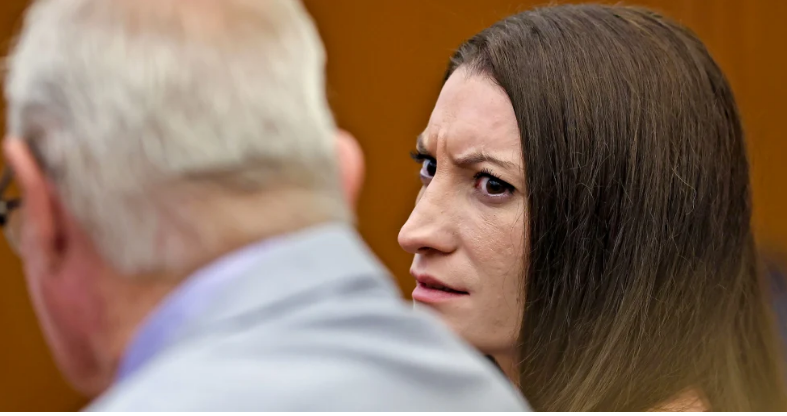
As the dispute over the juror unfolded, Clancy appeared visibly emotional.
She was seen crying and leaning toward Reddington after the judge rejected the request to remove the juror.
The courtroom drama came after weeks of testimony about Clancy’s mental state, her treatment history and the circumstances surrounding the deaths of her children.
Now, after six days of deliberations, the case has reached a point neither side can control.
Twelve jurors must somehow reach one unanimous decision.
And at least according to the defense attorney’s account, 11 appear to be on one side while one remains firmly opposed.
THE NEXT HOURS COULD CHANGE EVERYTHING
There is still no verdict.
There is also no ruling that a mistrial will occur.
The judge has kept the jury together and instructed them to continue deliberating.
But with more than 36 hours already spent behind closed doors, the pressure is mounting.
One juror could potentially stand between Lindsay Clancy and the verdict that prosecutors and the defense have spent years fighting over.
For the families involved, the waiting continues.
For Clancy, the next jury session could determine whether she is found criminally responsible, found not guilty by reason of insanity, or whether the extraordinary trial ends without a verdict at all.
After six days, the Lindsay Clancy jury is still divided — and the case may now be closer to a mistrial than ever before.