A Young Cancer Patient’s Name Is Now on a Bill That Could Change How America Searches for Childhood Cancer Cures
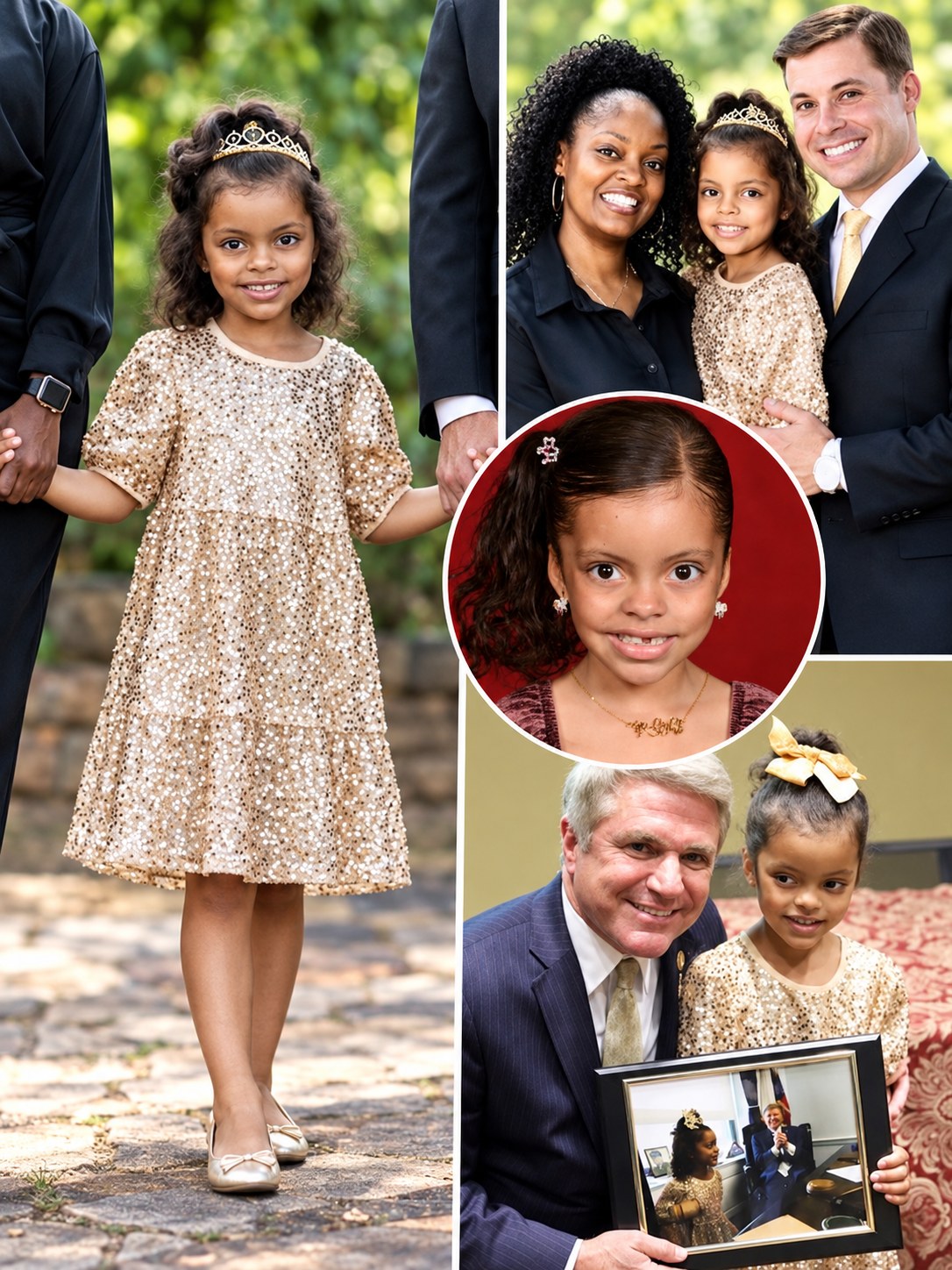
When Ailani Myers was 2 years old, her parents noticed something that did not look particularly frightening at first.
There was a red rash on her stomach and scalp.
She was still eating. Still playing. She did not have a fever.
But blood tests changed everything.
Ailani had leukemia.
What followed was an eight-year journey through hospitals, bone marrow transplants, relapses, experimental therapies and moments when her family feared doctors might run out of options.
Now, at 10 years old, Ailani’s name appears somewhere her parents could hardly have imagined during those first frightening hospital days:
on a bill in the United States Congress.
On September 14, Rep. Michael McCaul of Texas introduced the Ailani Myers Accelerating Innovation in Medicine — or AIM — to Cure Kids with Cancer Act, alongside Reps. Ami Bera of California and Mike Kelly of Pennsylvania.
The bipartisan legislation, formally designated H.R. 10370, proposes expanding the use of artificial intelligence and connected medical data to improve pediatric cancer research, clinical trials and treatment development. It has been referred to the House Energy and Commerce Committee and has not yet become law.
For Ailani, the bill’s name connects two very different versions of her childhood.
There is the little girl who spent countless nights in hospitals searching for a treatment that might work.
And there is the fifth grader who is now back in school, singing, spending time with friends and speaking publicly for children who are still fighting cancer.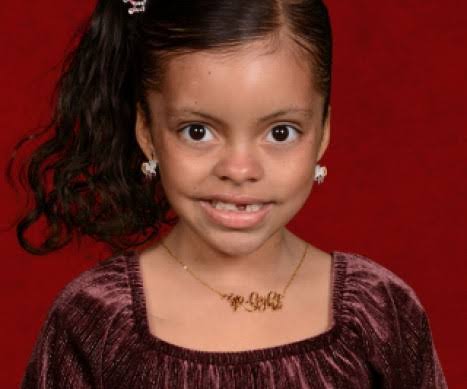
A rash led to a devastating diagnosis
Ailani’s cancer journey began in March 2019.
Her family was visiting relatives in Texas while relocating from California to Florida when her parents, Kurt and Princecine Myers, noticed the unusual red spots.
Doctors eventually determined that Ailani had a rare, very high-risk form of acute lymphoblastic leukemia involving a KMT2A genetic alteration.
Within months, her treatment became far more complicated than her family initially expected.
In July 2019, Ailani received a bone marrow transplant from her father.
Her family spent months living near Johns Hopkins so she could remain close to the hospital.
Then, shortly before the first anniversary of that transplant, the leukemia returned.
Her parents began searching again.
That search would become a defining feature of Ailani’s childhood.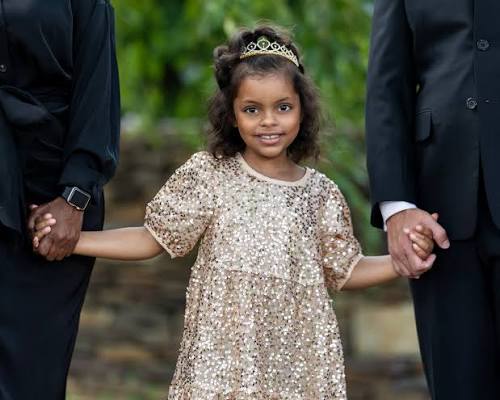
Seven hospitals, two parents as donors — and repeated searches for another option
Ailani eventually received CAR T-cell therapy, a form of immunotherapy in which a patient’s immune cells are modified to recognize and attack cancer.
Her first CAR-T treatment brought nine months of remission.
Then the cancer returned again.
In 2021, Ailani received another transplant — this time using cells from her mother.
Two months later, she relapsed.
There were more clinical trials.
In 2022, she received a bi-specific CAR-T therapy in Seattle and suffered serious neurological side effects that required treatment in a pediatric intensive care unit. The therapy worked temporarily, but the effect did not last.
Another experimental treatment followed.
Then another round of CAR-T therapy in 2023.
Then, in April 2024, a fourth CAR-T treatment targeting CD22.
Ailani later summed up that complicated medical history in much simpler language.
Speaking at the White House in 2025, when she was 9, she explained that she had been treated at seven hospitals around the country and had received bone marrow transplants from both her father and mother.
She remembered “pokies and yucky medicine.”
More importantly, she explained why her family had traveled so far:
they were trying to find the treatment that could make her better.
That experience now sits at the heart of the legislation carrying her name.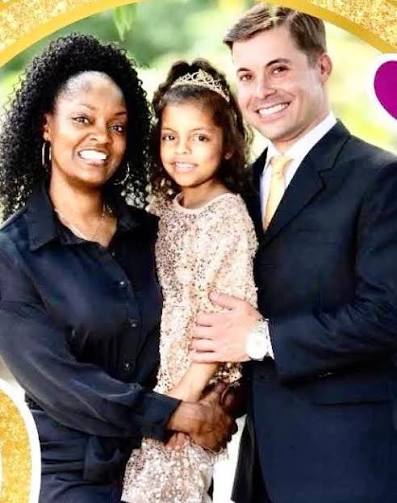
What the AIM Act would actually do
The proposal is not simply about telling computers to “find a cure.”
Its goals are more specific.
According to McCaul’s office, the legislation would formally strengthen the National Cancer Institute’s Childhood Cancer Data Initiative, which works to collect, connect and share pediatric cancer information.
It would also establish an AI coordinator to help align pediatric cancer efforts across federal agencies, the White House and private-sector partners.
And it calls for greater use of AI in areas such as predictive modeling, data sharing and the modernization of clinical trials.
Supporters argue that connecting these systems could help researchers identify patterns across genetic information, biomarkers, treatment responses and other medical data more quickly.
The Rally Foundation for Childhood Cancer Research, which helped work on the proposal, described the goal as bringing together functional precision medicine, molecular information and genetic data so doctors may be able to identify promising treatments for individual children faster.
That idea has an unusually personal connection to Ailani.
Her parents repeatedly had to search across institutions and clinical trials when standard approaches stopped working.
A central premise of the legislation is that future families should have better-connected information available when they face similar decisions.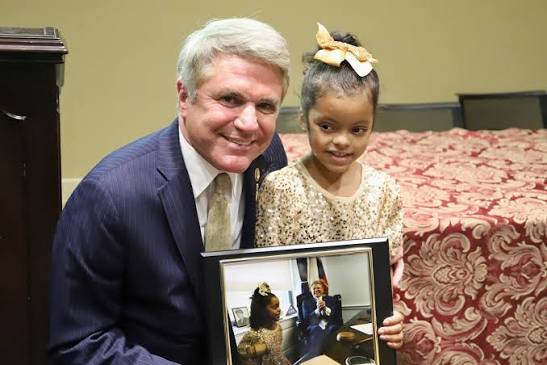
From the hospital to the White House
The new legislation also builds on an executive order signed in September 2025 directing federal agencies to expand the use of artificial intelligence in pediatric cancer research.
Ailani was present for that signing.
The order described pediatric cancer as a major cause of disease-related death among American children and directed the government to explore how AI could improve research and the use of health data.
A year later, lawmakers went a step further by attaching Ailani’s name to proposed legislation designed to put parts of that effort into federal law.
McCaul, who founded the Congressional Childhood Cancer Caucus, said Ailani had become an advocate for other children with cancer and cited her participation in the earlier White House event when announcing the bill.
For the Myers family, however, advocacy has grown out of years when simply getting through another treatment was the priority.
A 10-year-old getting pieces of childhood back
The contrast between Ailani’s early years and her life today is striking.
By May 2026, the Emily Whitehead Foundation reported that she was thriving and preparing to enter fifth grade.
She sings in choir.
She spends time with friends.
She loves baby dolls.
She recently celebrated an ordinary childhood milestone that carried extraordinary meaning after years of treatment: getting her ears pierced.
She also has a puppy named Philadelphia — a reference to the city where she received her most recent CAR-T treatment.
In March, doctors at Children’s Hospital of Philadelphia gave her another encouraging checkup.
And this month, her school in Anne Arundel County, Maryland, turned gold for Childhood Cancer Awareness Month.
Ailani spoke to classmates about what she had endured and about children who remain in treatment.
“I kept trying to be brave,” she said.
She told the school that seeing classmates support her “cancer buddies” still fighting the disease made her happy.
Then came the congressional announcement.
The child who once traveled from hospital to hospital looking for another treatment now has her name attached to an attempt to make those searches faster and better connected for children who come after her.
The bill is only at the beginning
The significance of having Ailani’s name on H.R. 10370 should not be confused with a guarantee that the proposal will become law.
As of September 18, the bill has been introduced and referred to the House Energy and Commerce Committee.
It would still need to move through the legislative process, pass both chambers of Congress and receive presidential approval before becoming law.
Nor can artificial intelligence itself guarantee new cures.
Pediatric cancers are biologically complex, and progress depends on researchers, clinical trials, high-quality medical data and treatments proven to be safe and effective.
But the story behind the bill explains what lawmakers are trying to address.
At 2, Ailani’s family began searching for something that could save her.
They moved between hospitals.
They turned to transplants.
They searched for clinical trials.
They tried CAR-T therapy repeatedly when earlier treatments stopped working.
Today, Ailani is 10.
She is back in school.
She sings in a children’s choir.
She plays with her puppy.
And somewhere inside the U.S. Capitol, lawmakers are considering a bill carrying her name — one built around the hope that someday, when another family hears the words “your child has cancer,” finding the next possible treatment will not require such a long and uncertain search.