SERIAL KI//ER OR POSSIBLE MISCARRIAGE OF JUSTICE? THE LUCY LETBY DEBATE CONTINUES
SERIAL KILLER OR POSSIBLE MISCARRIAGE OF JUSTICE? THE LUCY LETBY DEBATE CONTINUES
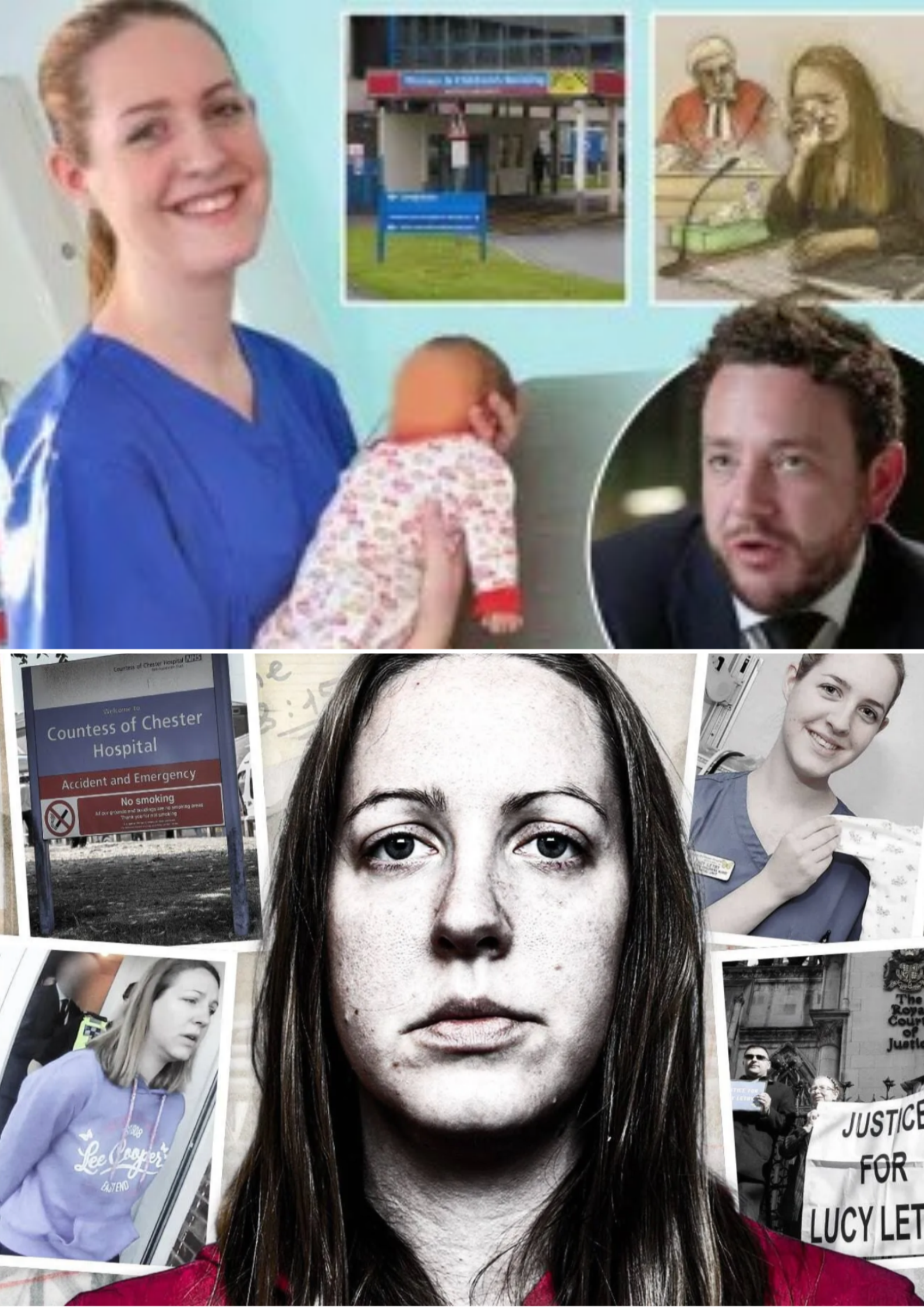
LONDON — Lucy Letby remains one of the most controversial criminal cases in modern British history, years after the former neonatal nurse was convicted of murdering seven babies and attempting to murder seven others at the Countess of Chester Hospital.
Letby, who continues to maintain her innocence, is serving 15 whole-life prison sentences following two trials. Her convictions have already survived an unsuccessful attempt to appeal.
But the case remains under review after her legal team presented new expert evidence to the Criminal Cases Review Commission (CCRC), the independent body responsible for investigating potential miscarriages of justice in England, Wales and Northern Ireland.
The CCRC confirmed in February 2026 that its review of Letby’s convictions is underway. It stressed that it does not decide whether a person is innocent or guilty. Instead, it considers whether new evidence or legal arguments create a real possibility that a conviction would not be upheld if referred back to the courts.
 QUESTIONS OVER THE MEDICAL EVIDENCE
Much of the current controversy centres on the medical and scientific evidence presented during Letby’s trials.
One of the most closely examined issues concerns two babies whom prosecutors said had been deliberately poisoned with insulin.
Engineering expert Helen Shannon and bioengineering professor Geoff Chase previously produced a 100-page report questioning whether the medical evidence supported the conclusion that the two babies had been poisoned.
The pair have maintained their view that it was “very unlikely” that the two infants had been poisoned with insulin.
However, in September 2026, both experts withdrew from Letby’s defence team after raising concerns about other arguments being advanced on her behalf.
They said some of those arguments were, in their view, inconsistent with available evidence, science and established physiology.
Their withdrawal therefore did not amount to a retraction of their doubts about the two insulin cases. Instead, they said they could not support other aspects of the defence’s wider scientific arguments.
Letby’s barrister, Mark McDonald, rejected the suggestion that the withdrawals had undermined the overall case.
He argued that the defence had evidence from experts in several different fields and that its challenge to the convictions did not depend on the conclusions of any single expert.
 ANOTHER EXPERT WITNESS UNDER SCRUTINY
Questions have also emerged over the evidence of Professor Peter Hindmarsh, a key prosecution expert who gave evidence concerning two babies whom prosecutors said had been poisoned with insulin.
In March 2026, The Guardian reported that Hindmarsh had been the subject of a professional investigation before giving evidence at Letby’s trial.
According to the report, Cheshire police and the Crown Prosecution Service said they had not been informed of the investigation before his initial appearance as a prosecution witness.
Hindmarsh’s employment at Great Ormond Street Hospital had been terminated in July 2022, and a General Medical Council investigation began in November that year. He later informed police of the GMC investigation in December 2022.
The jury was not told about the investigations.
The allegations concerning Hindmarsh were never finally adjudicated because he voluntarily removed himself from the medical register in 2024. Letby’s current legal team has said the disclosure issue is being submitted to the CCRC as additional material supporting her case.
These developments do not by themselves establish that the original convictions were unsafe. Their significance, if any, will ultimately have to be assessed through the legal process.
WHAT ABOUT THE HOSPITAL ITSELF?
Another major part of the debate concerns the conditions inside the Countess of Chester Hospital’s neonatal unit.
The Thirlwall Inquiry, established after Letby’s convictions, examined how hospital management and other organisations responded to concerns about the deaths and collapses of babies.
Its final report, published on September 15, 2026, was highly critical of the hospital.
Lady Justice Kathryn Thirlwall described a “complete failure” to protect babies and identified serious problems involving management, governance, safeguarding and communication between senior leaders and clinical staff.
The inquiry concluded that some babies might have survived, or might have been protected from harm, if concerns about Letby had been acted upon earlier.
It also examined how doctors’ concerns about unusual deaths and collapses were handled and why hospital leaders took so long to involve the police.
But there is an important distinction.
The Thirlwall Inquiry was not an appeal hearing.
It accepted Letby’s criminal convictions as the starting point for its work and was tasked with examining what happened at the hospital, how concerns were handled and what lessons should be learned.
It did not decide whether Letby was guilty or innocent, and its findings did not overturn her convictions.
THE NUMBERS THAT HELPED DEFINE THE CASE
The inquiry also examined the pattern of deaths in the neonatal unit.
According to figures discussed in reporting on the inquiry, the number of deaths increased sharply during the period when Letby worked on the unit.
There were:
- 1 death in 2010
- 3 deaths in 2011
- 3 deaths in 2012
- 2 deaths in 2013
- 3 deaths in 2014
- 8 deaths in 2015
- 5 deaths in 2016
The number of admissions remained broadly within a similar range during those years.
Prosecutors used the pattern of collapses and deaths as part of their case against Letby.
Critics of the convictions, however, have argued that the increase in adverse outcomes should not automatically be interpreted as proof of deliberate poisoning or murder and that medical explanations must be carefully considered on an individual case-by-case basis.
The competing interpretations of those medical events are now part of the material being considered by the CCRC.
THE CCRC REVIEW CONTINUES
The CCRC received a preliminary application on behalf of Letby in February 2025.
Additional expert reports and submissions were subsequently provided throughout 2025 and into January 2026.
In February 2026, the commission publicly confirmed that its review was underway.
Importantly, the CCRC said it would make an impartial, evidence-based decision and emphasized that its role was not to determine guilt or innocence.
There is currently no announced CCRC decision referring Letby’s convictions back to the Court of Appeal.
That means her existing convictions remain legally in force.
SIX MORE CASES ALSO REMAINED UNCHARGED
The debate has also extended beyond the 14 convictions.
In January 2026, the Crown Prosecution Service decided that no further criminal charges should be brought against Letby concerning deaths and non-fatal collapses involving babies at the Countess of Chester Hospital and Liverpool Women’s Hospital.
Families connected to six infants subsequently requested reviews of those decisions.
In August 2026, the CPS confirmed that an independent review had reconsidered six attempted-murder allegations and upheld the original decision not to bring additional charges.
Those decisions are separate from Letby’s existing