LORNA MCSORLEY: BRITISH TOURIST VANISHED IN SOUTH AFRICA AS FAMILY DEMANDS MURDER INVESTIGATION
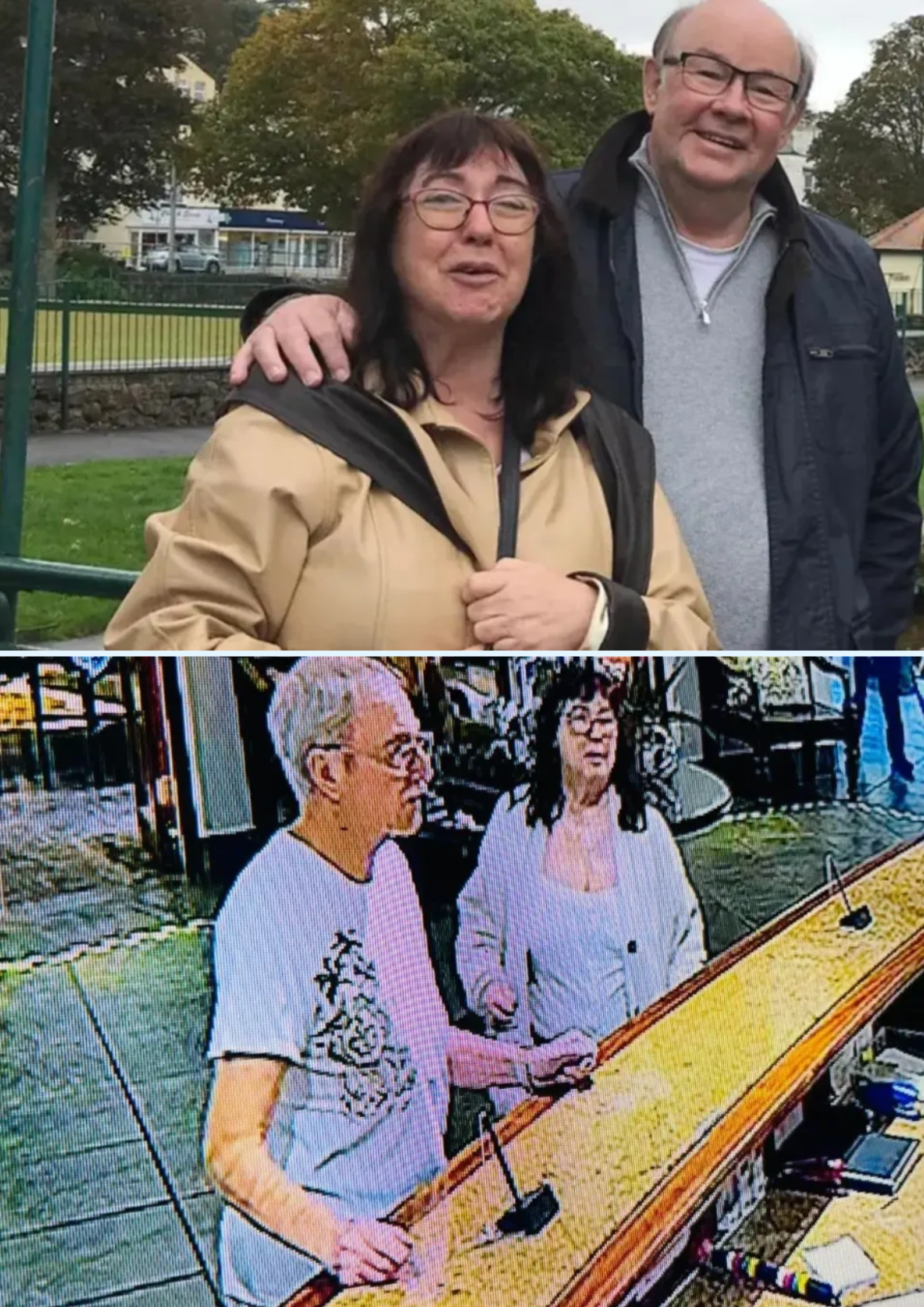
LORNA MCSORLEY: BRITISH TOURIST VANISHED IN SOUTH AFRICA AS FAMILY DEMANDS MURDER INVESTIGATION
A year after British tourist Lorna McSorley disappeared during a walk in South Africa, her family is demanding that her case be investigated as a possible murder.
McSorley, 71, from Devon, vanished on September 27, 2025, after setting out from the Ghost Mountain Inn in Mkuze, KwaZulu-Natal, with her long-term partner, Leon Probert.
Despite a major search operation involving police, rangers, private security teams, dogs, drones, boats and aircraft, no body or personal belongings have been found.
Now her brother says the family is trapped in a painful limbo, unable to properly grieve because they still do not know what happened to her.
 THE WALK THAT ENDED IN MYSTERY
McSorley and Probert had arrived at the Ghost Mountain Inn as part of a holiday in South Africa.
CCTV showed the couple leaving the hotel at around 2:30pm, carrying an A4 map showing a roughly three-mile circular route towards a nearby lake.
The walk was expected to be relatively short.
But the conditions were difficult. Probert, who was 81 at the time, turned back because of the heat while McSorley continued alone.
It was the last time he saw her.
McSorley soon became lost and eventually reached the property of local farmer Koos Prinsloo.
At approximately 3:15pm, Prinsloo encountered her near his fence.
She asked for directions but declined an offer of a lift.
There have been no confirmed sightings of her since.
 THE SEARCH FOUND ALMOST NOTHING
When McSorley failed to return, the alarm was eventually raised.
A huge search operation followed.
Police officers, local farmers, rangers, private security teams and search specialists scoured the surrounding area.
Dogs were deployed alongside drones, boats, helicopters and fixed-wing aircraft.
Yet after six days of searching, investigators found no trace of McSorley.
Her bank card was never used.
No clothing, remains or other belongings were recovered.
A crumpled map connected to her disappearance was found, but it did little to explain what had happened after she left the marked route.
The lack of physical evidence has allowed several competing theories to persist.
One possibility considered early in the investigation was a wildlife attack, including a crocodile.
Authorities also considered the possibility of foul play.
But police stressed that there was no evidence at the time proving either explanation.
FAMILY NOW WANTS A MURDER INVESTIGATION
One year on, McSorley’s family believes the case should no longer simply remain an unresolved missing-person inquiry.
Her brother, Geoff Sheward, 73, told The Times that the uncertainty has become unbearable.
“As bad as it would be to hear any horrible details, knowing nothing is definitely worse,” he said.
He added that the family was “in limbo,” unable to settle McSorley’s affairs or know how to properly grieve.
The family is therefore calling for investigators to consider the possibility that she was abducted and killed.
But police have not publicly reached that conclusion.
A KwaZulu-Natal police spokesperson told The Irish Sun that the matter remains an inquiry and said there was “nothing tangible” currently suggesting it should be changed to a murder investigation.
THE DISTURBING “MUTI” THEORY
One of the most disturbing theories surrounding McSorley’s disappearance involves muti, a term used in South Africa for traditional medicine and practices involving natural substances.
The Times has reported on fears among some people in the area that McSorley could have been abducted and killed for body parts allegedly sought for certain ritual practices.
Those claims remain unproven.
Muti itself is a broad term associated with traditional medicine, and the vast majority of traditional healing practices do not involve human remains.
The allegation concerns a much narrower and criminal form of ritual killing that some sources say occurs in connection with beliefs about the supposed spiritual power of human body parts.
There is currently no public evidence establishing that McSorley was the victim of such a crime.
NEW DISAPPEARANCES FUEL FEARS
The mystery has become even more unsettling because other incidents in the wider region have attracted attention.
The Irish Sun reported that another local woman subsequently disappeared and that a pensioner was found dead with her hands cut off.
Local political and religious figures have responded to fears surrounding so-called “muti murders,” including calls for prayers.
However, the existence of other crimes or disappearances does not establish a connection to McSorley’s case.
South African police have not publicly confirmed that her disappearance is linked to any other incident.
THE PHONE DATA THAT RAISED QUESTIONS
The Times’ investigative podcast Ghost Mountain has also examined McSorley’s disappearance.
According to reporting surrounding the investigation, analysis of device-location data around the area where McSorley’s map was discovered raised questions about possible movements involving several phones.
The Times has reported that investigators considered the pattern potentially consistent with an abduction and ritual killing.
That remains an interpretation of the available data rather than a finding established by police or a court.
The official investigation has not announced a suspect or confirmed that McSorley was abducted.
A PARTNER LEFT WITH QUESTIONS OF HIS OWN
McSorley had been travelling with Probert, her partner of around 30 years.
He turned back during the walk because of the heat, leaving McSorley to continue alone.
Her brother has previously questioned why Probert left her to walk alone in an unfamiliar environment.
But there is no indication from the latest police position that Probert has been accused of causing McSorley’s disappearance.
His decision to return to the hotel remains part of the circumstances surrounding the case, rather than proof of wrongdoing.
A MYSTERY WITHOUT A BODY
One of the most frustrating aspects of the investigation is the complete absence of physical evidence.
McSorley’s bank card has never been used.
No confirmed remains have been discovered.
There has been no ransom demand publicly reported.
And there has been no confirmed sighting since the farmer encountered her shortly after she left the hotel.
For her family, the absence of answers is almost as painful as the possibility of what may have happened.
POLICE SAY THE CASE REMAINS OPEN
Despite the family’s demand for a murder investigation, KwaZulu-Natal police continue to describe the matter as an inquiry.
The police spokesperson said there was currently nothing tangible to justify changing the classification to murder.
That means that, despite the increasingly disturbing theories surrounding McSorley’s disappearance, investigators have not publicly established that she was murdered.
The distinction is crucial.
A theory reported by investigators, journalists or local residents is not the same as evidence proving what happened.
“WE ARE JUST IN LIMBO”
For McSorley’s family, however, the investigation’s official status does little to ease their grief.
A year has passed since the 71-year-old left the Ghost Mountain Inn for what should have been a short afternoon walk.
Her family still does not know where she is.
They do not know whether she became lost, encountered wildlife, was abducted or met some other fate.
And without a body or definitive evidence, they remain unable to answer the most basic question of all:
What happened to Lorna McSorley?
For now, police say the investigation remains ongoing.
Her family is asking for more.
They want the possibility of murder to be formally investigated — and, above all, they want answers about what happened to the woman who disappeared alone in the South African bush and was never seen again.