LUCY LETBY CASE FACES FRESH QUESTIONS AS KEY DOCTOR SAYS HE IS NO LONGER CERTAIN
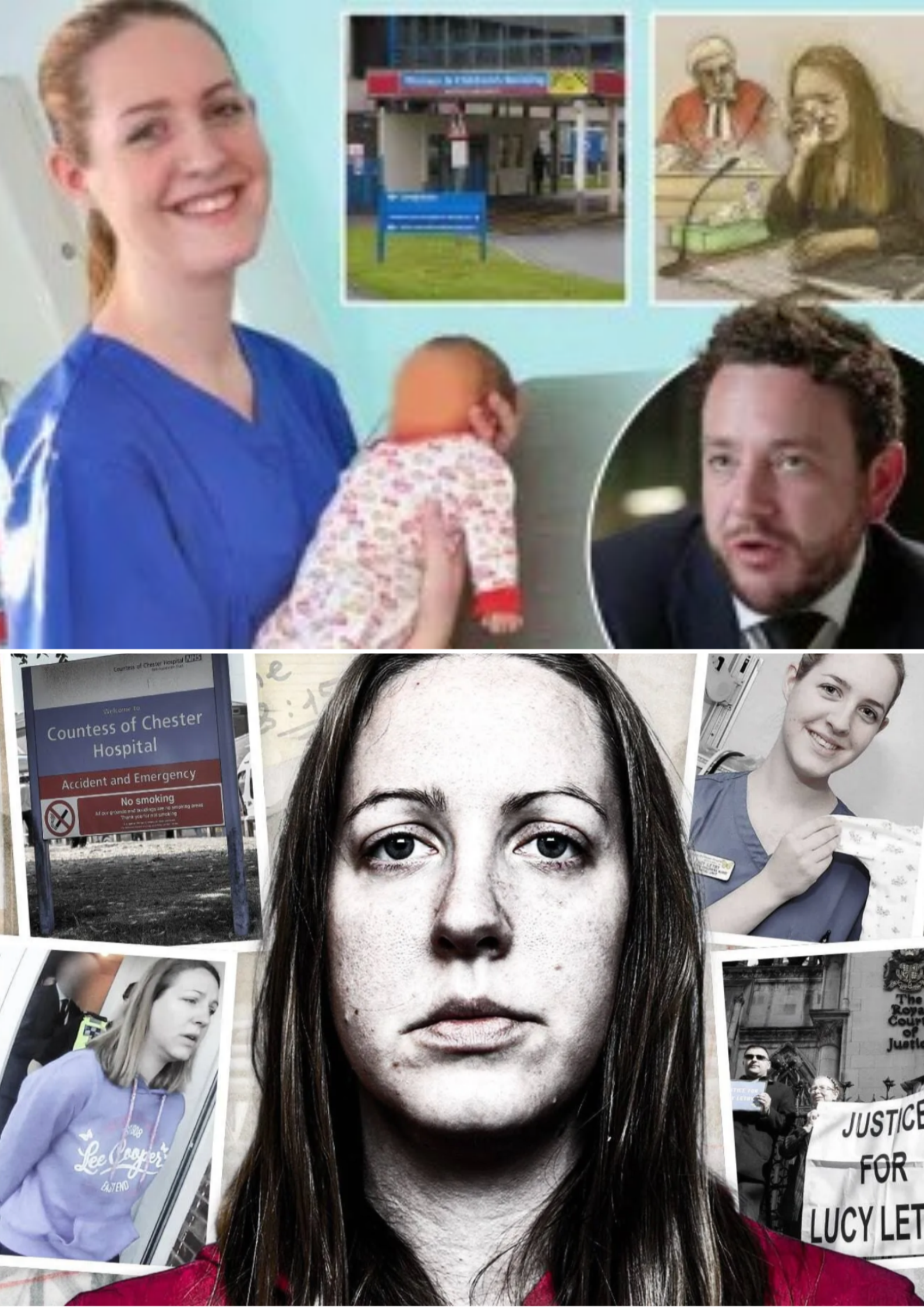
LUCY LETBY CASE FACES FRESH QUESTIONS AS KEY DOCTOR SAYS HE IS NO LONGER CERTAIN
The case of Lucy Letby has entered another extraordinary chapter after a retired paediatrician who played a significant role in the original investigation said he is no longer certain that she was responsible for the deaths and collapses of babies at the Countess of Chester Hospital.
Dr. John Gibbs, one of the consultants whose concerns helped trigger the investigation into the neonatal unit, has now said he believes a retrial could be appropriate.
More significantly, he has acknowledged that he has a small concern that there may not have been deliberate harm at all.
His comments have added to growing debate over the medical evidence used to convict Letby — although her convictions remain in place and no court has found that she was wrongly convicted.
 “I’M NO LONGER CERTAIN”
Letby was convicted at two trials of murdering seven babies and attempting to murder seven others at the Countess of Chester Hospital in 2015 and 2016.
She has always denied harming the babies.
She is currently serving 15 whole-life orders, and previous attempts to challenge her convictions have been rejected by the courts.
But Dr. Gibbs has now publicly expressed uncertainty about the conclusions reached during the original investigation.
Asked whether he remained certain that Letby had killed the babies, Gibbs said:
“No.”
He also said he had a concern that there may not have been any deliberate harm.
Gibbs told The Sun that, if Letby were imprisoned for crimes she had not committed, that would be “clearly appalling”, and said a retrial could potentially be the most appropriate course.
 THE QUESTION AT THE CENTRE OF THE CASE
Gibbs’ comments do not overturn Letby’s convictions.
They are, however, significant because they come from a doctor who was involved in the events that ultimately led investigators to suspect deliberate harm on the neonatal unit.
The central question now being debated is whether the medical evidence used to establish that babies had been deliberately harmed remains reliable when examined alongside evidence and expert opinions that have emerged since the trials.
Letby’s defence has submitted extensive expert material to the Criminal Cases Review Commission (CCRC).
The CCRC confirmed that it is reviewing the case but stressed that its role is not to decide whether Letby is innocent or guilty.
Instead, it must determine whether new evidence or arguments create a real possibility that the convictions would not be upheld if referred back to the Court of Appeal.
NEW EXPERTS HAVE CHALLENGED THE MEDICAL CASE
A group of medical experts supporting Letby’s defence has challenged important elements of the prosecution’s medical evidence.
Their arguments include claims that some of the babies’ collapses and deaths may have resulted from natural medical conditions or problems with care rather than deliberate poisoning or other intentional harm.
The Guardian reported that the CCRC application is supported by reports from numerous experts, including an international group led by Canadian neonatologist Dr. Shoo Lee.
Those experts dispute aspects of the prosecution’s interpretation of the medical evidence.
That does not mean their conclusions have been accepted by the courts.
The competing medical interpretations remain a central issue in the continuing review of the case.
MATERNITY RECORDS RAISE ANOTHER QUESTION
Another major development emerged in July when the BBC reported that maternity records relating to babies in the case had been seized by police but were not reviewed by the prosecution’s principal medical expert or disclosed to Letby’s defence before trial.
The records contained information about the mothers’ pregnancies, labour and births.
The discovery has prompted further questions about disclosure and whether all potentially relevant medical information was available to the defence.
The CPS has maintained that Letby’s convictions were reached following two jury trials and that the Court of Appeal has previously rejected arguments challenging the prosecution evidence.
CPS DOES NOT SAY IT IS HIDING NEW LABORATORY DATA
Online claims surrounding the case have included allegations that the Crown Prosecution Service is withholding secret laboratory evidence that could completely overturn the convictions.
There is currently no verified evidence supporting that claim.
What is confirmed is that the CPS has reviewed whether Letby should face additional charges relating to other babies.
In January 2026, prosecutors decided not to bring further charges. After requests from families, an independent CPS prosecutor conducted a further review of six attempted-murder allegations.
On August 5, the CPS confirmed that the decision not to bring those additional charges remained unchanged.
That decision concerns additional allegations, not a finding that the existing convictions were unsafe.
THE THIRLWALL INQUIRY
The debate has intensified following the publication of the Thirlwall Inquiry report into events at the Countess of Chester Hospital.
The inquiry identified serious failures in hospital management and governance and examined why concerns about the neonatal unit were not acted upon sooner.
But it was not established to determine whether Letby was innocent or guilty.
Lady Justice Kathryn Thirlwall explicitly stated that the inquiry was not a review of Letby’s criminal convictions.
That means some of the biggest questions surrounding the medical evidence remain matters for the courts and the CCRC rather than the inquiry itself.
WHAT HAPPENS NEXT?
For now, Lucy Letby’s convictions remain legally intact.
The CCRC’s review is ongoing, and there has been no decision to order a retrial.
Dr. Gibbs’ comments therefore do not represent a judicial finding that Letby was wrongly convicted.
But they add another voice to an increasingly intense debate over how the medical evidence was interpreted and whether the original investigation considered every possible explanation for the babies’ deaths and collapses.
For the families who lost their children, the renewed scrutiny is deeply painful.
For Letby’s defence, however, the continuing emergence of disputed medical evidence and questions about disclosure are reasons why the convictions should be examined again.
And for the CCRC, the question is narrower:
Is there enough genuinely new evidence or argument to create a real possibility that the convictions would not be upheld?
That question has not yet been answered.
Until it is, the Lucy Letby case remains one of the most closely scrutinised criminal cases in Britain — with a convicted nurse maintaining her innocence, medical experts sharply divided over the evidence, and even one of the doctors involved in the original investigation now saying he is no longer certain.