THE LITTLE BOY WHO DREAMED OF BECOMING AN ASTRONAUT — NEIL HUGHES’ FINAL 70 UP STORY LEAVES VIEWERS HEARTBROKEN
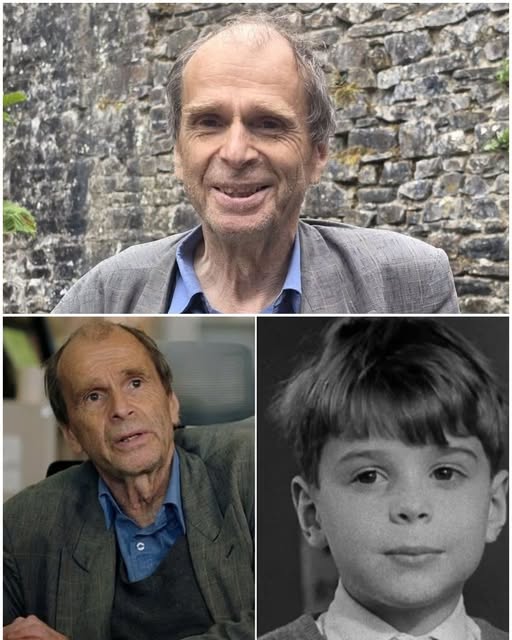
THE LITTLE BOY WHO DREAMED OF BECOMING AN ASTRONAUT — NEIL HUGHES’ FINAL 70 UP STORY LEAVES VIEWERS HEARTBROKEN
After more than six decades in front of the cameras, Neil Hughes opened up about loneliness, friendship and being misunderstood in the final chapter of Britain’s extraordinary television experiment
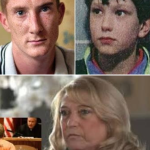
In 1964, Neil Hughes was just seven years old.
Bright, cheerful and full of imagination, the little boy from Liverpool appeared on television and spoke about what he wanted to become when he grew up.
His answer was simple:
An astronaut.
Neither Neil nor the filmmakers could have known then that viewers would continue watching his life unfold for more than six decades.
But they did.
From childhood to adulthood, through periods of homelessness, depression, politics, faith and relationships, Neil became one of the most unforgettable figures in the Up documentary series.
Now, at 70, his final appearance has brought the extraordinary journey to an emotional close.
 FROM A HAPPY CHILD TO A VERY DIFFERENT ADULT LIFE
The Up series began as a social experiment.
Fourteen seven-year-old children from very different backgrounds were filmed in 1964, with the original programme exploring the influence of class, family and environment on their futures.
The cameras then returned every seven years.
Neil’s life became one of the series’ most striking stories because it did not follow the path viewers might have expected from that optimistic little boy.
He had once dreamed of Oxford and spoke confidently about his future.
Instead, his adult years became marked by serious struggles with depression and periods of homelessness.
At different points, Neil lived in squats and relied on benefits. He later entered public life as a local councillor and became a lay Baptist minister.
“I’M STILL QUITE LONELY AT TIMES”
In the final 70 Up episode, viewers saw a very different Neil.
He now lives in France, largely on his own.
His home is a large property inherited from his parents, but the programme showed a remarkably solitary existence.
Neil admitted that loneliness remained part of his life.
He also reflected honestly on his difficulties connecting with other people and acknowledged that he had never been particularly comfortable in social situations.
Yet his words were not simply about sadness.
They were about acceptance.
Neil explained that people living with mental-health difficulties should not automatically be regarded as strange or antisocial.
His message was one of understanding — that people can struggle to connect without choosing isolation or wanting to be different.
And perhaps that was one of the most powerful things about his final appearance.
A LIFE THAT NEVER FIT A SIMPLE STORY
Neil’s journey became one of the clearest reminders that childhood circumstances cannot completely determine the course of an adult life.
The Up project was originally built around the idea that childhood could reveal the person someone would eventually become.
But Neil’s story repeatedly challenged that assumption.
His life changed in ways nobody could have predicted when the cameras first found him at seven.
He experienced hardship, found new directions and continued searching for a way of living that worked for him.
By 70, he described himself as sometimes lonely — but also suggested that he was probably as happy as he could be given the life he had lived.
VIEWERS COULD NOT LOOK AWAY
For people who had followed the series for years, Neil’s final interview carried an extraordinary emotional weight.
He was no longer simply a participant in a television experiment.
He was someone viewers had watched grow up.
They had seen his optimism as a child.
They had witnessed his struggles as a young man.
They had watched him disappear from ordinary society for periods of his life, then return to public life in unexpected ways.
And now they were seeing him at 70, reflecting on loneliness, friendship and the person he had become.
Following the final episode, some viewers even expressed concern for Neil and asked whether there was a way to send him messages of support.
That reaction revealed just how deeply his story had stayed with the audience.
THE END OF AN EXTRAORDINARY TELEVISION JOURNEY
70 Up marks the end of a documentary project that began in 1964 and followed its participants every seven years.
The series continued after the death of longtime director Michael Apted in 2021, with Oscar-winning filmmaker Asif Kapadia taking over for the final instalment.
The result is more than a television programme.
It is a record of people growing older, changing, struggling, loving, losing and trying to understand their own lives.
And Neil Hughes’ story may be one of its most poignant.
The seven-year-old boy who once dreamed of becoming an astronaut could never have known where life would take him.
He did not become the person that childhood prediction seemed to promise.
But he became something else — a man whose extraordinary, complicated and deeply human story touched generations of viewers.
SIXTY-THREE YEARS LATER, THE CAMERAS HAVE FINALLY STOPPED
There will be no 77 Up.
The participants have decided that this is where the experiment should end.
For Neil, the final chapter is not ab