NEW EVIDENCE IN FLORIDA LEARJET CR@SH: KEY AIRCRAFT PARTS FOUND NEARLY 4 MILES AWAY AS INVESTIGATORS SEARCH FOR ANSWERS AFTER 9 DEATHS

NEW EVIDENCE IN FLORIDA LEARJET CRASH: KEY AIRCRAFT PARTS FOUND NEARLY 4 MILES AWAY AS INVESTIGATORS SEARCH FOR ANSWERS AFTER 9 DEATHS
A devastating private jet crash in Florida has taken a new turn after investigators uncovered important pieces of the aircraft scattered nearly four miles from the main impact site.
The discovery is providing a clearer picture of the plane’s final moments, confirming that at least part of the aircraft separated before it struck the ground.
But one crucial question remains unanswered: What caused the Learjet to lose control in the first place?
The November 1 crash killed all nine people aboard, including a Texas family of four, two family friends, their nanny and two pilots.
Now, federal investigators are examining recovered aircraft components, weather conditions and the final communications from the cockpit as they work to establish what happened.
 CRITICAL PART OF THE AIRCRAFT FOUND MILES FROM THE CRASH SITE
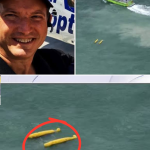
The latest major development came on Tuesday, November 3, when the National Transportation Safety Board revealed that investigators had recovered most of the Learjet 60’s left elevator in three separate pieces.
The components were found between 1.3 miles and 3.8 miles from the crash site in Greenacres, near West Palm Beach.
The elevator is a movable part of the aircraft’s tail that helps control its pitch — allowing the nose to move up or down.
NTSB board member Tom Chapman described the discovery as an important piece of evidence.
Without the elevator intact, he said, the pilots would not have been able to pull the aircraft out of its steep descent.
However, investigators have not determined whether the elevator’s separation caused the aircraft to lose control or whether it broke away because of the tremendous forces acting on the plane during its final moments.
“What that means exactly, in terms of what caused the aircraft to lose control, or whether the loss of this piece was a result of the forces on the aircraft, we don’t know yet,” Chapman explained.
That distinction is central to the investigation.
The recovered parts confirm that the aircraft was breaking apart before impact, but they do not establish what started the sequence of events.
 NEW DEBRIS FOUND ON ROOFS AND NEARBY BUILDINGS
The investigation continued into Thursday, November 5, when the NTSB announced another significant development.
During excavation work at the crash site in Palm Beach County, investigators recovered a portion of one of the aircraft’s engines.
Officials also confirmed that debris had been discovered on the roofs of nearby homes and buildings, as well as in locations farther from the main impact area.
The agency issued an urgent request to members of the public who may have found pieces of the Learjet.
Anyone who discovers possible wreckage has been asked not to move, alter, keep or throw it away.
Even small fragments could contain evidence that helps investigators reconstruct the aircraft’s final moments.
The NTSB emphasized that recovering all available wreckage is essential to determining the cause of the crash.
ICE AND SEVERE TURBULENCE BEFORE THE FINAL DESCENT
Investigators are also examining the weather conditions the Learjet encountered shortly before the crash.
The aircraft had departed Austin-Bergstrom International Airport in Texas on Sunday morning, November 1, bound for North Eleuthera Airport in the Bahamas.
At approximately 12:50 p.m. local time, it crashed in a residential area near Cresthaven in Greenacres, Florida.
In the minutes before impact, the co-pilot, 20-year-old Nathalia Gadelha Filgueiras, reported that ice was accumulating on the aircraft and that significant turbulence was causing dramatic changes in altitude.
According to air traffic control recordings, the plane was being thrown up and down by more than 700 feet.
The Learjet had entered an area affected by a rapidly developing thunderstorm, making weather a major focus of the NTSB’s early investigation.
Filgueiras had also reportedly texted her boyfriend about the conditions around 10 minutes before the crash.
“I’ve got turbulence, I’ve got ice,” she wrote, according to her stepfather, Thiago Corteleti, who spoke to the New York Post.
THE FINAL RADIO CALLS REVEAL A TERRIFYING DESCENT
The aircraft’s final communications with air traffic control have become another important part of the investigation.
During the last two minutes of the flight, the co-pilot’s messages reportedly shifted from routine communication to increasingly urgent warnings.
She told controllers that ice was building up and that the aircraft was experiencing severe turbulence.
As the Learjet plunged toward the ground, its descent rate reportedly exceeded 20,000 feet per minute.
“We’re going to crash into the ground,” Filgueiras warned.
Her final recorded words included: “We’re out of time!”
The aircraft struck the ground with tremendous force, creating a large crater near a residential community before erupting into flames.
Investigators are working to recover the aircraft’s recording equipment, which could provide additional information about the pilots’ actions and the aircraft’s condition.
WHO WERE THE NINE PEOPLE ON BOARD?
The crash claimed nine lives, leaving families and friends across the country mourning an unimaginable loss.
Among the victims were technology entrepreneur Adam Robinson, his wife, Helen Sharp, and their two young children, Emma, 4, and Charlie, 2.
The family was traveling with their nanny, Ana María Ramírez Cetina, who was also killed.
Two family friends, Rachael Reed and Charmi Fehr, were among the passengers.
The aircraft’s captain was identified as Jeff Gregory, 55, a longtime pilot from the Philadelphia suburbs. He was remembered by friends as a devoted husband, father and Christian.
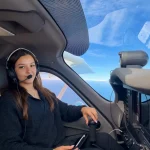
The co-pilot, Nathalia Gadelha Filgueiras, was just 20 years old.
Her family and friends have been left grieving a young woman whose aviation journey had begun at an exceptionally early age.
A NANNY WHO WAS LOVED LIKE FAMILY
The loss of Ana María Ramírez Cetina has also deeply affected her relatives in Colombia.
Her sister, Angie Alejandra Ramírez, recalled speaking with her shortly before she boarded the aircraft.
She had sent Ana María a photograph and video of her baby, and her sister said she would watch them after landing.
But that response never came.
Ana María had been a biomedical engineer before moving to the United States in search of better professional opportunities and to be closer to her mother.
She began working as the Robinson family’s nanny in January.
Her sister said Ana María loved the children, Emma and Charlie, and was treated as part of the family.
The Colombian government also announced that it was providing assistance to her relatives following the tragedy.
RESIDENTS FORCED TO LEAVE THEIR HOMES
The crash also had a serious impact on people living near the impact site.
The aircraft came down near a residential area in Greenacres, creating a large crater and damaging nearby properties.
Debris struck surrounding homes and buildings, while the resulting fire and emergency response forced hundreds of residents from the area.
Approximately 600 nearby residents remained displaced following the crash, although authorities reported only one person on the ground had been injured.
Investigators have been collecting wreckage, reviewing dashcam footage and speaking with witnesses as they continue examining the scene.
THE CAUSE REMAINS UNKNOWN
Despite the discovery of the scattered tail components and additional debris, investigators have not reached a final conclusion about why the Learjet crashed.
Weather conditions, ice accumulation, severe turbulence and the aircraft’s structural condition are among the issues being examined.
A preliminary NTSB report was expected approximately one month after the crash. However, determining the official probable cause could take more than a year.
For the families of the nine people who never reached their destination, the investigation represents an important search for answers.
Every recovered fragment, recording and witness account may help explain what happened during the aircraft’s final minutes.
For now, the tragedy remains under investigation — and the people left behind are waiting for the answers that may finally explain how a flight to the Bahamas ended in such devastating circumstances.