The Unbroken Spirit of Martha Lillard: Decades of Life, Art, and Triumph Inside an Iron Lung
The Unbroken Spirit of Martha Lillard: Decades of Life, Art, and Triumph Inside an Iron Lung
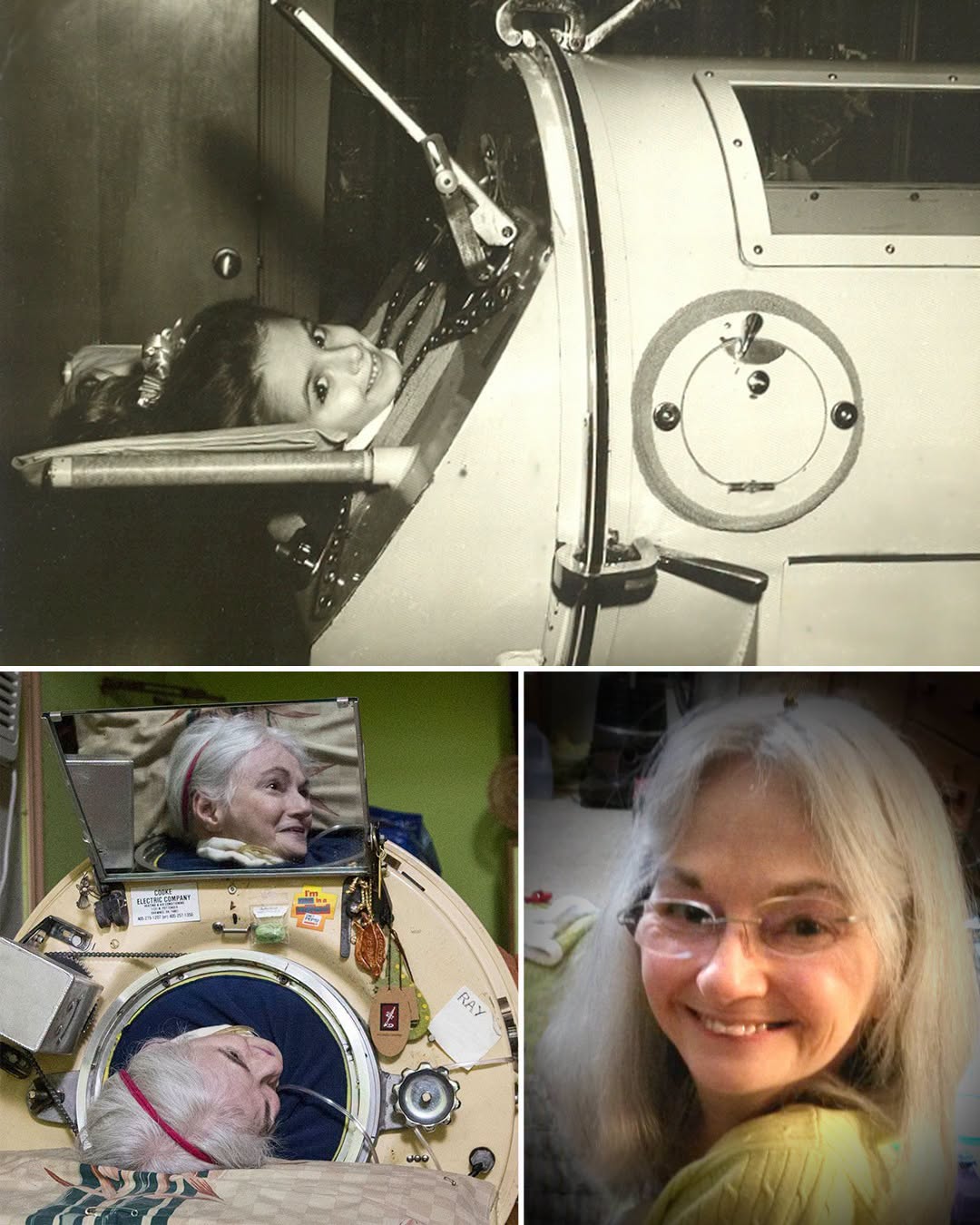
In 1953, at just five years old, Martha Lillard contracted polio in Oklahoma, a mere two years before the life-saving vaccine became widely available to the public. The devastating illness left her almost completely paralyzed, stripping her of the ability to perform the most fundamental human function: breathing. To save her life, doctors placed her inside an iron lung, a massive negative-pressure ventilator that used alternating air pressure to mechanically expand and contract her lungs. At the time, medical professionals grimly predicted that she would not survive past the age of twenty. Martha defied those expectations for nearly six decades, living to the age of 78.
Instead of allowing the massive metal cylinder to become a prison, Martha utilized it as a vessel for a vibrant life. Through grueling years of physical therapy, she managed to regain partial movement in her left arm and legs. She refused to let her education stall, utilizing home tutoring and an innovative telephone system that connected her directly to her high school classrooms. As she grew into adulthood, her determination allowed her to achieve remarkable milestones; for a period, she was able to drive, prepare her own meals, and live independently. Her family even constructed a custom trailer to transport the iron lung, carefully measuring hotel doors beforehand so Martha could travel and experience the world.
Beyond mere survival, Martha chose to create and contribute. She painted, wrote poetry, composed music, and dedicated her time to volunteering with local organizations and supporting animal rescue efforts, harboring a lifelong love for beagles. As time wore on, post-polio complications required her to spend increasing amounts of time inside the machine, eventually relying on it nearly twenty-four hours a day during her final two years.
Following the passing of fellow polio survivor Paul Alexander in 2024, Martha became recognized as the very last American relying on an iron lung. When she passed away on June 26, 2026, her departure marked the close of a profound chapter in modern medical history. The machines that once filled entire hospital wards had become so obsolete that finding replacement parts or technicians required monumental effort. Yet, Martha never viewed the machine with bitterness. To her, it was the sanctuary that granted her the time to breathe, love, and inspire, proving to the world that a restricted body can never confine a resilient soul.