WHISPERS IN THE HEAD: LINDSAY CLANCY’S DIARY ENTRIES REVEALED IN COURT

WHISPERS IN THE HEAD: LINDSAY CLANCY’S DIARY ENTRIES REVEALED IN COURT
Jurors in the Lindsay Clancy case have heard deeply personal diary entries describing severe exhaustion, sleeplessness, “brain fog” and the overwhelming pressures Clancy said she was experiencing in the months before the deaths of her three children. The writings have become part of a broader courtroom debate over her mental state and criminal responsibility.
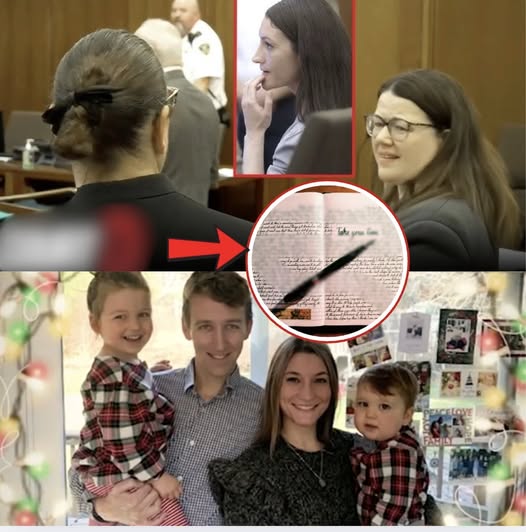 MASSACHUSETTS, USA — Personal writings from Lindsay Clancy have offered jurors a rare glimpse into the mental and emotional difficulties she described in the months before the devastating events involving her three children.
The diary entries, presented as evidence during the trial, describe a woman struggling with profound exhaustion, disrupted sleep and what she characterized as a worsening ability to cope with everyday life.
The writings are being examined alongside testimony from psychiatrists, medical experts, relatives and other witnesses as prosecutors and defense attorneys present sharply different interpretations of Clancy’s state of mind.
For the jury, the question is not simply what Clancy wrote, but what those writings reveal about her mental condition in the period leading up to the tragedy.
 A PERSONAL RECORD OF EXHAUSTION
The diary entries describe Clancy experiencing severe fatigue and repeated sleepless nights while caring for her young children.
She wrote about “brain fog” and feeling overwhelmed, providing a personal account of difficulties that had also been discussed with people around her.
The writings are significant because they were created before the January 2023 incident rather than after the fact.
That gives jurors an opportunity to consider Clancy’s own descriptions of her experiences before the events that ultimately resulted in the deaths of her children.
However, the meaning of those writings remains disputed.
The prosecution and defense have offered different explanations for what the entries demonstrate about her mental state.
EVIDENCE ABOUT DISTURBING THOUGHTS
The diary material is being considered alongside other evidence concerning thoughts and symptoms Clancy reportedly experienced during the months before the tragedy.
The court has heard that she sought professional help and reported serious difficulties, including anxiety, sleep problems and troubling thoughts.
Several mental-health professionals who treated Clancy have also testified about their interactions with her and the symptoms they observed.
The defense argues that the evidence is consistent with a severe psychiatric illness that affected Clancy’s perception of reality.
Prosecutors, meanwhile, argue that other evidence supports their interpretation of her actions and mental state.
THE POSTPARTUM PSYCHIATRIC DEBATE
A central issue in the trial is whether Clancy was suffering from a severe postpartum psychiatric disorder at the time of the killings.
The defense has argued that she experienced a serious psychiatric crisis that substantially affected her ability to understand reality and should therefore affect her criminal responsibility.
The prosecution disputes that interpretation and has presented evidence aimed at supporting its own account of what occurred.
The disagreement places medical testimony at the center of the proceedings.
Jurors must consider expert opinions alongside the documentary evidence, witness testimony and circumstances surrounding the incident.
WHY THE DIARY MATTERS
Diary entries can provide evidence that other witnesses cannot.
Unlike testimony given after an event, personal writings can show how someone described their experiences at the time.
But they also have limitations.
A diary entry can describe a person’s feelings without necessarily establishing a medical diagnosis. Expressions such as exhaustion, confusion or feeling overwhelmed can have many possible causes.
That is why the writings are being considered alongside expert psychiatric evidence rather than in isolation.
For the jury, the challenge is to determine how much weight should be given to the entries and what they reveal about Clancy’s condition.
EXPERTS OFFER DIFFERING INTERPRETATIONS
Mental-health experts have provided testimony about Clancy’s condition and the symptoms she experienced.
The court has heard evidence concerning her treatment history and the professionals who interacted with her before the tragedy.
The defense has emphasized the seriousness of the symptoms and argued that Clancy was actively seeking help.
The prosecution has questioned aspects of the defense’s interpretation and has presented evidence intended to support its own position concerning her state of mind and actions.
Those competing interpretations will ultimately have to be assessed by the jury.
A FAMILY TRAGEDY AT THE CENTER OF THE TRIAL
The proceedings concern the deaths of Clancy’s three children, making the case one of extraordinary emotional weight.
The courtroom has heard testimony and evidence about the events surrounding the tragedy, but the question of Clancy’s mental state has become one of the most closely contested issues.
The defense does not dispute the devastating outcome but argues that Clancy’s psychiatric condition is critical to understanding her actions and determining her criminal responsibility.
Prosecutors contend that the evidence supports a different conclusion.
WHAT WAS HAPPENING BEFORE THAT NIGHT?
The diary entries have brought the jury back to the period before the tragedy.
They describe exhaustion.
Sleepless nights.
Difficulty concentrating.
Feeling overwhelmed.
And a woman attempting to cope while her mental health was deteriorating.
But they do not provide a simple explanation for what happened later.
Instead, they form one piece of a much larger evidentiary picture.
Jurors are being asked to consider whether those writings, together with medical records and expert testimony, demonstrate that Clancy was experiencing a severe psychiatric crisis—or whether the evidence supports the prosecution’s interpretation of her actions.
THE QUESTION OF CRIMINAL RESPONSIBILITY
The central legal issue is not simply whether Clancy was experiencing mental-health difficulties.
The jury must consider whether those difficulties reached a level that affects her legal responsibility under the applicable law.
That requires careful consideration of medical evidence, expert testimony and the circumstances surrounding the incident.
A diagnosis alone does not automatically determine criminal responsibility, just as evidence of distress does not by itself establish the prosecution’s position.
The jury will ultimately have to weigh the competing evidence and reach its own conclusion.
A WINDOW INTO A DEEPLY TROUBLED PERIOD
For the public, the diary entries may provide one of the most personal glimpses yet into Clancy’s life before the tragedy.
For the court, however, they are evidence to be examined carefully.
They may help establish what Clancy was experiencing, what she believed she was experiencing and how she described her struggles before the events occurred.
But they cannot, on their own, answer the central question of the trial.
That question remains:
What was happening inside Lindsay Clancy’s mind during the weeks leading up to that devastating night?
The diary entries offer jurors another window into that period.
Whether they ultimately change the jury’s understanding of Clancy’s mental state will depend on how they fit together with the medical, psychiatric and other evidence presented throughout the proceedings.
The prosecution and defense have offered competing interpretations of that evidence, and the final determination remains with the court.