“I FEEL LIKE I’M DROWNING”: LINDSAY CLANCY’S PRIVATE JOURNAL REVEALS A DESPERATE STRUGGLE BEFORE THE TRAGEDY
“I FEEL LIKE I’M DROWNING”: LINDSAY CLANCY’S PRIVATE JOURNAL REVEALS A DESPERATE STRUGGLE BEFORE THE TRAGEDY
Private journal entries read aloud in court have offered jurors an unusually personal look at Lindsay Clancy’s state of mind in the months before the deaths of her three children. The writings describe exhaustion, anxiety, guilt and a growing sense of being overwhelmed, while testimony from her medical providers has raised questions about whether the warning signs were fully understood.
 WORDS WRITTEN BEFORE THE TRAGEDY
The courtroom has heard Lindsay Clancy’s own words—not from a police interview or a later statement, but from a handwritten journal she kept before the January 2023 tragedy.
The journal was entered into evidence during her murder trial, with passages read to jurors by both sides.
The entries portray a mother struggling with the demands of caring for her newborn while dealing with worsening emotional and psychological difficulties.
In one passage, Clancy described feeling as though she was “drowning every day.” Other entries referenced exhaustion, sleeplessness, guilt and feeling overwhelmed by the responsibilities surrounding motherhood.
 A MIND UNDER INCREASING PRESSURE
The journal evidence has become particularly significant because the defense is attempting to establish that Clancy was experiencing a severe psychiatric crisis before the killings.
Her attorneys argue that postpartum psychosis, possible bipolar disorder and the effects of multiple psychiatric medications contributed to a deterioration in her mental state.
Prosecutors dispute that interpretation and argue that Clancy remains criminally responsible for her actions.
The jury is therefore being asked to examine not only what happened on January 24, 2023, but also what was happening in the months leading up to that night.
THE MEDICAL RECORD TELLS A COMPLICATED STORY
Testimony from Clancy’s medical providers has revealed a complicated picture.
Psychiatric nurse practitioner Rebecca Jollotta testified about symptoms including insomnia, racing thoughts and suicidal concerns. At the same time, she said she did not observe psychosis or suicidal intent during her own treatment of Clancy.
Psychiatrist Jennifer Tufts similarly testified that Clancy’s depression had worsened and that she experienced anxiety and difficulty sleeping, but Tufts said she did not observe signs of psychosis during their appointments.
That apparent gap between the symptoms Clancy described privately and what clinicians believed they were seeing has become one of the most closely examined issues in the trial.
DID EVERYONE HAVE THE FULL PICTURE?
Another significant issue emerged during testimony: communication between the professionals treating Clancy.
A social worker testified that she was aware Clancy had reported suicidal thoughts but did not review records from another provider who was treating her at the same time.
Those records contained additional information about insomnia, racing thoughts and suicidal ideation.
The defense has highlighted these differences as evidence that Clancy’s condition may not have been fully understood by the people responsible for her care.
The prosecution, however, points to the fact that several professionals who interacted with Clancy did not identify psychosis or an immediate risk of violence.
FRIENDS ALSO REMEMBERED A DIFFERENT SIDE
Testimony from people who knew Clancy personally has added another layer to the picture.
Friends and relatives have described her as a loving and attentive mother.
At the same time, friends testified about her severe sleep problems, “brain fog,” feeling like a “zombie,” and comments about troubling or “dark” thoughts in the period before the killings.
Those accounts do not provide a simple explanation.
Instead, they show how dramatically different aspects of Clancy’s life were perceived by different people.
THE PROSECUTION’S CASE
Prosecutors have presented the evidence through a very different lens.
Their argument is that Clancy should be held criminally responsible for the deaths of her three children.
They have challenged aspects of the defense’s psychiatric narrative and presented testimony suggesting that the professionals who treated Clancy did not observe the symptoms of psychosis they would have expected.
A state police witness also testified that investigators found no evidence supporting a claim that a psychologist had influenced Clancy to tell her husband she heard voices.
THE DEFENSE SEES A WARNING THAT WAS MISSED
For the defense, however, the journal entries are important because they provide Clancy’s own description of what she was experiencing.
The defense has argued that her worsening condition, medication changes, lack of sleep and intrusive thoughts should be considered together rather than separately.
The argument is not simply that Clancy was depressed.
It is that her mental state may have deteriorated into a serious psychiatric condition that affected her ability to understand reality and control her actions.
THE JURY MUST SEPARATE SYMPATHY FROM EVIDENCE
The trial has become increasingly emotional.
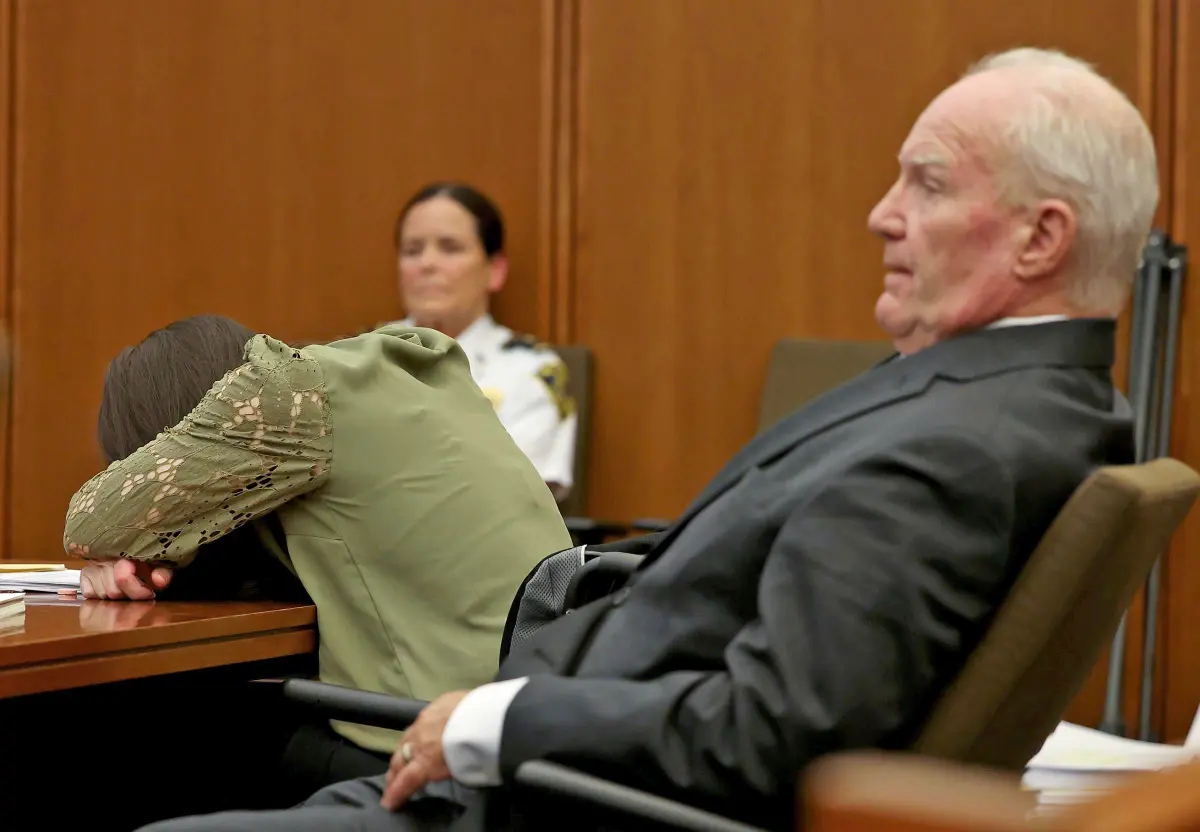
On August 12, medical examiners testified about the autopsies of Clancy’s three children, prompting Clancy to break down in court and forcing the judge to pause proceedings.
But the emotional nature of the evidence does not determine the legal outcome.
Jurors must ultimately decide the case according to the evidence and the legal standards governing criminal responsibility.
WHAT THE JOURNAL CAN ACTUALLY TELL US
The journal does not provide a definitive answer to the central question.
It does, however, provide a firsthand record of Clancy describing serious emotional difficulties before the tragedy.
It shows that she was struggling.
It does not, by itself, prove postpartum psychosis.
And it does not establish whether her mental illness legally prevented her from understanding or controlling her actions.
Those questions remain for the jury.
THE QUESTION NOW AT THE CENTER OF THE TRIAL
The evidence has left jurors with a difficult picture:
A mother documenting severe emotional distress.
Multiple psychiatric medications and changing treatment. Medical providers who saw some warning signs but did not necessarily interpret them as evidence of psychosis.
Private journal entries describing a growing sense of exhaustion and hopelessness.
And prosecutors and defense attorneys offering fundamentally different explanations for what those facts mean.
The journal may not contain the answer.
But it gives the jury something no witness can provide in quite the same way—the defendant’s own contemporaneous account of what she believed she was experiencing.
And that leaves one of the most difficult questions of the trial:
Were the warning signs visible—but misunderstood?
Independent commentary based on publicly reported court proceedings. The defense and prosecution have presented competing interpretations of the evidence. Allegations and legal arguments should not be treated as established facts unless determined by the court.