Their Dream Home Was Finally Within Reach — Then Alicia Claytor Saw Her Husband Beside a Wrecked Motorcycle
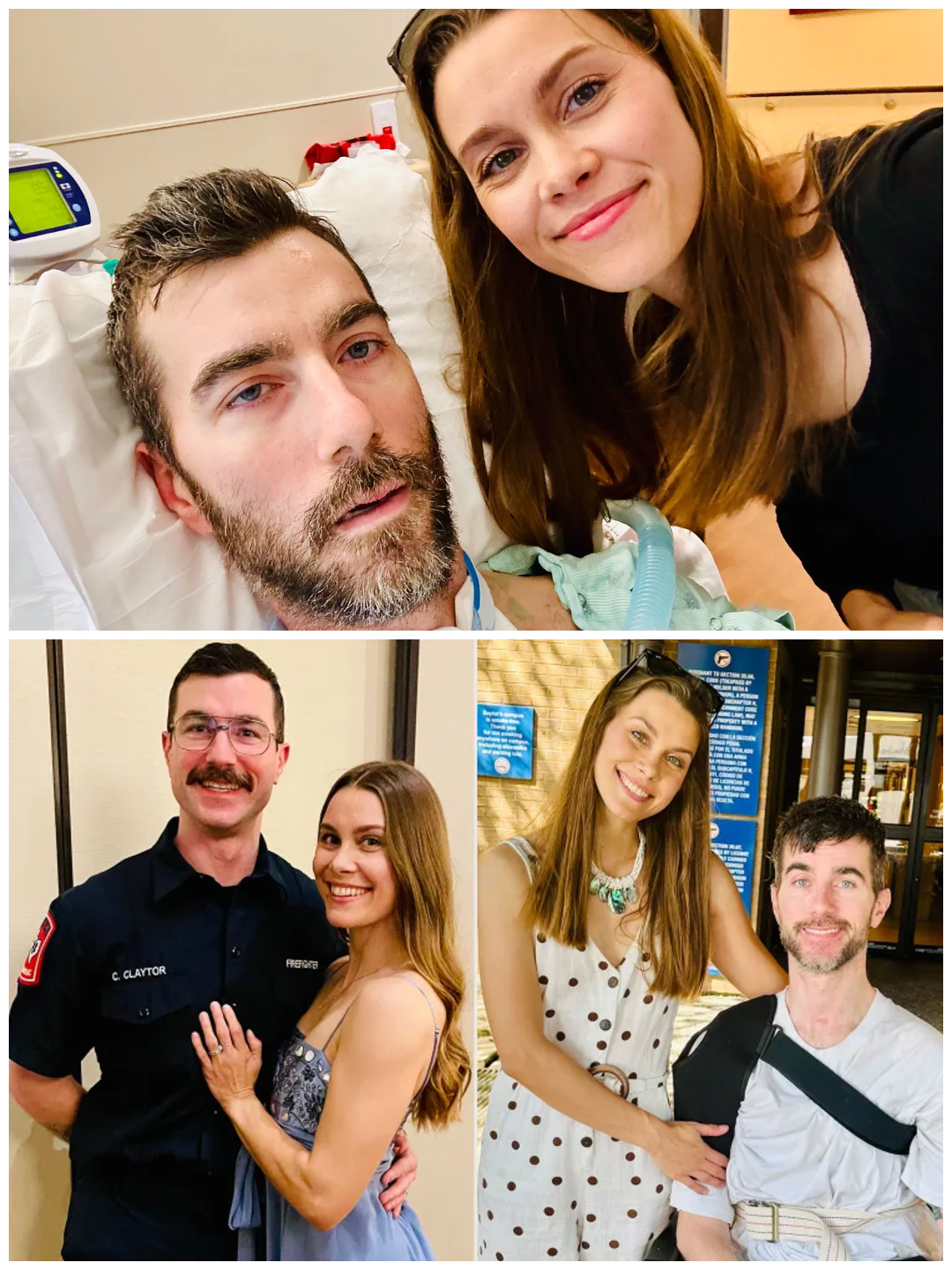
Alicia Claytor had two excited children in the car and a new house to show them.
It was March 22, 2024, and after months of planning, her family’s future seemed to be falling into place. The Texas home Alicia and her husband, Corey, had found was close to her parents and located in the school district they wanted for their children, Clyde, then 6, and Alice, then 3.
That morning, Corey had paperwork for the home notarized at the fire station where he worked as a firefighter and paramedic. Later, he kissed Alicia goodbye, got on his motorcycle and told her he would meet the family at home.
Alicia decided to take the children past the new house first.
They were thrilled, crowding toward the car window and firing off questions about the place that was supposed to become their new home.
Then traffic slowed.
Alicia chose an exit she had never used before.
What she found there transformed what should have been one of the happiest days of their lives into the beginning of a fight that would last for years.
The Man Beside the Motorcycle Was Corey
Along the roadside, Alicia saw an injured motorcyclist. A nurse was already beside him, and the motorcycle had landed several yards away.
Then Alicia realized the victim was her husband.
She stopped immediately.
When she asked the nurse how serious the situation was, the answer made clear that Corey was in grave condition. Alicia had spent years married to a paramedic, picking up enough medical knowledge to understand some of the signs she was seeing.
Corey’s condition terrified her.
She recognized abnormal breathing and physical posturing associated with severe injury. In that moment, Alicia believed she was watching her husband die while they waited for emergency crews to arrive.
Only later would she learn the full extent of his injuries.
According to Alicia, the other driver did not have a license or insurance and had failed to see Corey. His motorcycle helmet helped save his life, but he suffered a severe traumatic brain injury — a grade 2/3 diffuse axonal injury — as well as a fractured femur.:max_bytes(150000):strip_icc():focal(599x0:601x2):format(webp)/corey-alicia-claytor-3-4427e1cb72f74ee7a80934aef33f9aae.jpg)
Even the Paramedics Struggled to Recognize Their Colleague
When firefighters and paramedics arrived, Alicia told them the badly injured man was one of their own.
Corey was intubated and prepared for transport.
Then came another devastating moment.
After Alicia finally gave responders her husband’s name, one paramedic reacted in disbelief: “That’s Claytor?”
Corey’s injuries had changed his appearance so drastically that a fellow emergency worker had not recognized him.
Alicia was offered help with the children so she could ride in the ambulance, but she chose to keep Clyde and Alice with her and drive them safely to the hospital herself.
The driver involved in the crash remained at the scene. Alicia could see that he was crying, but she avoided looking directly at him, afraid of what the emotions of the moment might bring out.
Instead, she concentrated on the few facts she could control: Corey was still alive, he had been stabilized enough for transport, his coworkers were waiting for him, and her children needed her to get them to the hospital safely.:max_bytes(150000):strip_icc():focal(749x0:751x2):format(webp)/corey-alicia-claytor-6-3f331c9c95024e35999087c00e76ea66.jpg)
The Crash Was Only the Beginning
At the hospital, the seriousness of Corey’s injuries became even clearer.
His injured leg had swollen dramatically because of the fractured femur. His first surgery lasted four hours, and doctors warned Alicia that additional operations would be necessary.
She tried to hold onto whatever hope the medical team could give her.
Seven days into his hospitalization, another frightening emergency unfolded during an attempted tracheotomy. His vagus nerve was struck during the procedure, causing his heart rate to suddenly fall.
A crash cart appeared.
For Alicia, who understood what that equipment could mean, the sight was overwhelming.
Corey ultimately stabilized, but the crisis added another terrifying chapter to an already uncertain recovery.
He eventually left the intensive care unit for a long-term acute care facility. There, he developed pneumonia multiple times before his condition finally began moving in a better direction.
Alicia refused to imagine a future in which Corey simply disappeared from their lives.
They had children who needed him. They had plans they had made together. She wanted her husband back.:max_bytes(150000):strip_icc():focal(599x0:601x2):format(webp)/corey-alicia-claytor-9-21963dfe73a44c7ab8dd2bcb3f6b1202.jpg)
Three Months Before She Heard His Voice
Recovery from Corey’s brain injury did not arrive in one dramatic breakthrough.
For months, Alicia kept talking to him even when he could not answer.
She sang to him. She repeated familiar words. She continued showing up day after day, even when she received little visible response.
Then, approximately three months after the crash, something changed.
Alicia told Corey she loved him.
This time, he answered.
“I love you too.”
For a family living with enormous uncertainty, those four words represented far more than a conversation. They were proof that Corey was still reaching back toward them.
Doctors could not give Alicia a simple timetable for what would come next. Severe traumatic brain injuries can leave families facing uncertain and changing outcomes, and Corey’s future could not be neatly predicted.
Alicia knew hope did not eliminate fear. There were moments, days and even longer stretches when progress seemed almost impossible to see.
But she also knew the man fighting to recover.
Corey had spent his career as a firefighter and paramedic. He had been physically strong before the accident and, in Alicia’s view, possessed the stubborn determination needed to keep pushing toward his family.:max_bytes(150000):strip_icc():focal(599x0:601x2):format(webp)/corey-alicia-claytor-7-da0e582da9384fcd98b55e1030974006.jpg)
Progress Came in Inches, Then Suddenly in Steps
Two years after the accident, Corey’s recovery remained ongoing.
Alicia described it as slow and anything but linear. Sometimes months of exhausting work seemed to produce almost nothing. Then a new movement would appear. A new word would come. Another small ability would return.
He has had to relearn fundamental skills, including walking and talking.
His rehabilitation has included physical therapy, occupational therapy and continued speech-language therapy. One lasting consequence of the brain injury is dysarthria, which affects the muscles involved in speech.
The family has also faced financial pressures and broader systemic challenges while navigating Corey’s long recovery and sharing their experience publicly.
Yet for Alicia, one of the most important parts of Corey remains unchanged.
Brain injuries can alter personality, but she does not view the man beside her today as a stranger.
He is still her husband.
Still the father of their children.
Still the person she believed in while sitting beside hospital beds, waiting through surgeries and listening for a voice that took three months to return.
The life Alicia and Corey imagined on the morning of March 22, 2024, did not unfold the way they expected. Their dream-home celebration became a roadside emergency, followed by hospitals, rehabilitation and a future filled with obstacles neither could have anticipated.
But two years later, Corey is still moving forward.
And Alicia is still beside him — measuring progress not only in the abilities he has regained, but in every reminder that the person she feared she might lose on that roadside is still there.