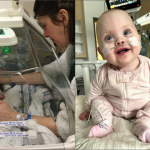
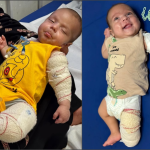
18-MONTH-OLD BOY STUNS DOCTORS AFTER SHOWING SIGNS OF LIFE 4 HOURS LATER IN A HOSPITAL MORTUARY

A 18-month-old boy in the U.S. was pronounced deceased after a drowning incident, but several hours later he was discovered still breathing inside a hospital morgue.
At 6:20 p.m. on February 8, a baby boy in Arizona was pronounced deceased in the emergency department. At 11:52 p.m. that same day, he was discovered still breathing inside the hospital morgue.
What happened during those nearly six hours, as well as the circumstances surrounding the near-drowning of 18-month-old Vincent Lorenzo Fiordilino in his family swimming pool, is now being investigated by the Maricopa County Attorney’s Office.
“The child ultimately survived and has since been discharged from the hospital,” the Gilbert Police Department said in a statement. However, the department has also recommended that prosecutors consider charges against Vincent’s parents related to child endangerment.

According to the police report, Vincent’s parents may not have realized their son had gone toward the pool while a game was taking place because “the mental state of both parents may have been affected by marijuana and/or other mind-altering substances.”
Meanwhile, Mercy Gilbert Medical Center confirmed it had launched an internal investigation into what it described as a “distressing situation.” However, the hospital has not released the findings and declined to answer questions about whether the doctor who pronounced the baby deceased remains employed there.
The doctor was identified in the police report as A. Toosi. When questioned by an officer about the decision to pronounce the child deceased while he was still breathing, Dr. Toosi reportedly responded firmly.
“Please do your job and let me do mine. I went to medical school for a reason,” Dr. Toosi said, according to an exchange cited in the report.
Vincent’s name was not included in the police report, but his family has created a fundraising page to help with his medical expenses.
According to the fundraiser, Vincent is breathing with the help of a ventilator. He has avoided severe brain injury but will require long-term medical monitoring and intensive rehabilitation.
The incident began around 5:38 p.m. on February 8, when 911 received a call for help after Vincent was found face-down in the family swimming pool. A relative attempted CPR, according to the report.
He was then rushed to the emergency department at Mercy Gilbert Medical Center, where emergency staff, including Dr. Toosi, took over his care.

According to the report, at 6:13 p.m., Dr. Toosi was seen checking the time before going outside to inform the child’s parents of the tragic news. At approximately 6:20 p.m., Dr. Toosi pronounced the time of death and asked everyone to observe a moment of silence.
However, the child’s parents and officers present in the emergency department told investigators that Vincent appeared to still be breathing after he was pronounced deceased.
At approximately 7:18 p.m., an investigator at the scene said he heard “another distinct breath” as medical staff prepared to move the child from the emergency department to a “cold room” used as the hospital morgue, where temperatures were maintained between 2 and 4°C.
When he returned about an hour later to photograph the child, the investigator “again observed what appeared to be a breath or airflow.”
“A nurse again stated that this was agonal breathing and explained that it resulted from CPR, oxygen administration and possibly pressure from family members while saying goodbye,” the report stated.
At 7:23 p.m., “the cold room door was closed.” More than four hours later, when the medical examiner’s team arrived at 11:52 p.m. to take custody of the child, “the child was discovered to still be breathing,” according to the report.
“The family was immediately notified,” and Vincent was flown by medical helicopter to Phoenix Children’s Hospital for continued care.
The Fiordilino family is filled with gratitude—but also faces medical expenses far beyond what they can manage on their own. Between emergency care, air transport, ICU treatment, MRI scans, organ support and the long-term therapy ahead, the financial burden is enormous.