INSIDE LINDSAY CLANCY’S FAMILY: THE PARENTS AND SISTER WHO STOOD BY HER AS HER TRIAL REACHED A CRITICAL STAGE
INSIDE LINDSAY CLANCY’S FAMILY: THE PARENTS AND SISTER WHO STOOD BY HER AS HER TRIAL REACHED A CRITICAL STAGE
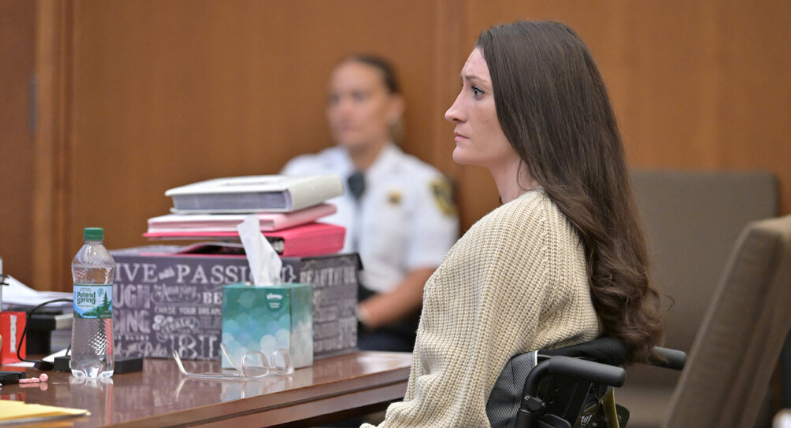
As the murder trial of Lindsay Clancy enters its final stages, her parents and sister have become important figures in the defense’s effort to explain the mental-health crisis they say preceded the deaths of her three children.
Clancy, a former labor-and-delivery nurse, is accused of killing Cora, 5, Dawson, 3, and Callan, 8 months, at the family’s Duxbury, Massachusetts, home on Jan. 24, 2023. She has pleaded not guilty by reason of insanity.
:max_bytes(150000):strip_icc():focal(749x0:751x2):format(webp)/lindsay-clancy-family-3-081926-a33d95305a1d4086bb25451264bde52d.jpg) HER MOTHER, PAULA MUSGROVE
HER MOTHER, PAULA MUSGROVE
Paula Musgrove has remained closely involved throughout the case.
According to PEOPLE, Lindsay was raised by Paula and Michael Musgrove in Wallingford, Connecticut. Her parents later relocated to Massachusetts to support their daughter and have attended the trial.
When Paula took the witness stand this month, she described a daughter whose mental health had deteriorated dramatically after the birth of her youngest child.
She testified that Lindsay had expressed fears about her medications, saying they were affecting her mind and making her increasingly paranoid. Paula also told jurors that Lindsay had experienced thoughts about harming her children.
For the defense, that testimony is central to the argument that Lindsay was experiencing a severe psychiatric crisis rather than acting with ordinary criminal intent.
:max_bytes(150000):strip_icc():focal(749x0:751x2):format(webp)/lindsay-clancy-family-1-081926-ce2011b059dd4b98b4c2e89e4f98c827.jpg) HER SISTER, ALLISON OZGA
HER SISTER, ALLISON OZGA
Lindsay’s sister Allison Ozga also testified for the defense.
Like their mother, Allison portrayed Lindsay as a loving mother whose behavior changed dramatically as her mental-health problems intensified.
Her testimony was intended to give jurors a picture of Lindsay before and after the birth of Callan — and to reinforce the defense’s argument that the tragedy cannot be understood without examining her psychiatric condition.
The defense argues that Lindsay was suffering from postpartum psychosis, severe depression and other psychiatric problems and therefore should not be held criminally responsible for the killings.
A FAMILY THAT HAS REMAINED BESIDE HER
Michael and Paula Musgrove have continued to support their daughter throughout the proceedings.
Their family has also faced significant financial and emotional disruption after moving to Massachusetts to be near Lindsay and attend court. A friend established the Musgrove Family Fund to help with expenses associated with the relocation.
Their support has continued even as prosecutors have presented a dramatically different interpretation of Lindsay’s behavior.
THE PROSECUTION’S VERSION IS VERY DIFFERENT
Prosecutors argue that Lindsay was not experiencing psychosis when she killed her children.
Their case emphasizes what they describe as planning and organized behavior before and after the killings.
A prosecution forensic psychiatrist, Dr. Avram Mack, testified Friday that Lindsay suffered from major depression and anxiety but that he found no evidence of psychosis, mania or hypomania at the time of the killings. He told jurors that she remained capable of understanding that her actions were wrong.
The defense’s final psychiatric witness, Dr. Phillip Resnick, reached the opposite conclusion.
He testified that Lindsay was “clearly psychotic” that day and experienced a command hallucination that convinced her she had to kill her children.
TWO COMPLETELY DIFFERENT STORIES
That clash now sits at the heart of the trial.
The defense says Lindsay’s family witnessed a frightening psychiatric deterioration and that her actions occurred during a severe postpartum mental-health crisis.
The prosecution argues that mental illness does not explain away what it says was deliberate, organized behavior.
After the defense rested Friday, prosecutors began presenting rebuttal witnesses. Closing arguments are expected next week.
THE QUESTION NOW FACING THE JURY
Was Lindsay Clancy experiencing a psychiatric break so severe that she could no longer understand or control her actions?
Or was she suffering from mental illness while still knowing exactly what she was doing?
Her parents and sister have given jurors their answer.
The jury will ultimately have to decide whether that explanation meets the legal standard for criminal responsibility.