THE RESCUING HUG THAT FOREVER CHANGED PREMATURE INFANT CARE IN NEONATAL INTENSIVE CARE UNITS
THE RESCUING HUG THAT FOREVER CHANGED PREMATURE INFANT CARE IN NEONATAL INTENSIVE CARE UNITS
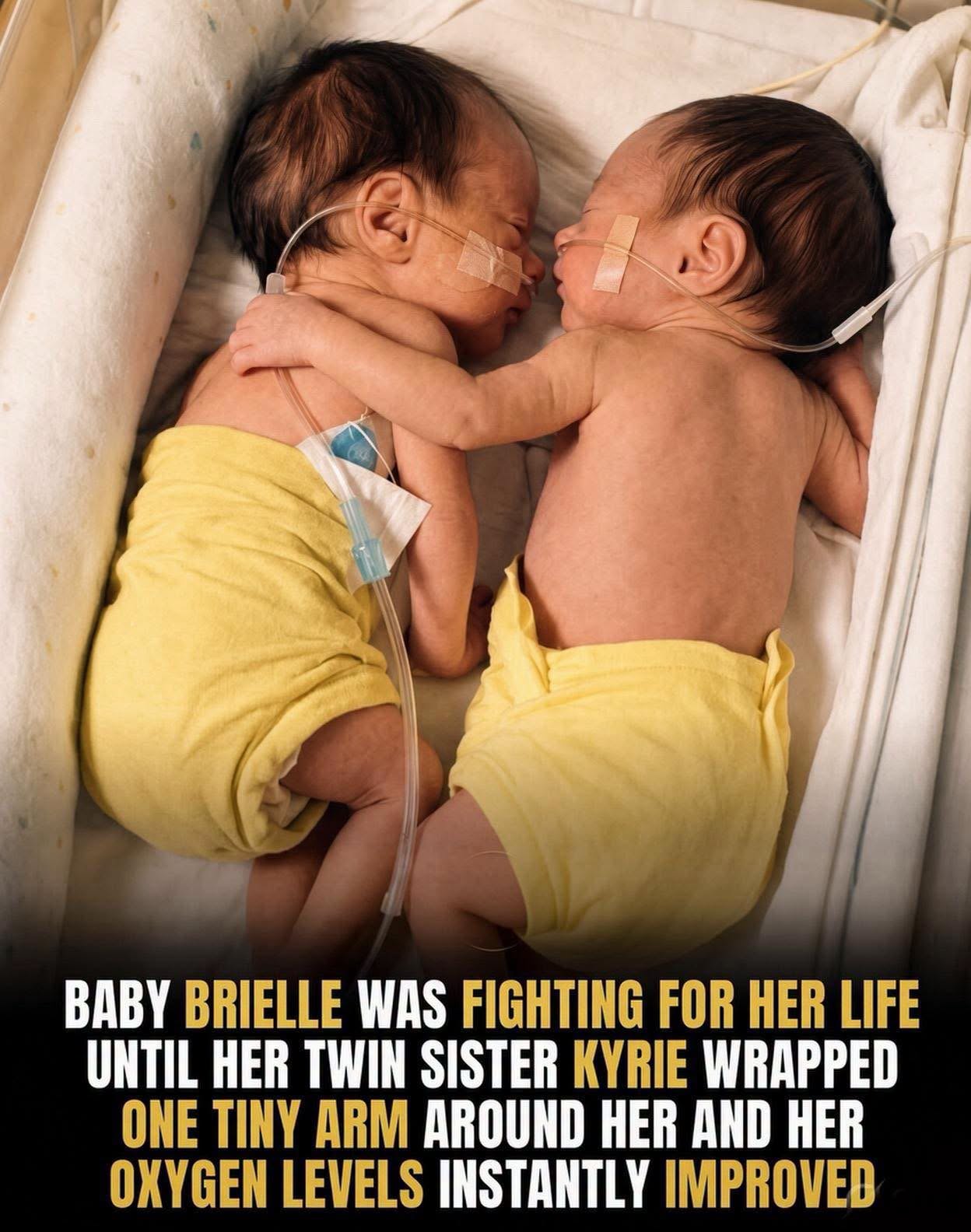
In 1995, twin sisters Brielle and Kyrie Jackson were born twelve weeks premature, each weighing less than two pounds. Their birth marked the beginning of a precarious medical journey inside a neonatal intensive care unit, where every moment was critical. While Kyrie gradually began to gain strength and stabilize, Brielle’s condition suddenly deteriorated. She struggled terribly to breathe, her heart rate dropped rapidly, and her oxygen saturation levels fell to dangerous lows. The medical team feared she would not survive the night.
In a moment of desperation, a nurse made a unconventional and simple decision that defied standard medical protocols of the era: she placed both fragile babies together in a single incubator. Almost instantly, Kyrie reached out her tiny arm and wrapped it firmly around her struggling sister.
What followed amazed the surrounding medical staff. Brielle’s heart rate quickly stabilized, her oxygen levels rose back to normal, her crying ceased, and her small body visibly relaxed into a calm state. The iconic photograph of that embrace became internationally famous as “The Rescuing Hug.”
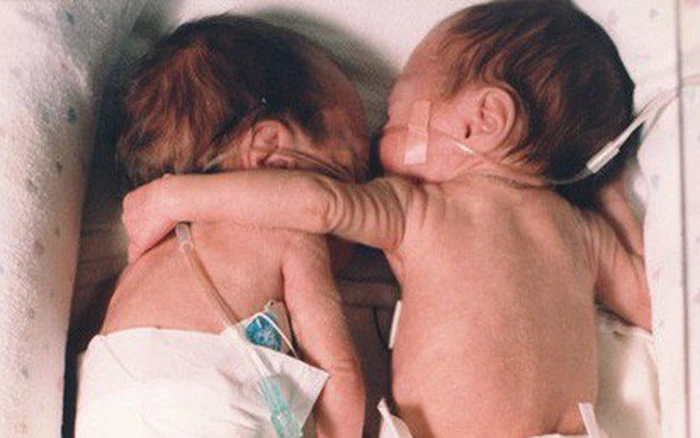
This singular, miraculous moment did far more than save a young life. It fundamentally transformed modern pediatric medicine, serving as a powerful catalyst for human-centered newborn care. It sparked widespread interest in co-bedding multi-birth infants and helped accelerate the global adoption of touch-based practices like kangaroo care, demonstrating that human connection can be a powerful force in healing.