EXTRAORDINARY BRAZILIAN TWINS: BEYOND A RARE MEDICAL DIAGNOSIS

EXTRAORDINARY BRAZILIAN TWINS: BEYOND A RARE MEDICAL DIAGNOSIS
Born prematurely in 2021 in Boa Vista, Brazil, identical twin sisters Elis and Eloá Lima Carneiro began their lives like any other infants. However, around four months of age, subtle changes emerged: thinning hair, slow weight gain, and distinct skin alterations. Seeking answers through rigorous evaluations, their family eventually received a groundbreaking diagnosis: Hutchinson-Gilford Progeria Syndrome (HGPS), an extremely rare genetic condition characterized by accelerated physical aging. A 2024 medical report highlighted Elis and Eloá as the first known female identical twins diagnosed with progeria, making their case scientifically remarkable.
While HGPS brings severe medical complexities—including growth restrictions, joint challenges, and premature cardiovascular risks—it does not define who these sisters are. Despite rigorous healthcare regimens involving physiotherapy, monitoring, and specialized medication like lonafarnib, the girls display vibrant, distinct personalities. By age four, Elis grew remarkably curious and expressive, while Eloá developed a confident, independent spirit.
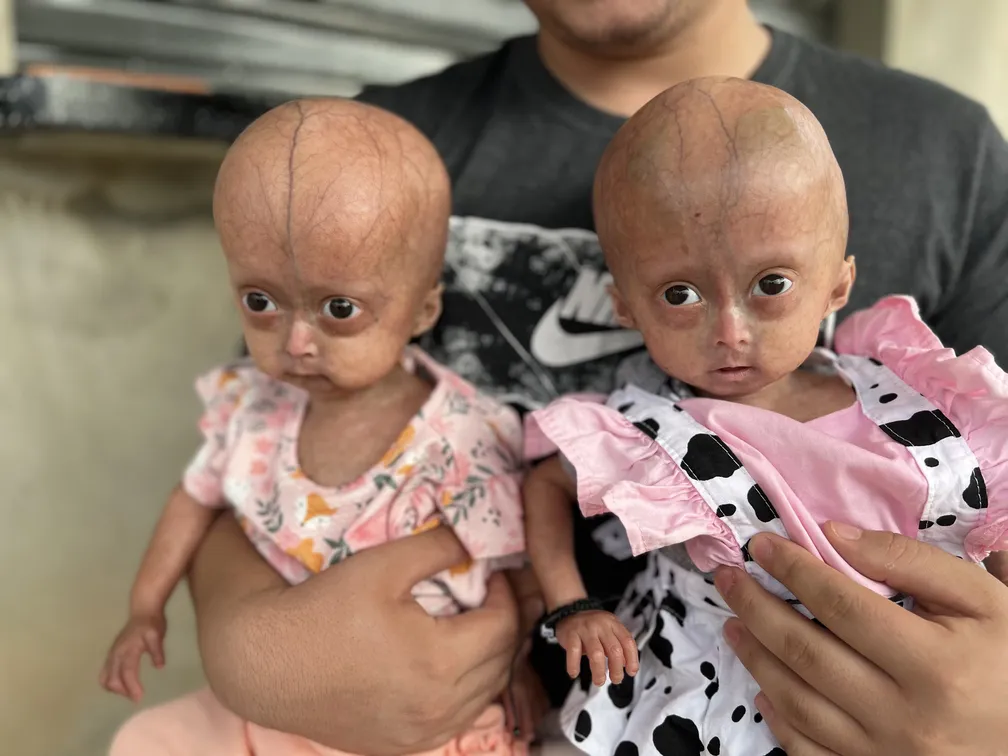
Beyond offering researchers priceless genetic insights into progeria, the story of Elis and Eloá serves as a powerful universal reminder. A medical diagnosis explains physical needs, but it cannot measure personality, laughter, or the profound bond of sisterhood. Above all medical literature, Elis and Eloá are children who deserve love, dignity, and the freedom to experience a joyful childhood together.