Sandra Bullock Left Hollywood Exhausted — Four Years Later, She Returned to the Film Once Questioned for Having “Too Many Women”
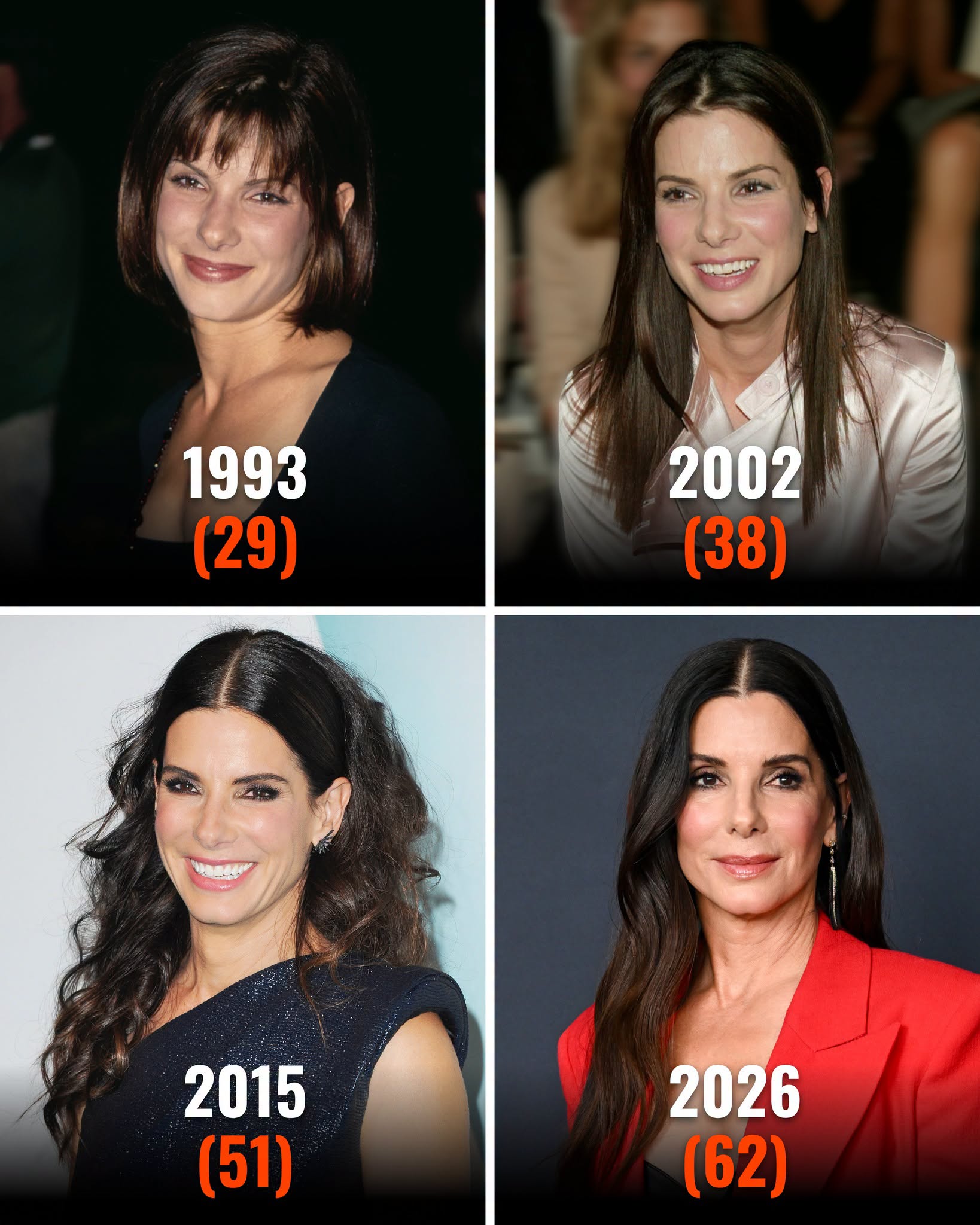
When Sandra Bullock walked onto the CinemaCon stage in Las Vegas in April 2026 beside Nicole Kidman, the reaction was bigger than a routine sequel announcement.
For Bullock, it marked the end of a four-year absence from making movies. And the project bringing her back was not Speed, Miss Congeniality or another easy extension of one of her biggest commercial successes.
It was Practical Magic 2 — a sequel to a movie that Hollywood once seemed unsure how to understand at all.
The irony has not been lost on Bullock. The original Practical Magic, released in 1998, was built around sisters, mothers, aunts, daughters and a community of women helping one another. Bullock now remembers being confronted during that era with a remarkable question: “How many women do you need in a film?”

Nearly three decades later, the same female-centered world has become the vehicle for one of Hollywood’s most closely watched comebacks.
Bullock’s disappearance from movie sets had been deliberate.
In March 2022, while promoting The Lost City, she publicly announced that acting needed to stop for a while. During production in the Dominican Republic, she had already realized she did not want to keep moving immediately from one project to another.
“I want to be at home,” Bullock told CBS Sunday Morning. She said she had spent years “always running” toward whatever came next and wanted instead to be present for her family.
A few months later, she described the exhaustion more starkly.
“I’m so burnt out. I’m so tired,” she said while explaining that work had begun to function almost like a source of validation she needed to stop relying on. Bullock did not announce a retirement. She simply did not know when she would want to return.
Her children, Louis and Laila, became the center of that decision.
Then life became far heavier than a professional hiatus.
On August 5, 2023, Bullock’s longtime partner Bryan Randall died at 57 after a private three-year battle with ALS. His family said Randall had chosen to keep the illness confidential and that those caring for him had honored that wish. Bullock later spoke about how deeply the experience affected her and her family.
By the time she returned to filmmaking, she was not simply coming back from exhaustion. She was returning after years shaped by motherhood, caregiving and grief.
That made Practical Magic an unexpectedly fitting place to begin again.
The first movie, adapted from Alice Hoffman’s novel, starred Bullock as Sally Owens and Kidman as her sister Gillian, women born into a family of witches and raised by their aunts, played by Stockard Channing and Dianne Wiest.
Its story moved between romance, comedy, supernatural fantasy, domestic abuse, death, family loyalty and female friendship. That mixture would eventually become part of the movie’s appeal.
In 1998, it was frequently treated as a problem.
Bullock remembered believing that audiences would love what the cast had made. Instead, she said, the reception suddenly became quiet and hostile. Questions were raised not only about the number of women in the movie but about why it moved through so many different emotional tones.
Producer Denise Di Novi has likewise recalled criticism specifically directed at the film’s concentration of female characters.
Financially, the theatrical run did not justify its sizable budget. Practical Magic cost a reported $75 million and earned about $46.7 million domestically. Critics were also largely unimpressed at the time.
But the movie did not disappear.
Over the following decades, DVDs, television, streaming and repeated autumn viewing helped create an audience that had not been obvious during its original release. The Owens house, the midnight margaritas scene, the soundtrack and, above all, the relationship among the women gradually became cultural touchstones.
Bullock herself has said she did not initially understand just how devoted that audience had become. When Warner Bros. raised the possibility of revisiting the story, her first reaction was essentially disbelief.
The movie that had once left its creators bruised was now valuable enough to resurrect.
This time, Bullock and Kidman returned not only as Sally and Gillian but as producers with substantial influence over the sequel.
They were determined to preserve the strange combination of warmth, darkness, humor and magic that had once been criticized. Bullock has said recreating the atmosphere mattered down to the lighting, the house and small details recognizable to longtime fans.
Bullock, Kidman and Di Novi also wanted a woman directing the new chapter. They chose Oscar-winning Danish filmmaker Susanne Bier, with Bullock describing herself and Kidman as highly involved throughout production.
Practical Magic 2, inspired by Hoffman’s The Book of Magic, expands the Owens family with a younger generation. Joey King plays Kylie and Maisie Williams plays Antonia, while Channing and Wiest return alongside Bullock and Kidman. Lee Pace, Xolo Maridueña and others join the cast. The sequel is scheduled for its North American theatrical release in September 2026.
Yet Bullock’s return carries a personal layer the original film could never have anticipated.
Grief has always existed inside Practical Magic. Its characters learn that supernatural power cannot protect them from every loss.
After Randall’s death, that theme became painfully real for Bullock.
She has said that parts of her own grief entered the sequel and that she gave the writers permission to draw from her experiences — including the way humor and pain can exist together. Her fears as a mother also informed Sally’s relationship with the next generation of Owens women.
Even after returning, Bullock has made clear that the old pattern of letting work dictate everything is not coming back.
Her career now fits around her children rather than the reverse. She has talked about returning from the promotional campaign straight to school routines and basketball season, while also acknowledging that she is beginning to consider other creative projects.
That may be the most striking part of the comeback.
Sandra Bullock did not spend four years away from Hollywood only to resume exactly where she stopped.
She returned on different terms — as a mother protecting her time, a producer guarding the story and an actress bringing years of real loss into a character she first played at 34.
And Hollywood’s treatment of Practical Magic has changed just as dramatically.
In 1998, Bullock remembers people asking why one movie needed so many women.
In 2026, those women — joined by their daughters — are the reason the movie exists again.