THE TASERS HIT PAMELA CISNEROS — SO WHY DIDN’T THEY STOP HER?
THE TASERS HIT PAMELA CISNEROS — SO WHY DIDN’T THEY STOP HER?
A new detail about the final confrontation between Pamela Cisneros and NYPD officers in Times Square is raising fresh questions about why multiple Taser deployments failed to stop her before officers opened fire.
According to retired NYPD detective and Taser expert Artur Sadowski, Cisneros’ body composition may have been one factor.
Sadowski, who previously helped write NYPD Taser training material, suggested that a layer of subcutaneous fat could have reduced the effectiveness of one of the probes if it failed to reach the underlying muscle properly.
And that may have mattered because the Taser was reportedly deployed toward Cisneros’ midsection.
 BUT HER BODY WASN’T THE ONLY PROBLEM
A Taser does not simply need to touch a person to guarantee incapacitation.
For the device to produce neuromuscular incapacitation, its probes need to make effective contact and create the necessary electrical circuit between them.
In Cisneros’ case, Sadowski pointed to several possible complications.
She was moving unpredictably during the confrontation.
Her purse or shopping bag may have interfered with one of the probes.
And the position of the probes may have prevented the electrical current from effectively reaching the muscles.
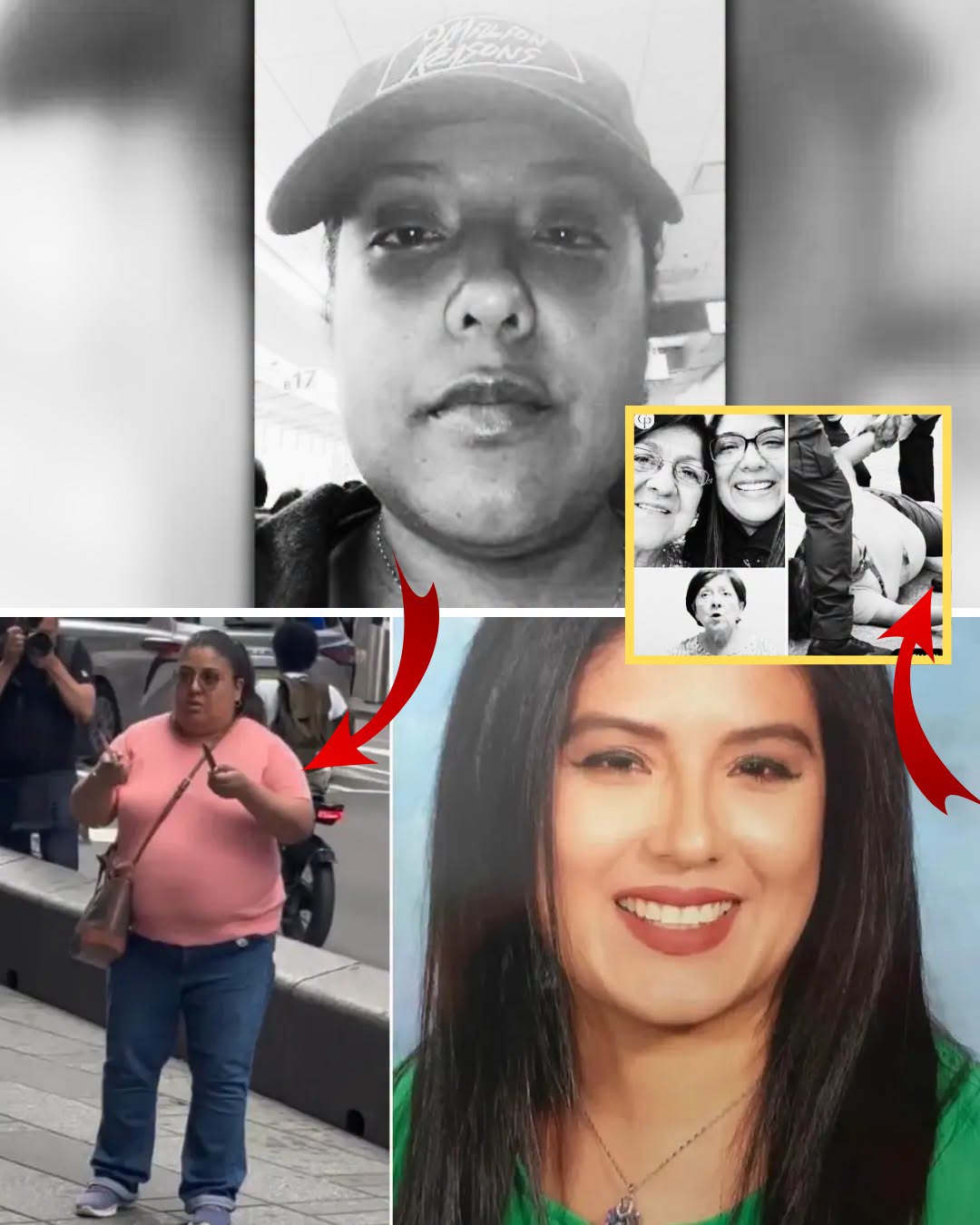
Video from the scene also appears to show a Taser probe or wire caught in her bag.
The result was terrifying.
The Tasers did not stop her.
 THE FINAL SECONDS
On Aug. 31, Cisneros, 49, allegedly attacked two strangers in Times Square with knives.
The first victim, 68-year-old Tak Kam, survived.
The second victim, 32-year-old Erin Piacenti, a Bank of America vice president and new mother, died after being stabbed.
Cisneros then moved toward a nearby NYPD substation, where officers confronted her.
Police repeatedly ordered her to drop the knives.
According to New York Attorney General’s Office of Special Investigation, three officers discharged Tasers, with no apparent effect.
Cisneros allegedly continued moving toward the officers while holding the knives.
Two officers then discharged their service weapons, striking her.
She was taken to Bellevue Hospital, where she was pronounced dead.
A DETAIL THAT CHANGES HOW THE ENCOUNTER IS UNDERSTOOD
The Taser failure does not, by itself, establish that the officers did anything wrong.
The New York Attorney General’s Office of Special Investigation is reviewing the encounter, and officials have stressed that the facts remain preliminary and could change.
But the possibility that several small factors combined at exactly the wrong moment offers one explanation for why a less-lethal weapon appeared to have little effect.
A moving target.
A bag potentially interfering with a probe.
The distance and positioning of the probes.
And possibly the thickness of tissue between a probe and the underlying muscle.
Together, those factors may have prevented the electrical current from producing the muscle-control effect officers were seeking.
WHAT HAPPENED IN THOSE FINAL MOMENTS?
That remains one of the most important questions surrounding the Times Square confrontation.
Officers had only seconds to react as Cisneros allegedly continued advancing with knives.
The Tasers had failed.
The threat had not stopped.
And the confrontation ended with two officers firing their service weapons.
Now, investigators must reconstruct exactly what happened during those critical seconds — including where every officer was standing, where each Taser probe landed, and what Cisneros was doing immediately before the shots were fired.
The Taser failure may help explain why the confrontation escalated so quickly. But only the ongoing investigation can determine the full sequence of events.