“NOAH WAS MY GREATEST GIFT”: MOTHER FIONA DONOHOE’S SIX-YEAR FIGHT FOR ANSWERS AFTER HER SON’S DE@TH
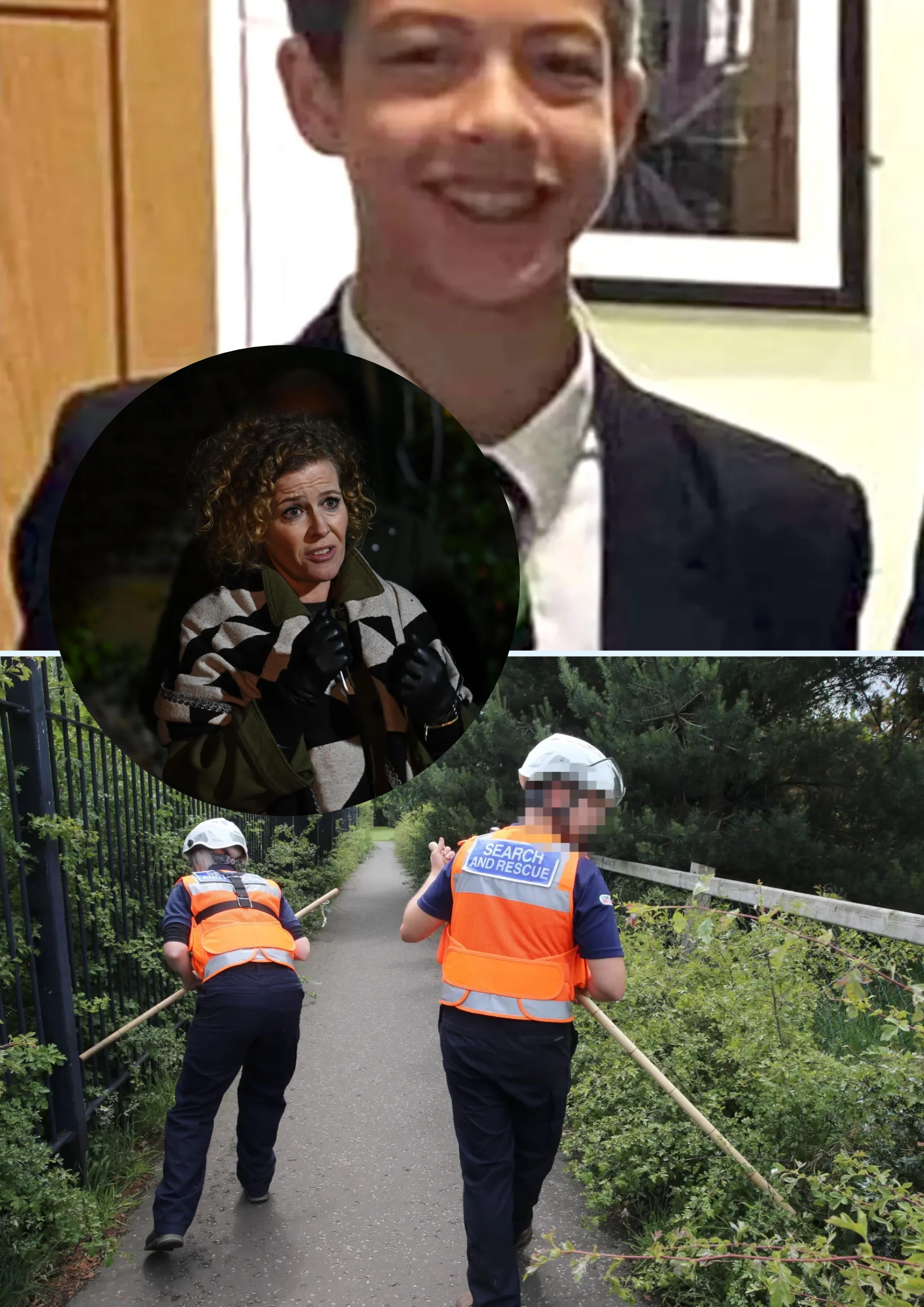
“NOAH WAS MY GREATEST GIFT”: MOTHER FIONA DONOHOE’S SIX-YEAR FIGHT FOR ANSWERS AFTER HER SON’S DEATH
For more than six years, Fiona Donohoe has refused to stop searching for answers about what happened to her only son, Noah Donohoe.
The Belfast teenager was just 14 years old when he disappeared on June 21, 2020.
Six days later, his body was discovered inside an underground water tunnel in north Belfast.
Now, after one of Northern Ireland’s longest and most closely watched inquests, a jury has delivered its findings — bringing the formal proceedings to an end while leaving Fiona still facing the pain of unanswered questions.
 NOAH DISAPPEARED AFTER LEAVING HOME ON HIS BICYCLE
Noah was a student at St Malachy’s College in Belfast.
On the afternoon of Sunday, June 21, 2020, he left his home in south Belfast on his bicycle, telling his mother that he was going to meet two friends near Cave Hill.
He left at approximately 5:40 p.m.
His mother later told the inquest that Noah had been behaving unusually that day.
She said he had been particularly affectionate and had hugged her repeatedly.
At around 4 p.m., she found him crying in his bedroom. When she asked what was wrong, he told her he was laughing.
Several hours after he left home, Fiona became increasingly concerned.
She eventually called police to report her son missing.
The emergency call lasted more than 25 minutes and was later played in full during the inquest.
Fiona told the call handler that Noah had been “very up and down” and that his behaviour had been out of character.
 A HUGE SEARCH FOR THE MISSING TEENAGER
Noah’s disappearance triggered an enormous search operation across Belfast.
More than 600 calls were made to police during the week he was missing, while members of the public joined officers and search teams looking for the teenager.
His case quickly attracted widespread attention, with people across Northern Ireland sharing appeals for information.
The public campaign became known as “Noah’s Army.”
Fiona became the central figure in the campaign, continuing to appeal for information while pressing authorities to investigate every possible explanation for her son’s disappearance.
She also created social-media accounts dedicated to Noah and his case.
Eventually, almost 300,000 people signed a petition calling for greater transparency surrounding the investigation.
NOAH WAS FOUND SIX DAYS LATER
On June 27, 2020, six days after he disappeared, Noah’s body was discovered inside an underground water tunnel in north Belfast.
He was found more than 600 metres downstream from a culvert entrance close to Northwood Road.
The discovery devastated his family and brought the nationwide search to a tragic end.
A postmortem examination indicated that the likely cause of death was drowning. The eventual inquest concluded that Noah died by drowning between approximately 7 p.m. and midnight on June 21.
But many questions surrounding his final movements remained unanswered.
Among the most difficult issues was why Noah had behaved so unusually before his death.
CCTV showed him falling from his bicycle.
Later footage showed him cycling without clothes.
Friends and family told the inquest that such behaviour was completely unlike him.
The jury ultimately said the available evidence was insufficient to explain why Noah behaved in that way.
FIONA TURNED HER GRIEF INTO A CAMPAIGN
After Noah’s death, Fiona could have stepped away from public attention.
Instead, she continued demanding answers.
She attended hearings, challenged decisions involving evidence and repeatedly questioned the way the investigation had been conducted.
Her campaign attracted political support and thousands of members of the public.
Supporters wearing blue and white Noah’s Army jerseys attended demonstrations calling for transparency.
For Fiona, the campaign was about more than finding an explanation for her son’s death.
It was about making sure every possible question was examined.
She told the inquest that Noah had been a “beautiful, happy and much-loved soul” and described the bond between them as magical.
THE LONG-AWAITED INQUEST
The inquest finally began in January 2026, almost six years after Noah’s death.
It became an extraordinary legal process.
The court heard from 76 witnesses, while statements from another 42 people were also considered.
Evidence included CCTV footage, photographs, maps, police logs, expert reports and extensive documentation concerning the search for Noah and the subsequent investigation.
The proceedings lasted almost six months.
Fiona attended throughout, listening to detailed evidence about the final hours of her son’s life and the investigation that followed.
Friends and teachers also described Noah as exceptionally intelligent, kind and curious.
One of his closest friends told the inquest that Noah was the “most intelligent human being” he had ever known.
His cello teacher described him as an exceptional student.
Noah was interested in literature, music, mathematics and science and had hoped to study medicine at Trinity College Dublin.
JURY IDENTIFIES FAILINGS
After more than 30 hours of deliberations over five days, the jury reached a unanimous verdict on ten questions.
The jury found that Northern Ireland’s Department for Infrastructure had erred in its management of the culvert leading to the underground water tunnel.
There were no adequate warnings indicating that members of the public could access the tunnel.
The jury also found that the decision to install a debris screen rather than a storm screen meant Noah was able to enter the tunnel.
The jury said it was possible, although not probable, that failings by the Department for Infrastructure contributed to Noah’s death.
13 POLICE FAILINGS WERE ALSO IDENTIFIED
The jury did not find that police errors contributed to Noah’s death.
However, it identified 13 failings in the PSNI investigation.
Among the concerns were failures relating to CCTV, house-to-house inquiries and delays in considering the possibility that Noah had entered the storm-drain system.
The jury concluded that these investigative shortcomings did not contribute to Noah’s death based on the time of death established by the evidence.
The PSNI said it accepted the jury’s findings and would consider the lessons identified.
Assistant Chief Constable Davy Beck said officers had been determined to locate Noah, but said there was no action police could have taken that would have prevented his death.
FIONA: “NOAH WAS FAILED”
Outside Belfast’s Laganside Courts following the verdict, Fiona’s solicitor read a statement on her behalf.
Her words reflected both the enormous love she had for her son and the frustration she has carried for years.
“Noah was my greatest gift in life,” the statement said.
She said she missed him every day and that he should still be alive, following his dreams and planning his future.
Fiona said she had entered the inquest seeking answers but was leaving with one clear conclusion:
“Noah was failed.”
She criticised both the Department for Infrastructure and the PSNI, saying she believed the evidence had exposed repeated failings.
She also thanked the jury, the coroner and the thousands of supporters who had stood beside her throughout the years.
REMEMBERING THE BOY BEHIND THE HEADLINES
Throughout the inquest, Fiona and Noah’s friends repeatedly emphasized that he should not be remembered only through the circumstances of his death.
He was an ambitious teenager with a huge appetite for knowledge.
He loved music and played cello.
He was fascinated by books, philosophy, mathematics and science.
His teachers remembered his academic ability, while his friends remembered his humour, kindness and curiosity.
Fiona described him as a young person with a bright future ahead of him.
His friend Charlie Rocks told the inquest that Noah was one of the nicest, friendliest and funniest people he knew.
For his family and friends, the boy at the centre of the six-year campaign was not simply a missing-person case or an inquest file.
He was Noah.
SIX YEARS LATER, THE QUESTIONS REMAIN
The inquest has now concluded, but it has not answered every question surrounding Noah’s final movements.
The jury was unable to explain why he behaved in a way that was so unusual for him shortly before his death.
It also identified significant shortcomings in how the investigation was handled, while concluding that those police failings did not contribute to his death.
For Fiona, however, the search for answers has always been inseparable from her love for her son.
For six years, she has continued to speak about Noah, campaign in his name and demand that the circumstances surrounding his death be fully examined.
The formal inquest may now be over.
But Fiona’s grief has not ended.
Nor has the memory of the 14-year-old boy she described as her “greatest gift in life.”
Noah Donohoe was 14 when his life ended. More than six years later, his mother is still carrying his memory — and the fight for answers she began the day he disappeared.