Before Aaron Pierre Became Green Lantern, He Quietly Built One of Hollywood’s Most Interesting Careers
For many viewers, Aaron Pierre seemed to arrive all at once.
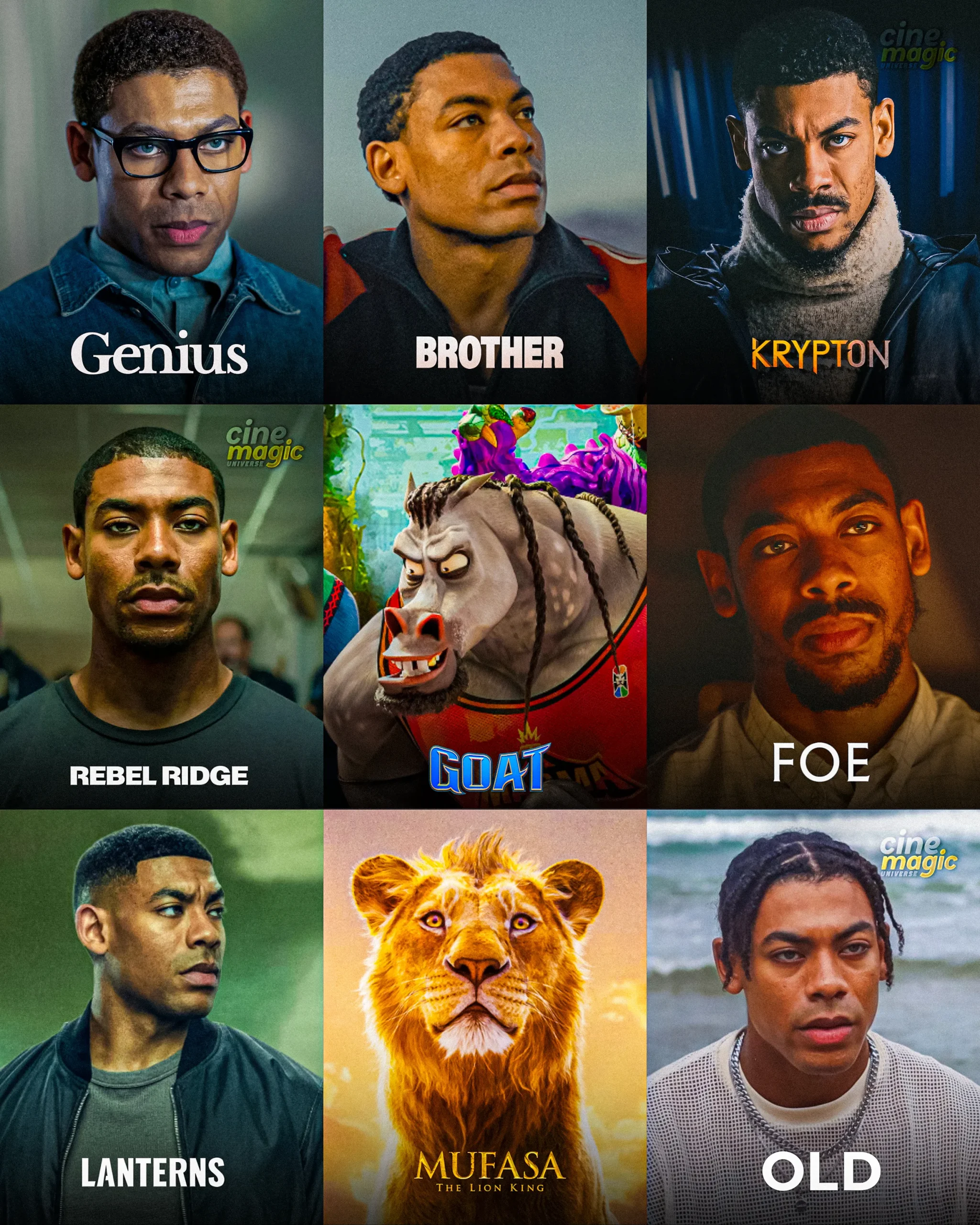
They may have first noticed him as Terry Richmond, the determined ex-Marine at the center of Rebel Ridge. Others heard his voice as Mufasa in Disney’s Mufasa: The Lion King. And now, audiences know him as John Stewart, the newest Green Lantern at the center of HBO’s Lanterns.
But Pierre’s rise was never really sudden.
By the time he stepped into the DC Universe, he had already spent years moving between television, prestige drama, psychological thrillers, intimate family stories and major studio productions. His career had been built one very different role at a time.
That makes the arrival of John Stewart feel less like a breakthrough out of nowhere and more like the latest stage of a remarkably varied journey.

The Early Roles That Started Building His Range
Pierre, born in London in 1994, trained at the London Academy of Music and Dramatic Art. His professional stage work included Cassio in Othello at Shakespeare’s Globe, a performance that earned him a 2018 Ian Charleson Award nomination.
His screen career began gathering momentum with roles that were small enough to be easy to overlook but important enough to establish his range.
One of those early opportunities came with Krypton, the Syfy series exploring the history of Superman’s home planet. Pierre appeared as Dev-Em, giving him an early entry into the world of superhero storytelling long before John Stewart entered his career.
But his most significant early turning point came with Barry Jenkins’ The Underground Railroad.
In the 2021 limited series, Pierre played Caesar, a central character whose relationship with Cora becomes part of the emotional heart of the story. The role demanded considerably more than simply looking the part. Pierre had to communicate tenderness, fear, hope and determination within a story built around slavery, escape and the search for freedom.
It was an early sign that he was capable of carrying emotionally demanding material.

Then He Started Choosing Very Different Characters
What makes Pierre’s career interesting is how difficult it is to reduce his roles to one type.
In M. Night Shyamalan’s Old, he played Mid-Sized Sedan, a rapper whose life becomes entangled with the film’s mysterious beach. The role was another departure from The Underground Railroad, but Pierre found an additional way to contribute: he co-wrote and performed the song “More Dough for the Cookin’” for the movie.
That detail is easy to miss when looking backward at his filmography.
Pierre was not simply collecting acting credits. He was showing that his talents extended beyond the expected boundaries of an actor.
He followed Old with Brother, Clement Virgo’s drama in which he played Francis, one half of a story centered on two brothers and the forces that shape their lives.
Then came Foe, Garth Davis’ science-fiction psychological drama starring Saoirse Ronan and Paul Mescal. Pierre played Terrance, placing him in a three-person dramatic environment alongside two actors who were already receiving major attention. HBO and Warner Bros. later highlighted Foe, Brother and The Underground Railroad among the projects that defined his work before Lanterns.
Each role was different.
And that difference mattered.

Rebel Ridge Changed How Many People Saw Him
Then came Rebel Ridge.
Released by Netflix in September 2024, Jeremy Saulnier’s film put Pierre in the lead as Terry Richmond, an ex-Marine who arrives in a small Louisiana town to post bail for his cousin and becomes caught in a confrontation with local authorities.
Suddenly, the actor who had spent years building a résumé across prestige television and independent-minded films was carrying a major streaming action thriller.
The performance also brought formal recognition. Pierre won the NAACP Image Award for Outstanding Actor in a Television Movie, Limited-Series or Dramatic Special for Rebel Ridge in 2025.
More importantly for his public profile, Rebel Ridge gave viewers a character they could follow from beginning to end.
Terry was physically imposing, but the performance was not built solely around action. Pierre played him with restraint, allowing the character’s determination and frustration to accumulate rather than turning every scene into a display of aggression.
That combination helped introduce him to a much wider audience.

Then His Voice Became Part of a Disney Legacy
If Rebel Ridge showed audiences what Pierre could do on screen, Mufasa: The Lion King introduced an entirely different side of his performance.
Barry Jenkins cast Pierre as the adult voice of Mufasa in the 2024 film, a role carrying an enormous legacy because James Earl Jones had made the character one of the most recognizable voices in Disney history.
Pierre later described being uncertain when Jenkins asked whether he could sing. He had sung privately but had not approached it as a professional performer before. He ultimately took on the challenge, combining acting and singing for a character whose history was already deeply familiar to audiences.
Disney’s film presents Mufasa before he becomes the king audiences know, following him from orphaned cub to future ruler of the Pride Lands.
For Pierre, it was another completely different test: not physical action, not a historical drama, not a psychological thriller, but voice performance and music inside one of the world’s most recognizable entertainment franchises.

And Then Came John Stewart
By October 2024, the next major step was official.
HBO announced Pierre as John Stewart in Lanterns, alongside Kyle Chandler as veteran Green Lantern Hal Jordan. The series was developed by Chris Mundy, Damon Lindelof and DC writer Tom King and is based on the Green Lantern comics.
The premise places the two characters in an Earth-based mystery, investigating a murder in the American heartland. HBO describes John as a new recruit working alongside the more experienced Hal Jordan.
The significance of the role goes beyond another superhero credit.
John Stewart has been part of DC Comics since his introduction in Green Lantern #87 in 1971. Over decades, the character became especially recognizable to many fans through his appearances in animated Justice League stories.
Pierre therefore stepped into a character with a history that predates his own career by decades.
And by the time Lanterns premiered in August 2026, he was no longer an actor waiting to be discovered. He had already played Caesar, Mid-Sized Sedan, Francis, Terry Richmond and Mufasa.
John Stewart was the next chapter.

The Career Was Never as Sudden as It Looked
That is what makes Pierre’s trajectory so interesting.
From Krypton to The Underground Railroad, Old, Brother, Foe, Rebel Ridge and Mufasa, the roles kept changing. The scale changed. The genres changed. Even the way audiences experienced his performances changed.
Some saw him on stage. Others encountered him in prestige television. Some discovered him through Netflix. Millions heard him in a Disney film. Now, a new audience knows him as one of the central figures in DC’s Lanterns.
It can look, from the outside, as if Hollywood suddenly handed Aaron Pierre a series of enormous opportunities.
The longer view tells a different story.
Hollywood had years to see what he could do in very different kinds of roles before giving him one of DC’s most recognizable characters.
Pierre did not suddenly become Green Lantern.
He built toward it—quietly, role by role, until the next role became John Stewart.