SERIAL KI//ER OR POSSIBLE MISCARRIAGE OF JUSTICE? THE LUCY LETBY DEBATE CONTINUES
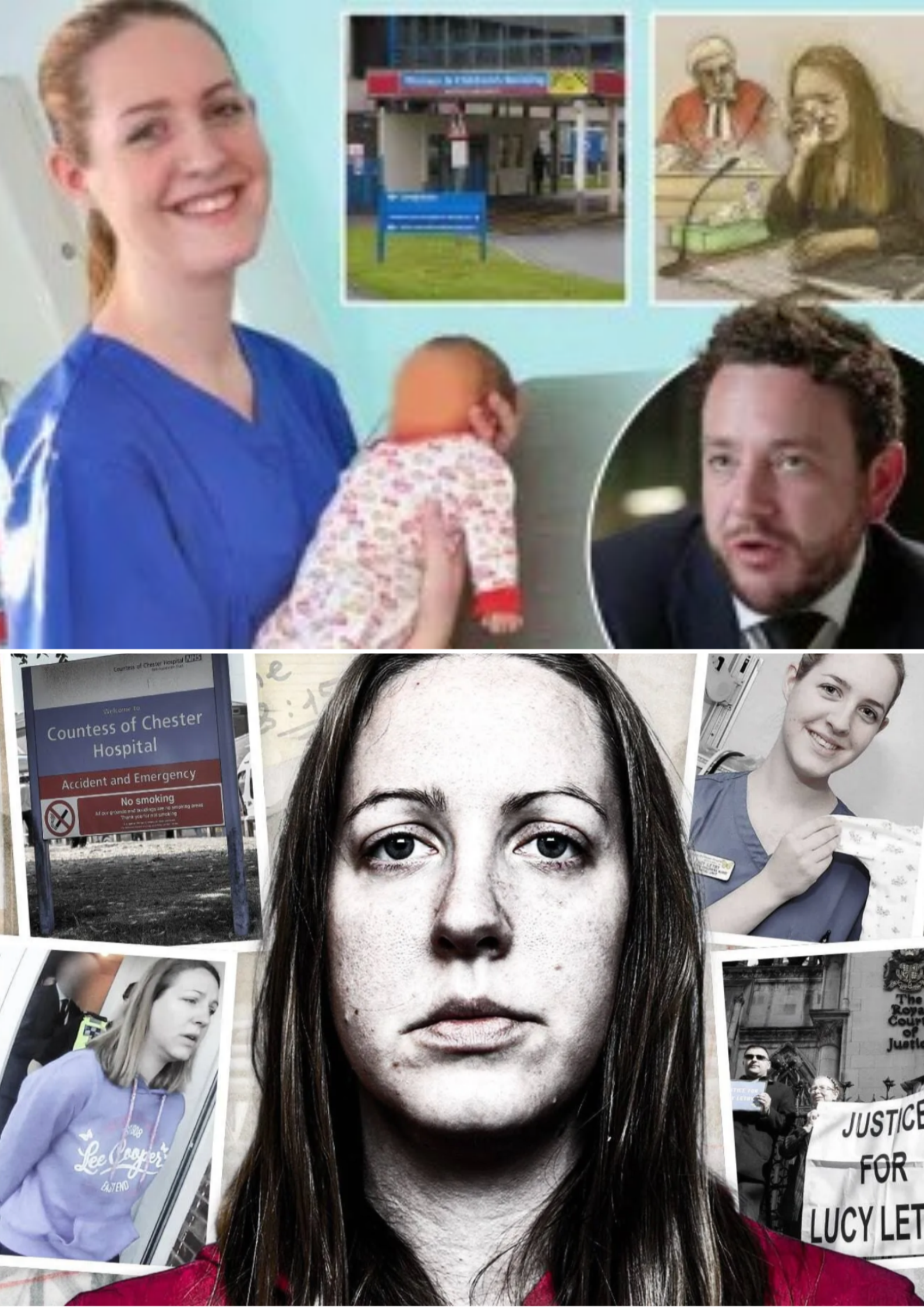
SERIAL KILLER OR POSSIBLE MISCARRIAGE OF JUSTICE? THE LUCY LETBY DEBATE CONTINUES
Few criminal cases in Britain have generated as much debate as that of Lucy Letby, the former neonatal nurse convicted of murdering seven babies and attempting to murder seven others at the Countess of Chester Hospital.
Letby was convicted at two trials and is serving 15 whole-life orders. She continues to maintain her innocence.
But while the convictions remain in force, questions surrounding some of the scientific evidence and the circumstances inside the hospital’s neonatal unit have continued to fuel a campaign for the case to be reconsidered.
The latest developments have added another complicated layer to the debate.
 NEW QUESTIONS ABOUT THE SCIENTIFIC EVIDENCE
Letby’s defence has assembled evidence from medical and scientific specialists who argue that some of the babies’ collapses or deaths may have had natural or medical explanations rather than being the result of deliberate harm.
One of the most closely disputed issues concerns two babies whom Letby was convicted of attempting to murder through insulin poisoning.
Engineering experts Helen Shannon and Professor Geoff Chase previously produced a report questioning aspects of the scientific evidence used in those convictions.
In September 2026, however, the pair withdrew from Letby’s defence team.
They said they continued to stand by their assessment that it was “very unlikely” that two babies had been poisoned with insulin, but they could not support some other arguments being advanced by the defence.
They described some of those arguments as having “fundamental unresolvable problems” and said they were inconsistent with available evidence, science and established physiology.
Letby’s barrister, Mark McDonald, rejected the suggestion that their departure undermined the wider case being presented to the Criminal Cases Review Commission.
He said other experts remained involved and argued that new evidence from specialists in insulin, endocrinology and laboratory medicine raised fundamental questions about the scientific basis of the two insulin convictions.
 WHAT ABOUT THE HOSPITAL’S FAILURES?
The debate has also focused heavily on conditions inside the Countess of Chester Hospital.
The Thirlwall Inquiry, established after Letby’s convictions, published its final report on September 15, 2026.
It found serious failures in management, governance and safeguarding at the hospital.
Lady Justice Kathryn Thirlwall said there had been a “complete failure to protect babies” and found that some collapses and deaths could have been avoided had appropriate safeguarding procedures been followed.
The inquiry also found that doctors had raised concerns about unusual deaths and collapses, but senior management failed to respond appropriately and delayed contacting police.
The report was highly critical of the way the hospital handled concerns about Letby and the way parents were kept informed.
However, the inquiry was not a retrial.
It was established to examine what happened at the hospital, including management failures, safeguarding, the experiences of families and the wider NHS systems surrounding the neonatal unit.
It did not have the task of deciding whether Letby’s criminal convictions were correct.
THE INSULIN EVIDENCE REMAINS DISPUTED
The question of insulin is particularly important because it formed part of the prosecution case against Letby.
Defence experts have argued that the blood-test evidence used at trial should be reconsidered.
The Thirlwall Inquiry examined some of those arguments and concluded there was no reason to believe the relevant testing machines were improperly calibrated or that the testing process was defective. It also said the relevant immunoassay tests are widely used in hospitals.
That does not end the legal debate, however.
The defence continues to argue that newly obtained expert evidence could potentially affect the convictions.
This is now a matter for the Criminal Cases Review Commission, rather than the public inquiry.
THE CCRC IS STILL CONSIDERING THE CASE
Letby’s lawyers submitted material to the Criminal Cases Review Commission (CCRC) seeking another opportunity to challenge her convictions.
The CCRC confirmed in February 2026 that its review was underway.
The commission emphasized that it does not decide whether a person is innocent or guilty.
Instead, it investigates potential miscarriages of justice and can refer a case to an appellate court where new evidence or argument creates a real possibility that a conviction would not be upheld.
The process has already involved a substantial amount of new material, including expert reports and further submissions from Letby’s legal team.
As of September 2026, the CCRC had not announced a decision to refer the convictions back to the Court of Appeal.
WHY THE CASE REMAINS SO DIVISIVE
The debate has increasingly developed into two overlapping questions.
The first is whether the evidence presented at Letby’s trials was sufficient to prove beyond reasonable doubt that she deliberately harmed the babies.
The second concerns what went wrong inside the hospital and whether institutional failures allowed a pattern of deaths and collapses to continue without an earlier intervention.
Those questions are connected, but they are not identical.
The Thirlwall Inquiry’s findings about hospital failures do not, by themselves, establish that Letby was wrongly convicted.
At the same time, evidence of hospital failures does not automatically resolve the separate questions being examined by the CCRC about the scientific and legal arguments surrounding the convictions.
LETBY’S CONVICTIONS HAVE NOT BEEN OVERTURNED
For now, the legal position remains unchanged.
Lucy Letby remains convicted of seven murders and seven attempted murders and remains in prison under whole-life orders.
Her previous appeal against her convictions was unsuccessful, while the CCRC is now examining a new application.
Her defence maintains that new scientific evidence could fundamentally change the understanding of the case.
Meanwhile, the prosecution convictions remain legally valid, and the families of the babies continue to live with the consequences of the deaths and injuries that occurred at the hospital.
The result is a case where questions about evidence, hospital failures and the legal process continue to collide.
Whether those questions eventually lead to another appeal will depend not on public opinion, but on the evidence and the decisions of the institutions responsible for reviewing criminal convictions.