LUCY LETBY CASE — DOCTOR WHO HELPED CONVICT HER NOW ADMITS HE IS NO LONGER CERTAIN DELIBERATE HARM TOOK PLACE
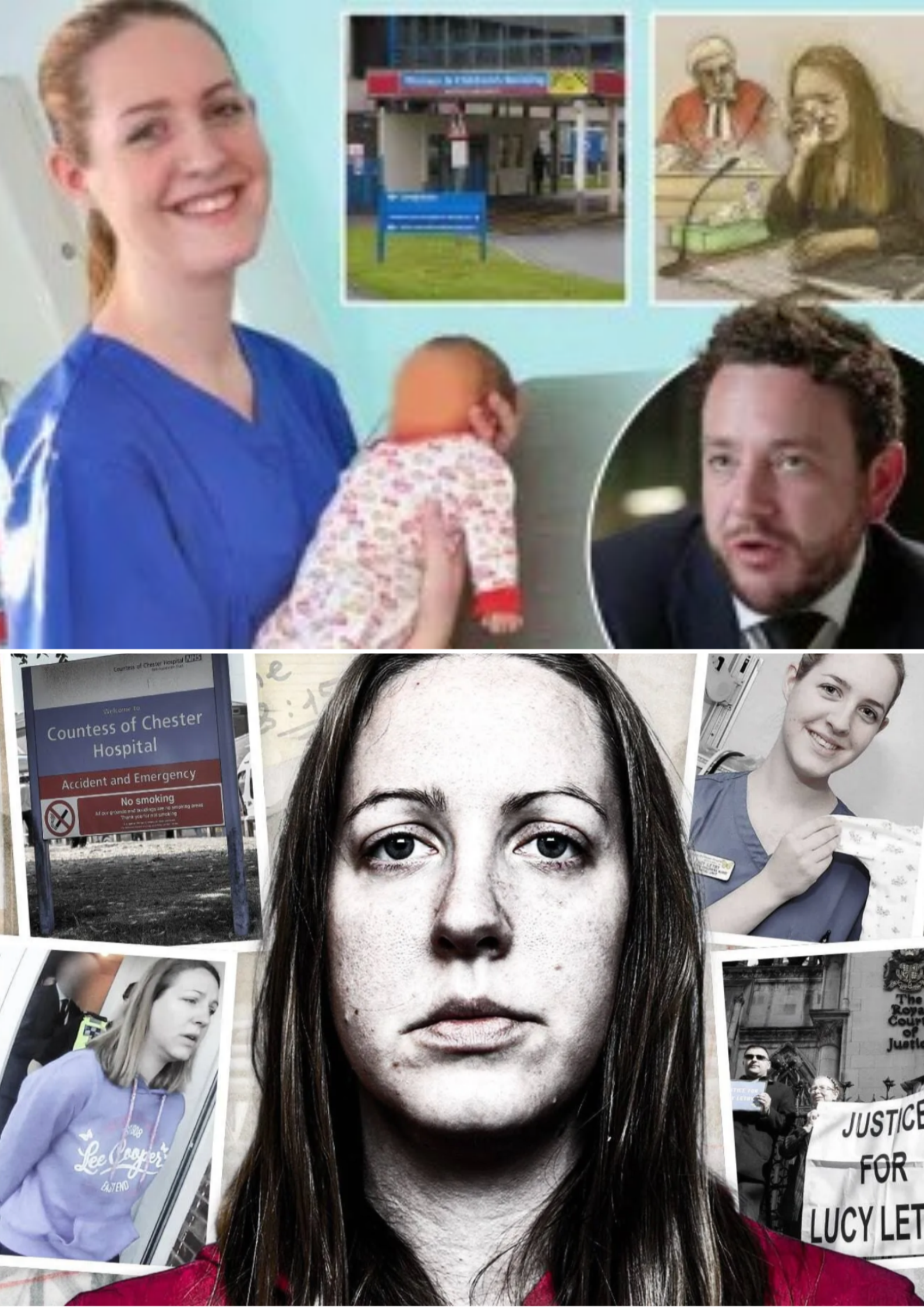
LUCY LETBY CASE — DOCTOR WHO HELPED CONVICT HER NOW ADMITS HE IS NO LONGER CERTAIN DELIBERATE HARM TOOK PLACE
The Lucy Letby case has been thrown back into the spotlight after one of the doctors whose evidence helped secure her convictions admitted that he is no longer certain deliberate harm was carried out at the Countess of Chester Hospital.
Dr John Gibbs, a retired paediatrician who was involved in the investigation and gave evidence connected to the case, has now said he has a “very small concern” that no deliberate harm may have taken place at all.
His comments represent a remarkable change in tone from one of the medical professionals who helped investigators understand the unexplained collapses and deaths on the neonatal unit.
Gibbs has also said that a retrial could be the most appropriate course of action, particularly as new medical arguments continue to emerge around the evidence presented during Letby’s trials.
 A CONVICTION THAT REMAINS IN PLACE
Lucy Letby was convicted of murdering seven babies and attempting to murder seven others in connection with events at the Countess of Chester Hospital during 2015 and 2016.
She received 15 whole-life orders and has consistently denied deliberately harming any of the babies.
Her convictions remain legally valid. Previous attempts to challenge them through the Court of Appeal were unsuccessful.
That is why the latest developments are significant: the current debate is not simply being driven by Letby’s defence team or commentators online.
A doctor who was involved in the original medical evidence is now publicly acknowledging that he has questions of his own.
 “NO” — WHEN ASKED IF HE IS STILL CERTAIN
According to reports of his recent comments, Dr Gibbs was asked directly whether he remained certain that Letby had murdered the babies.
His answer was “No.”
He went further, saying that if Letby was not responsible, he did not necessarily believe another person was deliberately harming the babies either.
Instead, he said he now holds a small concern that there may have been no deliberate harm at all.
Gibbs nevertheless acknowledged the enormous consequences of reopening the issue, particularly for the families whose babies died.
He argued that concern for the families should not prevent genuinely compelling new evidence from being examined if that evidence could potentially undermine a conviction.
WHY THE MEDICAL EVIDENCE IS BEING REVISITED
The renewed controversy centres heavily on how the babies’ medical deterioration was interpreted.
One of the major areas of dispute concerns whether symptoms that prosecutors presented as evidence of deliberate intervention could instead have resulted from natural medical complications or problems associated with pregnancy, birth and neonatal care.
A particularly significant development came to light in a BBC investigation in July 2026.
The BBC reported that maternity records for babies involved in the case had been seized by police but were not made available to Letby’s defence before trial.
Those records contained information about pregnancy, labour and delivery — information that medical experts said can be important when determining why a newborn became critically ill.
THE CASE OF “BABY O”
One example highlighted by the BBC concerns a baby identified during the trial as Baby O.
Prosecutors argued that the infant had been born in good condition, remained stable and then suddenly deteriorated — circumstances they said were consistent with deliberate harm.
But Professor Phil Bennett, a specialist in obstetrics and gynaecology who reviewed the case for Letby’s new defence team, offered a different interpretation.
He argued that the baby may have suffered a liver injury associated with a difficult Caesarean delivery.
According to his assessment, such an injury can result in a baby initially appearing relatively well before deteriorating approximately 48 hours later.
Bennett said the maternity records could therefore be important in understanding what happened.
Dr Dewi Evans, the prosecution’s principal medical expert, disagreed with that interpretation and maintained that the babies had been born in acceptable condition.
That disagreement illustrates the central issue now confronting the case: whether the medical evidence has been interpreted correctly.
QUESTIONS OVER THE AIR-EMBOLISM EVIDENCE
Another major area of debate involves the allegation that Letby deliberately introduced air into babies’ bloodstreams.
During the original trials, the prosecution argued that certain clinical signs were consistent with air embolism.
But Professor Shoo Lee, whose earlier medical research was cited in discussions surrounding air embolism, has subsequently questioned whether his research was interpreted correctly.
A panel of medical experts assembled by Lee reportedly concluded that they found no medical evidence supporting deliberate harm in the cases they reviewed.
These views are disputed, and they do not themselves overturn Letby’s convictions. They form part of the new material being put forward by those seeking further examination of the case.
WHAT ABOUT THE “HIDDEN LAB DATA”?
Claims have circulated online that crucial laboratory data or coroner records were deliberately suppressed and that authorities are afraid to release them.
There is currently no reliable evidence establishing that claim in those terms.
There are, however, documented questions about evidence and records that were not available to the defence at trial.
The BBC’s investigation into the maternity notes is one such example.
The Crown Prosecution Service has also faced renewed attention after prosecutors decided not to bring additional charges relating to other babies whose cases had been investigated.
In August 2026, the CPS confirmed that an independent review had examined requests concerning six infants and upheld the original decision not to bring further criminal charges.
That decision does not establish Letby’s innocence, nor does it invalidate her existing convictions. It does, however, form part of the wider legal background surrounding the case.
THE CCRC IS NOW EXAMINING NEW MATERIAL
The Criminal Cases Review Commission is currently reviewing Letby’s convictions.
The CCRC has confirmed that it received a preliminary application in February 2025 and subsequently received expert reports, further submissions and defence material over the following months.
Further expert reports and submissions were received as recently as January 2026.
Importantly, the CCRC has stressed that it does not decide whether Letby is innocent or guilty.
Its role is to determine whether new evidence or arguments create a real possibility that a conviction might not be upheld by an appeal court.
That means Dr Gibbs’ latest comments are significant as part of the broader debate, but they do not mean that a retrial has already been granted.
THE QUESTIONS THAT REMAIN
The renewed controversy leaves several major questions unresolved.
Could some of the babies’ collapses have had medical explanations that were not fully considered at the original trials?
Did the prosecution and defence have access to all relevant medical records?
Were certain clinical signs interpreted differently by different experts?
And could newly submitted expert evidence satisfy the legal threshold required for the convictions to be reconsidered?
Those questions are now being examined against the background of a case in which Letby remains convicted and imprisoned.
For the families of the babies, the renewed debate is deeply painful.
For Letby’s supporters, the new medical opinions are evidence that the case deserves another examination.
For the prosecution and those who continue to support the original verdict, the convictions were reached by juries after extensive evidence was presented and remain legally valid.
A CASE FAR FROM OVER
Dr John Gibbs’ change in position does not prove that Lucy Letby was innocent.
But it does mark an extraordinary development in a case that has already undergone years of investigation, two trials and multiple legal challenges.
A doctor who once contributed to the evidence surrounding the case is now saying he is not certain that deliberate harm occurred and believes a retrial could potentially be appropriate.
Meanwhile, the CCRC continues its review of the new material.
Until that process reaches a conclusion, the central question remains unresolved:
Were the babies deliberately harmed, or could some of the medical evidence have been interpreted incorrectly?
For now, Lucy Letby’s convictions remain in force — but the debate surrounding the evidence is showing no sign of disappearing.
👇 FULL STORY AND THE LATEST DEVELOPMENTS IN THE COMMENTS