CHRISTa PIKE SURVIVES FAILED EXECUTION — DEATH ROW WOMAN LEFT IN CRITICAL CONDITION AS NEW QUESTIONS EMERGE
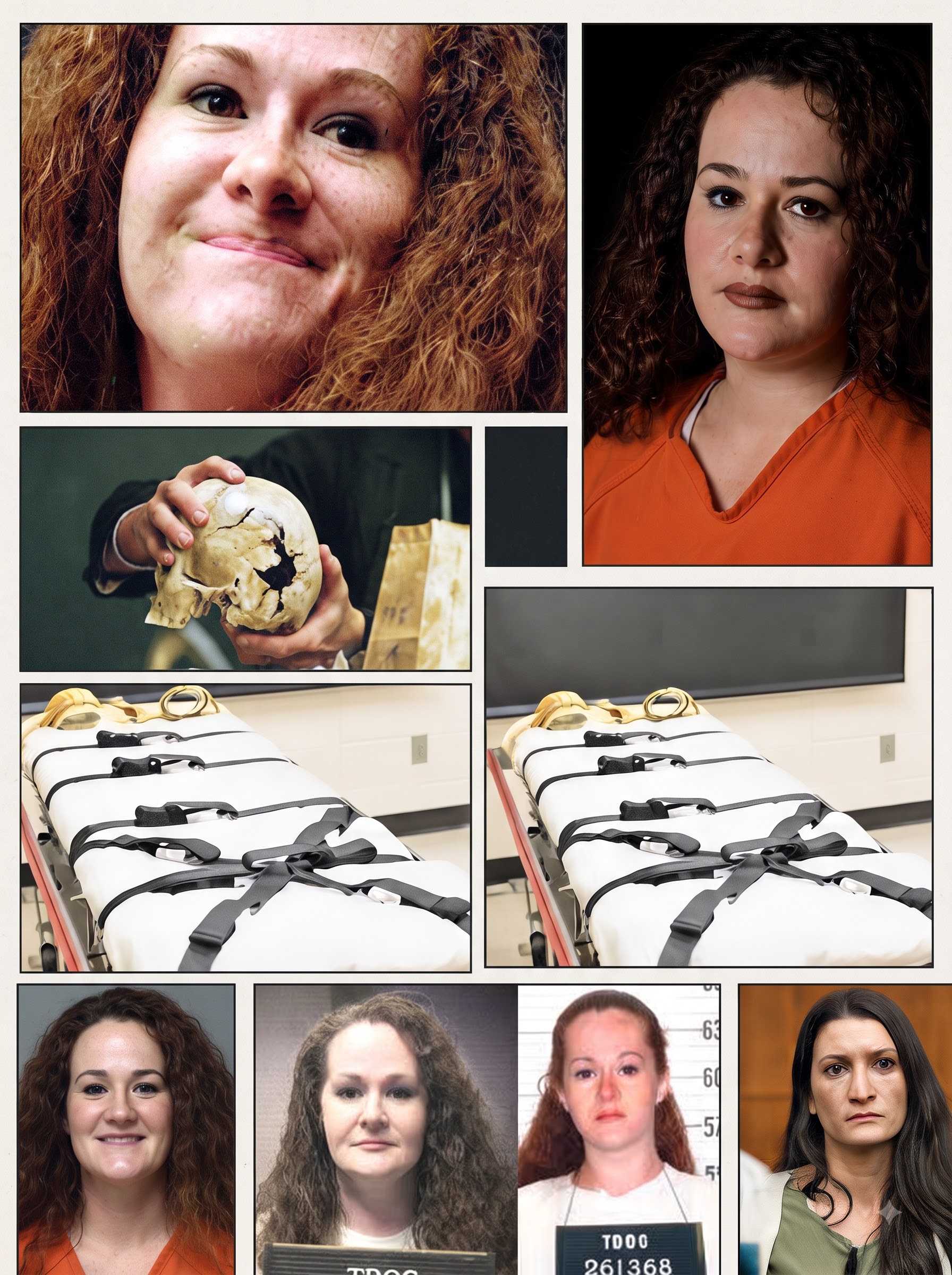
CHRISTa PIKE SURVIVES FAILED EXECUTION — DEATH ROW WOMAN LEFT IN CRITICAL CONDITION AS NEW QUESTIONS EMERGE
Christa Pike was supposed to become the first woman executed by Tennessee in more than two centuries.
Instead, the 50-year-old death row prisoner survived the state’s attempt to carry out her sentence and was rushed to a hospital, where she remains in critical condition.
Now, her lawyers are demanding that evidence from the execution attempt be preserved as questions grow over what happened inside Tennessee’s execution chamber on September 30.
Pike remains unconscious, intubated and on a mechanical ventilator, according to her attorneys.
 THE EXECUTION DID NOT GO AS PLANNED
Pike’s execution began at Riverbend Maximum Security Institution in Nashville on Wednesday evening.
Tennessee used its one-drug lethal-injection protocol, administering pentobarbital.
But after two doses, Pike was still alive.
Witnesses reported hearing her breathing and making other sounds after the drugs had been administered. She was eventually taken from the prison by ambulance to a Nashville-area hospital rather than being pronounced dead in the execution chamber.
The Tennessee Department of Correction said afterward that officials had followed every step of the state’s established execution protocol.
The department also confirmed that Pike had been transported to an off-site medical facility.
 LAWYERS SAY HER ARMS WERE SEVERELY INJURED
Pike’s legal team has now provided a much more detailed account of what happened.
According to an emergency court filing, Pike’s attorneys say the intravenous lines were not properly placed and that the execution team did not realize the lines had failed.
The filing says both of Pike’s arms were swollen, burned and blistered when she arrived at the hospital.
Her lawyers say medical staff are working to save her life and clear the pentobarbital from her system.
They have asked a court to require Tennessee authorities to preserve evidence connected to the execution attempt.
The attorneys argue that the evidence will be crucial in determining exactly what happened and whether Pike’s legal rights were violated.
Those allegations have not yet been finally determined by a court.
SHE HAD WARNED ABOUT HER MEDICAL CONDITIONS
The failed execution has drawn particular attention because Pike’s lawyers had previously raised concerns about the difficulty of establishing intravenous access.
Court filings cited her small veins and a blood disorder known as thrombocytosis.
Her legal team had argued that these medical circumstances created a significant risk of unnecessary pain and complications during lethal injection.
Those arguments were rejected by the courts before the execution was allowed to proceed.
On September 30, the U.S. Supreme Court vacated a last-minute stay issued by the Sixth Circuit, allowing Tennessee to continue with the execution before the death warrant expired. Justice Sonia Sotomayor, joined by Justices Elena Kagan and Ketanji Brown Jackson, dissented.
TENNESSEE GOVERNOR ORDERS INDEPENDENT REVIEW
The extraordinary outcome has now prompted action from Tennessee Governor Bill Lee.
Following the failed execution, Lee ordered a third-party review into what happened.
He also announced that the remaining scheduled execution in Tennessee would not take place during 2026.
The governor said the state needed answers about why the procedure produced a different result despite officials saying they had followed the established protocol.
That investigation could become critical in determining whether procedural failures occurred and what changes, if any, should follow.
THE CASE THAT PUT PIKE ON DEATH ROW
Pike was sentenced to death for the 1995 killing of 19-year-old Colleen Slemmer, a fellow Jobs Corps student.
Pike was 18 at the time.
She was convicted of first-degree murder in 1996 after prosecutors presented evidence that she and her then-boyfriend, Tadaryl Shipp, were involved in Slemmer’s killing.
Shipp was also convicted of first-degree murder and received a life sentence with the possibility of parole.
Pike has spent nearly three decades on death row.
She also received another prison conviction in 2001 for attempted first-degree murder following an assault on another inmate.
LAST-MINUTE LEGAL BATTLES
Pike’s execution was preceded by a series of legal challenges.
Her lawyers argued that her history of childhood sexual abuse and other circumsta