LUCY LETBY CASE: NEW EVIDENCE AND INQUIRY FINDINGS PUT CONVICTIONS UNDER FRESH SCRUTINY
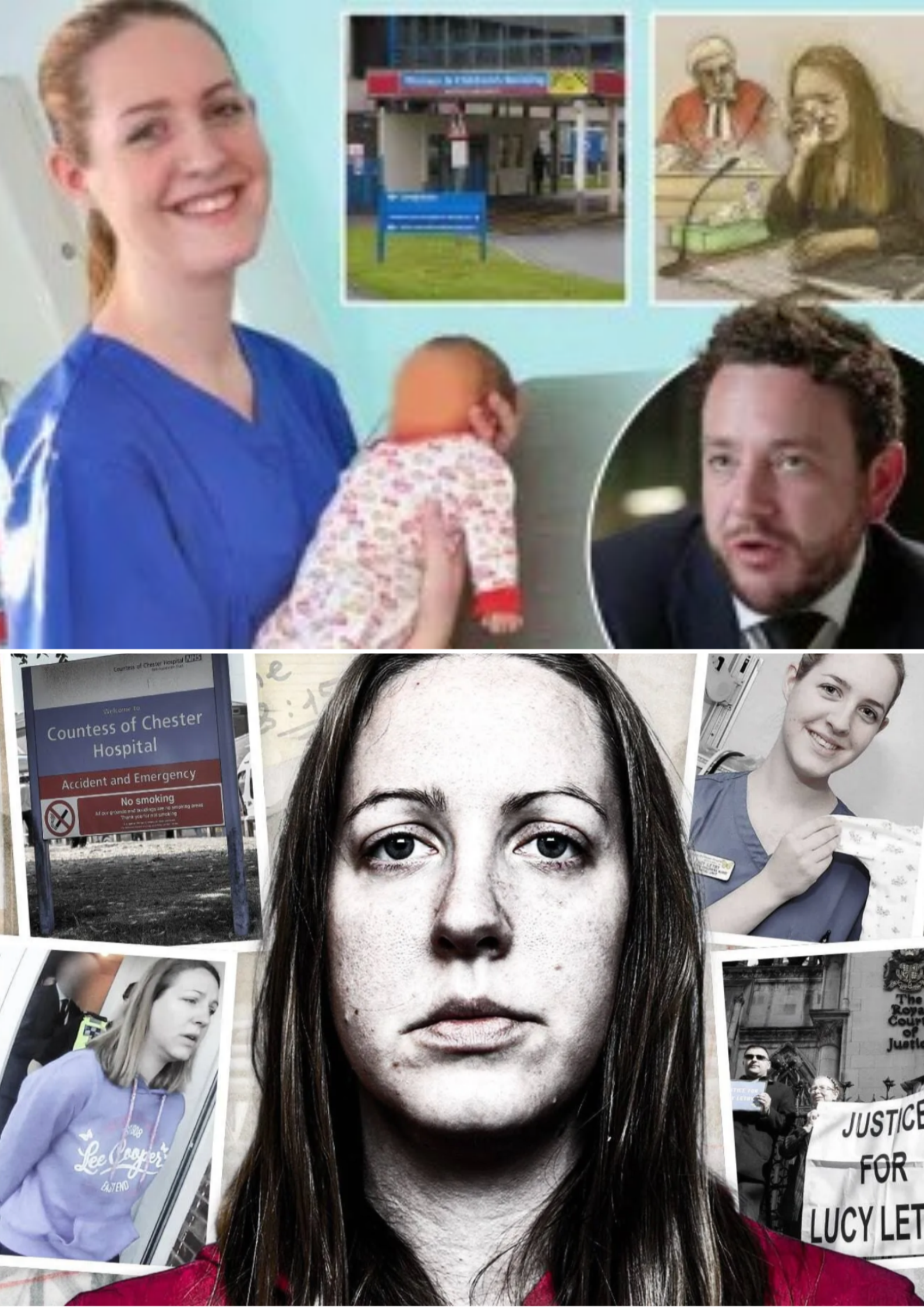
LUCY LETBY CASE: NEW EVIDENCE AND INQUIRY FINDINGS PUT CONVICTIONS UNDER FRESH SCRUTINY
Former neonatal nurse remains behind bars as new medical evidence, disputed expert testimony and a damning hospital inquiry fuel renewed debate over one of Britain’s most controversial criminal cases
The Lucy Letby case has entered another extraordinary chapter.
More than three years after the former neonatal nurse was convicted of murdering seven babies and attempting to murder seven others at the Countess of Chester Hospital, her convictions remain in place — but a growing body of new medical evidence is being examined by Britain’s miscarriage-of-justice watchdog.
At the same time, a major public inquiry into what happened inside the hospital has found serious failures in management, safeguarding and communication.
The developments have intensified debate around the case, although no court has overturned Letby’s convictions and she has not been officially cleared.
Letby continues to maintain that she is innocent.
 LETBY IS SERVING 15 WHOLE-LIFE ORDERS
Letby was convicted after a 10-month trial at Manchester Crown Court in 2023.
She was found guilty of murdering seven babies and attempting to murder seven others while working at the Countess of Chester Hospital’s neonatal unit between June 2015 and June 2016. One attempted-murder allegation was later considered at a separate retrial.
She received 15 whole-life orders, meaning she is expected to remain in prison for the rest of her life.
Her first major attempt to challenge the convictions failed in 2024, when the Court of Appeal refused permission to appeal. A further application relating to the attempted murder conviction considered at retrial was also unsuccessful.
But the legal battle did not end there.
 THE CCRC IS NOW EXAMINING NEW EVIDENCE
The Criminal Cases Review Commission, or CCRC, is currently reviewing Letby’s convictions.
The independent body received a preliminary application on her behalf in February 2025. Since then, it has received multiple expert reports, legal submissions and defence material.
The CCRC confirmed in February 2026 that its review was still underway and emphasized that it does not decide whether someone is innocent or guilty.
Its role is to determine whether new evidence or legal arguments create a real possibility that a conviction would not be upheld if the case were referred back to an appeal court.
That distinction is important.
The existence of a CCRC investigation does not mean Letby’s convictions have been overturned or that the commission has concluded she is innocent.
INTERNATIONAL EXPERTS HAVE CHALLENGED PARTS OF THE ORIGINAL CASE
One of the central issues now being examined concerns the medical evidence used during Letby’s trials.
An international group of medical and scientific experts supporting the defence has questioned some of the conclusions presented to the original juries.
Among the most controversial arguments concern two babies whom prosecutors said were deliberately poisoned with insulin.
Engineering expert Helen Shannon and bioengineering professor Geoff Chase produced a lengthy report challenging aspects of the insulin evidence.
The pair have continued to maintain that it was very unlikely the two babies were deliberately poisoned.
However, their position has recently become more complicated.
TWO EXPERTS WITHDRAW FROM LETBY’S DEFENCE TEAM
In September 2026, Shannon and Chase announced that they were withdrawing from Letby’s defence team.
The experts said they continued to stand by their assessment concerning the two insulin cases but could not support some of the wider arguments being advanced on Letby’s behalf.
In correspondence to the CCRC, they raised concerns about arguments they believed were inconsistent with available evidence, science and established physiology.
They also warned that continuing to associate themselves with those arguments could create serious professional and ethical problems.
The development immediately attracted attention because the two experts had previously been among the scientists challenging important parts of the prosecution’s medical case.
However, Letby’s barrister Mark McDonald rejected the suggestion that their withdrawal had undermined the wider appeal effort.
He argued that the defence case does not depend on any single expert and said other international specialists continue to challenge the scientific evidence used at trial.
QUESTIONS OVER MATERNITY RECORDS
Another major development emerged earlier this year when the BBC reported that maternity records relating to babies involved in the case had been seized by police but were not reviewed by the prosecution’s principal medical expert or disclosed to Letby’s defence before trial.
The records contained information about pregnancy, labour and delivery.
Some medical experts have argued that such information can be important when trying to determine why a newborn became critically ill or died.
Professor Phil Bennett, an obstetrics and gynaecology specialist, told the BBC that maternity and neonatal care would normally be considered together when investigating a baby’s death.
Prosecution expert Dr Dewi Evans disagreed, saying the maternity information was not necessary to understand the events in the cases and that he had seen brief maternity summaries.
The disagreement has become another area for the CCRC to consider as it examines whether the original evidence should be reassessed.
One example discussed by the BBC involved Baby O, one of the infants whose death was attributed by prosecutors to deliberate harm.
Professor Bennett argued that an injury to the baby’s liver during a difficult Caesarean delivery could potentially explain the later collapse.
Evans rejected that interpretation and maintained that the baby had been born in good condition.
The competing medical opinions remain disputed.
THE THIRLWALL INQUIRY DELIVERED A DAMNING VERDICT ON THE HOSPITAL
Then came another major development.
On September 15, 2026, Lady Justice Kathryn Thirlwall published the final report of the public inquiry into events at the Countess of Chester Hospital.
The inquiry found what she described as a “complete failure” to protect babies.
Its findings included serious problems with hospital management, governance, communication and safeguarding.
Doctors had raised concerns about the unusual number of neonatal deaths and collapses, but the inquiry found that senior management failed to respond appropriately.
The report concluded that safeguarding procedures should have been triggered once there were concerns that a member of staff might be deliberately harming babies.
POLICE SHOULD HAVE BEEN CONTACTED EARLIER, INQUIRY FOUND
One of the most significant findings concerned the delay in involving police.
The inquiry found that hospital management spent considerable time pursuing internal reviews and other explanations rather than escalating the concerns to law enforcement.
The report concluded that police should have been contacted earlier.
It also found that Letby remained working on the neonatal unit after concerns had already emerged.
According to the inquiry’s findings, babies O and P should not have died if appropriate safeguarding action had been taken earlier.
The inquiry also criticized the treatment of parents, finding that families were kept in the dark for years about concerns surrounding their babies.
Lady Justice Thirlwall described the lack of consideration shown to affected parents as “reprehensible.”
BUT THE INQUIRY DID NOT DECLARE LETBY INNOCENT
This is one of the most important distinctions in the entire story.
The Thirlwall Inquiry did not investigate whether Letby was guilty or innocent.
Lady Justice Thirlwall explicitly stated that her report was not an investigation into Letby’s criminal convictions.
Instead, the inquiry examined how the hospital responded to concerns, how its management operated and whether failures allowed babies to remain at risk.
She also said she did not want to interfere with the separate CCRC process.
In other words, the inquiry’s criticism of the hospital does not automatically invalidate the criminal convictions.
The two issues are legally separate.
14 RECOMMENDATIONS FOLLOW THE INQUIRY
The inquiry made 14 recommendations designed to improve safety in neonatal and maternity care.
Among the proposals are video baby monitors for neonatal cots and incubators and CCTV monitoring of areas where insulin is stored.
The recommendations are intended to strengthen safeguarding and prevent similar failures from happening again.
The government has also indicated that it intends to introduce further measures in response to the inquiry’s findings.
NO FURTHER CHARGES WERE BROUGHT IN A SEPARATE REVIEW
Another development has also attracted attention.
In January 2026, prosecutors decided not to bring additional charges against Letby relating to other babies who had suffered deaths or collapses at the Countess of Chester Hospital and Liverpool Women’s Hospital.
The decision was later reviewed under the Victims’ Right to Review scheme after requests involving six infants.
In August, the Crown Prosecution Service confirmed that the independent review had upheld the decision not to bring the additional charges.
The CPS said the evidential test for additional offences had not been met.
That decision does not overturn Letby’s existing convictions. It concerns separate potential offences investigated after her original trials.
THE CASE REMAINS DEEPLY DIVIDED
The latest developments have left the case surrounded by competing interpretations.
Supporters of Letby’s appeal argue that new medical evidence raises fundamental questions about the scientific basis of some convictions.
Her legal team says the breadth of international expert criticism could ultimately justify another examination of the evidence.
Meanwhile, critics of the defence arguments say the new theories do not provide a sufficient explanation for the totality of the evidence considered at trial.
The withdrawal of Shannon and Chase has added another layer to that dispute because the pair continue to challenge aspects of the insulin evidence while rejecting other arguments being advanced by the defence.
WHAT HAPPENS NEXT?
For now, the most important institution to watch is the CCRC.
The commission has not announced a final decision on whether to refer Letby’s case back to the Court of Appeal.
If it concludes that the new evidence creates a real possibility that one or more convictions would not be upheld, it could refer the case for another judicial examination.
If it does not, Letby’s existing convictions will remain in place unless another legal route succeeds.
There is therefore no official ruling clearing Lucy Letby at this stage.
What has changed is the amount of scrutiny surrounding the medical evidence, the hospital’s handling of warnings and the circumstances surrounding the origin