LUCY LETBY CASE ERUPTS INTO A NEW LEGAL STORM — FRESH MEDICAL EVIDENCE AND UNDISCLOSED HOSPITAL RECORDS PUT HER CONVICTIONS UNDER RENEWED SCRUTINY
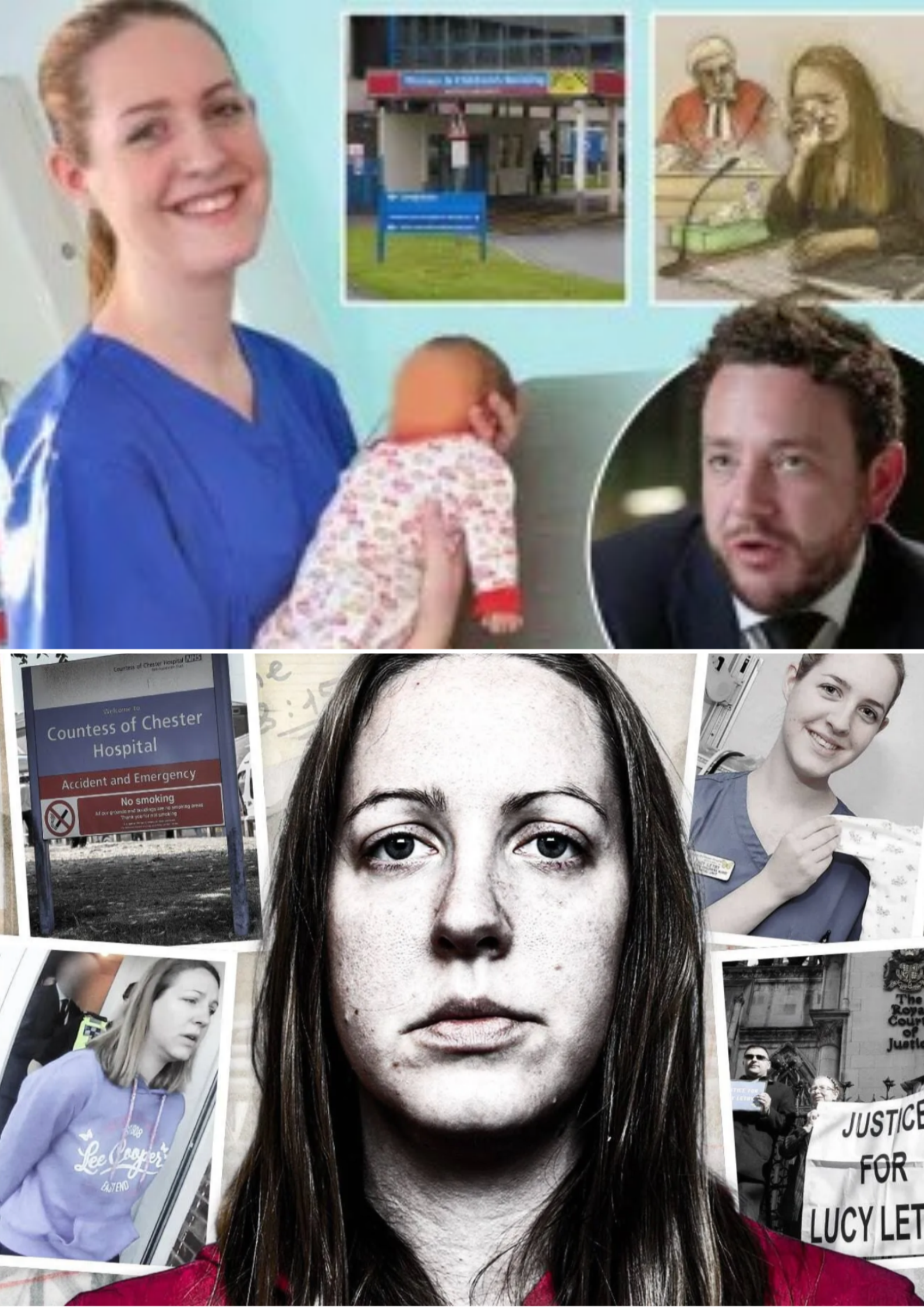
LUCY LETBY CASE ERUPTS INTO A NEW LEGAL STORM — FRESH MEDICAL EVIDENCE AND UNDISCLOSED HOSPITAL RECORDS PUT HER CONVICTIONS UNDER RENEWED SCRUTINY
New medical opinions, questions over statistical evidence and the discovery that maternity records were not disclosed to Letby’s defence have intensified scrutiny of one of Britain’s most controversial criminal cases. But her convictions have not been overturned, and the CCRC is still investigating.
The case of convicted neonatal nurse Lucy Letby has entered another extraordinary chapter.
Letby is currently serving 15 whole-life prison terms after being convicted of murdering seven babies and attempting to murder seven others at the Countess of Chester Hospital between 2015 and 2016.
She has always maintained her innocence.
Now, years after her convictions, her legal team is continuing to challenge the evidence used against her — while independent experts have raised questions about aspects of the medical and statistical case presented at trial.
At the same time, the Criminal Cases Review Commission (CCRC) is examining Letby’s application for a possible referral back to the Court of Appeal.
But there is an important distinction:
Her convictions remain in force. No court has ruled that the prosecution case was fundamentally flawed, and the CCRC has not referred the case for a fresh appeal.
 INTERNATIONAL EXPERTS CHALLENGE THE MEDICAL EVIDENCE
One of the most significant developments has come from a group of international medical specialists assembled by Letby’s defence team.
The panel, led by Canadian neonatal specialist Professor Shoo Lee, reviewed medical evidence relating to the babies involved in the convictions.
The experts have argued that the medical evidence does not establish that the babies were deliberately harmed and have proposed alternative explanations involving natural causes or medical complications.
Their conclusions have been submitted as part of the material being considered by the CCRC.
However, the full expert reports have not all been publicly released.
The BBC has reported that Letby’s barrister Mark McDonald has released summaries of some of the panel’s findings, while the underlying reports are with the CCRC.
That means many of the claims circulating publicly cannot yet be independently assessed in their entirety.
 QUESTIONS OVER THE STATISTICAL EVIDENCE
Another area of controversy concerns the use of statistics and staffing patterns during the original investigation.
A roster chart showing which nurses were working when babies collapsed became an important part of the prosecution’s presentation.
Supporters of Letby’s appeal have argued that the statistical interpretation of the staffing data was problematic.
But the statistical debate is itself contested.
A 2026 academic critique of one statistical analysis argued that the analysis contained serious errors, while also maintaining that there were legitimate concerns about how roster data was used as evidence.
That is very different from saying that an independent statistical review has conclusively destroyed the prosecution’s entire case.
The evidence and arguments remain under examination.
MISSING MATERNITY RECORDS ADD ANOTHER LAYER
One of the most significant recent revelations came from a BBC File on 4 investigation in July 2026.
The BBC reported that maternity records belonging to babies involved in Letby’s case had been seized by Cheshire Police but were not reviewed by the prosecution’s chief medical expert or disclosed to the defence before trial.
Those records contained information about pregnancies, labour and births.
Such information can be medically significant when attempting to determine why a premature or seriously ill newborn became unstable.
The revelation has therefore become an important part of the wider questions now being examined by Letby’s legal team.
It does not, however, automatically establish that the convictions are unsafe.
TWO EXPERTS LEFT THE DEFENCE TEAM
The case has also experienced an unusual development on the defence side.
In September 2026, two experts withdrew from Letby’s defence team because of concerns about the scientific credibility of some arguments being advanced, according to the Guardian.
They said certain arguments were inconsistent with available evidence, established science and physiology.
Their departure highlights how complicated the scientific dispute has become.
There are now competing medical interpretations of some of the evidence, with experts reaching different conclusions about the possible causes of the babies’ collapses and deaths.
That disagreement is one reason the case remains highly contentious.
THE COURTS HAVE ALREADY REJECTED AN EARLIER APPEAL
Letby’s supporters have emphasized the new evidence.
But the history of the case also matters.
After her first conviction in 2023, Letby sought permission to appeal.
The Court of Appeal rejected her challenge.
Cheshire Police have pointed to that decision in responding to continuing public debate, noting that three Court of Appeal judges rejected her arguments concerning the evidence.
Therefore, the current legal challenge is not simply a continuation of an unresolved first appeal.
It is a new attempt to persuade the CCRC that additional evidence or arguments justify another referral to the Court of Appeal.
THE CCRC IS NOW EXAMINING THE CASE
Letby’s application to the Criminal Cases Review Commission was submitted in February 2025.
Since then, substantial quantities of expert reports, legal submissions and defence material have been provided.
The CCRC said in February 2026 that the review was underway and listed material received as recently as January 21, 2026.
The commission stressed that it is independent and that its role is not to decide whether Letby is innocent or guilty.
Instead, it must determine whether new evidence or argument creates a real possibility that the convictions would not be upheld if the case were referred to an appeal court.
If the CCRC eventually refers the case, the Court of Appeal — not the CCRC — would decide whether the convictions are unsafe.
THE THIRLWALL INQUIRY DID NOT OVERTURN HER CONVICTIONS
Another major development came in September 2026, when the Thirlwall Inquiry published its report into events at the Countess of Chester Hospital.
The inquiry found serious failures by hospital management, including failures to respond adequately to doctors’ concerns about the unexplained deaths and collapses.
It concluded that some babies might have been saved had police been contacted earlier.
But the inquiry was not an appeal against Letby’s convictions.
Its purpose was to examine what happened at the hospital, how concerns were handled and what lessons should be learned for the future.
The report therefore did not decide whether Letby was guilty or innocent.
POLICE HAVE ALSO INVESTIGATED OTHER BABIES
Cheshire Police previously conducted a further investigation into other deaths and collapses at the hospital.
In January 2026, prosecutors decided that Letby should face no additional criminal charges following a review of evidence relating to nine babies.
The CPS later reviewed six of those decisions under its Victims’ Right to Review procedure and upheld the decision not to bring further charges.
Police said the decision did not affect Letby’s existing convictions.
WHAT HAPPENS NEXT?
For now, there is no dramatic courtroom reversal.
There is no new acquittal.
There is no order releasing Lucy Letby.
Instead, the case sits in a legally unusual position: a convicted prisoner serving whole-life sentences is seeking to persuade an independent review body that newly available evidence may justify another appeal.
The CCRC continues to examine the material.
Among the issues attracting attention are competing medical explanations, questions about the use of statistical evidence, previously undisclosed maternity records and disagreements among experts themselves.
At the same time, the original convictions remain legally valid.
A CASE STILL FAR FROM OVER
Few British criminal cases have generated such an intense clash between courtroom findings and subsequent scientific debate.
The prosecution case resulted in convictions after two lengthy trials.
Letby’s defence now argues that important medical evidence has been misunderstood or overlooked.
Some experts support aspects of that challenge.
Others have publicly warned that certain defence arguments do not fit established science.
And the CCRC has yet to reach a conclusion.
So the biggest question is not whether Lucy Letby’s convictions have already been overturned.
They have not.
The question now is whether the new evidence and arguments being examined by the CCRC will eventually be strong enough to send the case back to the Court of Appeal.
Until that happens, the verdicts remain in place.
But with new medical opinions, disputed statistical arguments and previously undisclosed hospital records now forming part of the continuing legal battle, the Lucy Letby case is far from disappearing from Britain’s courts — or from the global debate surrounding it.