CHRISTa PIKE SURVIVED TWO LETHAL INJECTIONS — NOW 911 RECORDINGS REVEAL THE CONFUSION THAT DELAYED EMERGENCY HELP
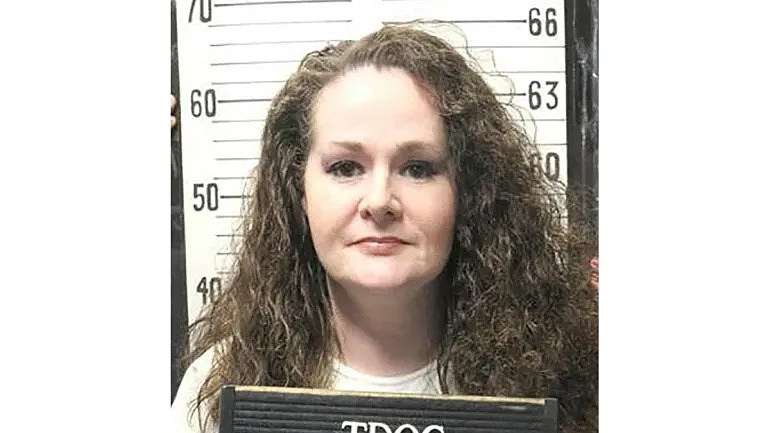
CHRISTa PIKE SURVIVED TWO LETHAL INJECTIONS — NOW 911 RECORDINGS REVEAL THE CONFUSION THAT DELAYED EMERGENCY HELP
Newly released emergency dispatch recordings reveal a troubling sequence of events after Tennessee’s attempted execution of Christa Pike was halted. As officials struggled to verify the emergency, more than 30 minutes passed before prison authorities confirmed that medical responders should be allowed inside.
NASHVILLE, TENNESSEE — The failed execution of Christa Pike has taken another unexpected turn after newly released 911 recordings revealed confusion among emergency dispatchers, first responders and Tennessee prison officials during the effort to obtain urgent medical assistance.
Pike, 50, survived two doses of pentobarbital during an attempted lethal injection at Riverbend Maximum Security Institution on September 30, 2026. What followed was a desperate effort to secure medical treatment — one that, according to the recordings reviewed by The Associated Press, was complicated by uncertainty over whether the initial emergency call was legitimate.
The revelations have raised new questions about emergency procedures inside the prison and how officials respond when an execution does not proceed as expected.
 THE 911 CALL THAT SET OFF A CHAIN OF CONFUSION
The first emergency call was made at approximately 8:40 p.m., more than an hour after the execution attempt began.
According to the transcript released by Nashville’s Department of Emergency Communications, the caller explained that an execution had been carried out and that the person had received 10 grams of pentobarbital but was still alive.
The caller requested an ambulance.
However, the dispatcher asked for a verification code, which the caller could not provide. Emergency personnel then began trying to establish whether the request was genuine.
At 9:03 p.m., a dispatcher relayed information that the emergency call had been deemed false and that no medical assistance was supposedly needed at Riverbend Prison.
Four minutes later, a first responder reported that someone was waiting outside the prison gates, insisting that the emergency was real and demanding access.
The recordings show that prison control personnel initially disputed having made the call. At approximately 9:11 p.m., authorities confirmed that the emergency was legitimate and began allowing responders through the gates.
An Associated Press reporter observed an ambulance and fire trucks arriving inside the prison grounds at approximately 9:14 p.m.
The timeline suggests that more than 30 minutes elapsed between the initial call and the confirmation that allowed emergency responders to enter.
 PIKE’S ATTORNEYS WERE ALSO TRYING TO GET HELP
The recordings reveal that Pike’s legal team was independently attempting to secure emergency medical assistance.
At approximately 9:08 p.m., attorney Kelly Gleason contacted emergency services and identified Pike as a person undergoing a state execution who remained alive and breathing after the execution protocol had been completed.
Gleason told the dispatcher that Pike needed immediate, life-saving care.
The legal team was also attempting to contact officials through other channels as the situation unfolded. According to PEOPLE’s timeline, attorney Randy Spivey encountered obstacles while trying to alert colleagues after realizing Pike was still alive. Attempts to reach officials through emergency contacts and the governor’s office did not immediately produce the response the attorneys were seeking.
The sequence illustrates how several different groups were trying to communicate about the same emergency while uncertainty persisted over who had authorized the request and whether responders could enter the facility.
At approximately 9:34 p.m., as medical personnel were transporting Pike to a hospital, a responder asked dispatch to ensure that prison officials knew where she was being taken.
The responder cited the confusion surrounding the incident as the reason for the additional check.
FROM THE EXECUTION CHAMBER TO THE HOSPITAL
Pike was taken to a hospital in critical condition after surviving the two injections. Her attorneys said she required a ventilator for several days, and at one point they feared she might not survive.
Her condition subsequently improved. According to updates from her legal team, Pike regained consciousness, began speaking and was later able to walk with assistance.
She was eventually discharged from the hospital and returned to the Debra K. Johnson Rehabilitation Center, the women’s prison where she had been held for approximately three decades.
The recovery has been described by her attorneys as unprecedented. Pike’s survival has also intensified scrutiny of the state’s lethal-injection procedures and the medical response that followed.
The state’s execution protocol provides for a second dose of pentobarbital if the first dose does not result in death. However, the protocol does not clearly explain how officials should proceed when a person survives both doses.
That gap has become an important issue in the aftermath of the failed execution.
WHAT CAUSED THE EXECUTION TO FAIL?
The precise reason Pike survived remains undetermined.
Before the execution, her attorneys informed officials that she had a blood disorder that could cause clotting at injection sites. Her legal team has also raised concerns about the placement of intravenous lines and whether the execution procedure followed the state’s written protocol.
Medical experts have discussed several possible explanations, including problems with the intravenous access or the drug entering surrounding tissue rather than reaching the bloodstream as intended. Questions about the medication itself have also been raised.
These possibilities have not been established as the definitive cause.
Tennessee officials have not publicly provided a final explanation for what went wrong during the procedure. The Department of Correction is reviewing the incident, and the newly released dispatch recordings add another layer to the questions surrounding the state’s response.
WHY CHRISTA PIKE WAS ON DEATH ROW
Pike was sentenced to death for the 1995 killing of Colleen Slemmer, an 18-year-old classmate at the time.
Pike was also 18 when she participated in the killing alongside her boyfriend, Tadaryl Shipp, and another teenager, Shadolla Peterson. Prosecutors said Slemmer was lured to an isolated area in Knoxville, Tennessee, where she was tortured and killed.
Pike was convicted and sentenced to death. Shipp, who was 17 at the time and therefore ineligible for a death sentence, received a life sentence. Peterson testified against Pike and Shipp and received probation.
Pike’s case attracted renewed national attention in 2026 because she was scheduled to become the first woman executed in Tennessee in more than two centuries.
Her execution proceeded after the U.S. Supreme Court declined to grant a last-minute request to stop it.
TENNESSEE HALTS FURTHER EXECUTIONS
Following the failed procedure, Tennessee Governor Bill Lee paused further executions scheduled through the end of 2026 while the state reviews what happened.
The investigation is expected to examine the execution procedure and the circumstances surrounding Pike’s survival. The emergency recordings have also brought attention to the communication and access procedures that affected the response after the execution was halted.
It remains unclear whether Tennessee will attempt to execute Pike again. Her attorneys have continued to pursue a commutation of her death sentence to life imprisonment without the possibility of parole.
For now, several major questions remain unanswered: why the lethal-injection procedure failed, whether established protocols were followed, and why emergency responders encountered such difficulty gaining access after the first call for help.
The newly released recordings provide a clearer timeline of the confusion that night, but they do not resolve the central questions surrounding the execution itself.
As the review continues, Pike’s case has become a major focus of debate over capital punishment, execution procedures and the responsibilities of officials when a state-sanctioned procedure turns into a medical emergency.