AILEEN WUORNOS’ FINAL MINUTES — SIX MINUTES INSIDE FLORIDA’S DE@TH CHAMBER
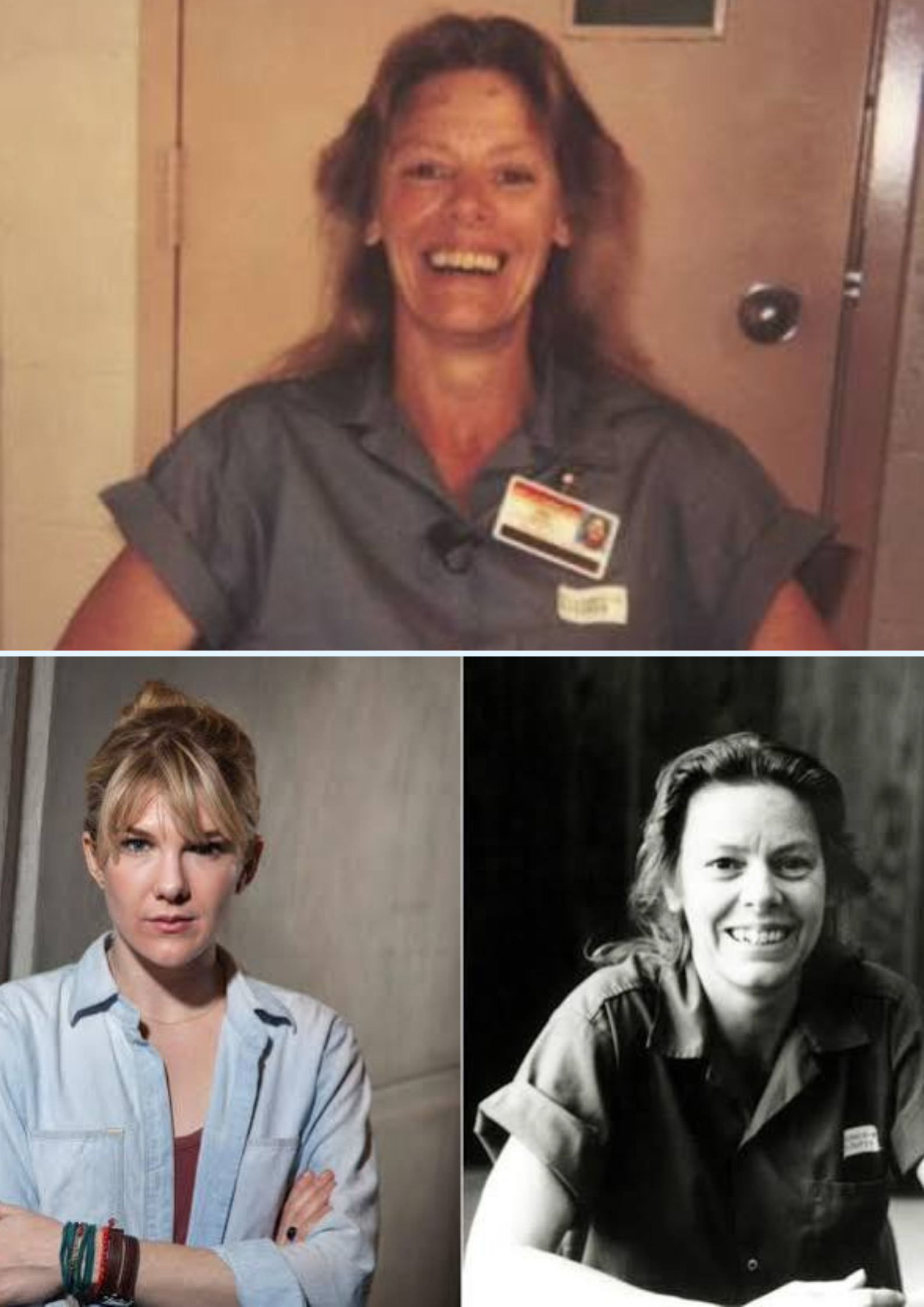
AILEEN WUORNOS’ FINAL MINUTES — SIX MINUTES INSIDE FLORIDA’S DEATH CHAMBER
On the morning of October 9, 2002, Aileen Wuornos walked into Florida’s death chamber knowing she was about to die.
The 46-year-old had spent years on death row after being convicted in connection with the killings of men she encountered along Florida highways.
That morning, there would be no last-minute escape.
The Florida Supreme Court had rejected her final appeals the previous day, including arguments concerning her mental competency. Wuornos had also dismissed her attorneys and opposed efforts to delay her execution.
Inside the Florida State Prison at Starke, 32 witnesses were present to observe the execution.
Wuornos was strapped to a gurney and connected to two intravenous lines.
At approximately 9:41 a.m., the lethal-injection process began.
Six minutes later, at 9:47 a.m., Aileen Wuornos was pronounced dead.
 HER FINAL WORDS
Before the chemicals were administered, Wuornos delivered a final statement.
It was not a conventional apology or a request for mercy.
Instead, she spoke about sailing with “the rock” and returning with Jesus, invoking the imagery of the movie Independence Day.
“I’ll be back,” she said in her final remarks.
Her words became the final public record of a woman whose life and crimes had already attracted enormous international attention.
 SHE DID NOT ASK FOR A LAST-MINUTE DELAY
Wuornos had previously made clear that she wanted the execution to proceed.
She had written to the Florida Supreme Court expressing her desire to move forward rather than continue spending public money on appeals.
Prison officials said she was calm on the morning of her execution.
She declined the traditional last meal and instead had a cup of coffee.
Her execution was carried out by lethal injection rather than the electric chair. Florida officials said Wuornos had expressed relief that the electric chair was no longer being used for her execution.
THE CASE THAT LED TO DEATH ROW
Wuornos was convicted in the 1992 killing of Richard Mallory, a 51-year-old electrician whose body was discovered in December 1989.
She later confessed to killing five other men and became a suspect in a seventh case.
Prosecutors said the victims had encountered Wuornos while she was working as a prostitute along Florida highways. She was convicted of multiple murders and received several death sentences.
Her case became one of the most widely publicized criminal cases of the era.
Books, television productions and other works examined her life, the killings and the circumstances surrounding her convictions.
SIX MINUTES
There was no dramatic last-second reprieve.
There was no court order arriving at the prison gates.
There was only the execution procedure itself.
Wuornos was secured to the gurney.
The intravenous lines had been connected.
The chemicals were administered.
And approximately six minutes later, the prison officially recorded her death.
She was 46 years old.
Outside the prison, a small group of anti-death-penalty demonstrators gathered as corrections officers maintained security.
For the families connected to the victims, the execution marked the final chapter of a case that had begun more than a decade earlier.
For Wuornos, it was the end of a life that had become the subject of intense public fascination, courtroom battles and years on death row.
At 9:47 a.m. on October 9, 2002, the state of Florida declared Aileen Wuornos dead.
Six minutes had passed since the lethal-injection process began.
And with that, one of the most notorious murder cases in modern Florida history entered its final chapter.