Christa Pike’s September 30 Execution Halted at the Last Minute in Tennessee

Christa Pike’s September 30 Execution Halted at the Last Minute in Tennessee
SEO Title: Christa Pike Execution Halted at Last Minute by Federal Appeals Court
Meta Description: Christa Pike’s scheduled September 30 execution in Tennessee was halted by a federal appeals court about an hour before she was set to receive lethal injection.
NASHVILLE, Tenn. — Christa Pike was hours away from becoming the first woman executed by Tennessee in more than two centuries when a federal appeals court intervened at the last minute.
Pike’s execution, scheduled for 10 a.m. Wednesday at Riverbend Maximum Security Institution in Nashville, was halted by the U.S. Court of Appeals for the Sixth Circuit approximately one hour before it was set to begin.
The court ordered that the execution be stayed “until further order of this court,” giving Pike’s legal challenge additional time for review.
The decision came after Gov. Bill Lee rejected Pike’s request for clemency and the U.S. Supreme Court declined her earlier request for a stay.
Why the Court Stepped In
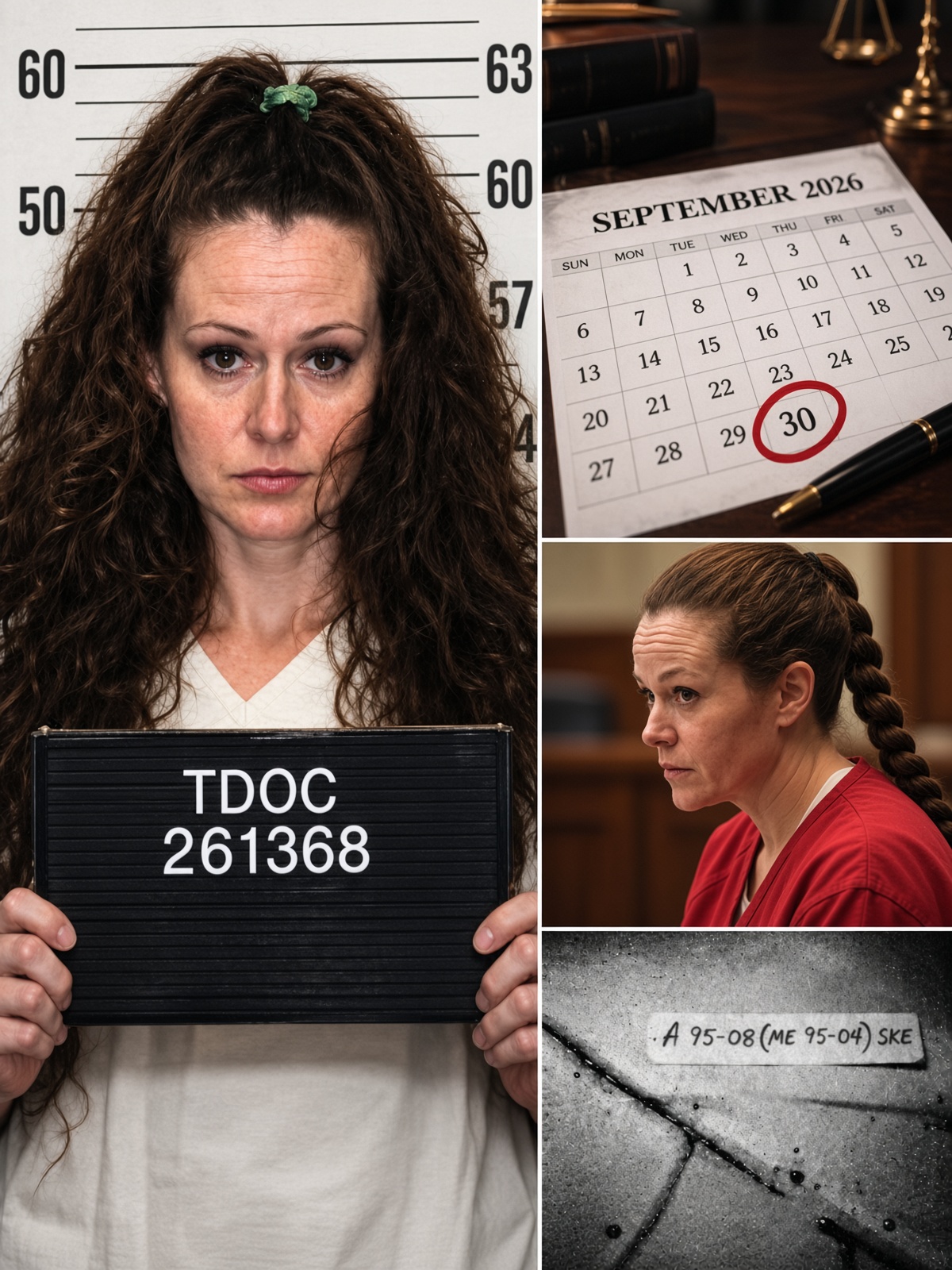
Pike’s attorneys have argued that significant evidence concerning her childhood abuse, trauma and mental health was not adequately considered when she was sentenced to death.
The Sixth Circuit’s intervention centers on whether those claims can be reviewed through Pike’s latest federal habeas proceedings. The court has not overturned her conviction or death sentence.
The legal question is therefore narrower than a reversal of the case.
For now, the court has stopped the execution while it considers the procedural issues surrounding Pike’s latest filing.
Tennessee Attorney General Jonathan Skrmetti said his office plans to challenge the stay and ask the U.S. Supreme Court to lift it.
A Case Dating Back More Than 30 Years
Pike was 18 in January 1995 when she was convicted of killing 19-year-old Colleen Slemmer, a fellow student at a Knoxville Job Corps training facility.
Prosecutors said Pike and her boyfriend, Tadaryl Shipp, lured Slemmer to a wooded area, where Slemmer was beaten and stabbed. Shipp was 17 at the time and received a life sentence with the possibility of parole.
Pike received the death penalty and has remained on Tennessee’s death row for decades.
Her attorneys have acknowledged the seriousness of the crime while arguing that her age and extensive history of childhood sexual abuse and other trauma should have been given greater consideration.
Pike herself expressed remorse in her clemency petition, writing that she eventually came to understand the impact of taking another person’s life.
Colleen Slemmer’s Family Has Waited Decades

For Slemmer’s mother, May Martinez, the case has never stopped being about the daughter she lost.
Martinez has publicly supported carrying out Pike’s sentence and had planned to travel from Florida with her husband to witness the execution. She has spoken about remembering Colleen as a young woman who loved computers, roller skating and running marathons.
The scheduled execution had therefore represented a major moment for both sides of a case that has remained unresolved emotionally for more than three decades.
But Wednesday’s court order changed what had been expected to be the final chapter.
A Historic Execution That Did Not Happen
Had Pike been executed as scheduled, she would have become the first woman put to death by Tennessee in at least 200 years.
She also would have been the only person executed in Tennessee’s modern death-penalty era for a crime committed at age 18, according to reporting based on the state’s death-penalty history.
Instead, the execution was stopped shortly before the scheduled procedure.
The stay does not mean Pike has been exonerated, and it does not erase her conviction or death sentence. It means the execution cannot proceed while the federal appeals court considers the matter under its current order.
For now, the question surrounding Christa Pike is no longer simply whether Tennessee will carry out the September 30 execution.
It is what the federal courts will decide next — and whether the state will eventually receive permission to proceed with the death sentence that has stood for more than three decades.