AILEEN WUORNOS: THE STORIES BEHIND THE “QUEEN OF THE SERIAL KI//ERS” THAT THE NETFLIX DOCUMENTARY COULDN’T FULLY TELL
AILEEN WUORNOS: THE STORIES BEHIND THE “QUEEN OF THE SERIAL KILLERS” THAT THE NETFLIX DOCUMENTARY COULDN’T FULLY TELL
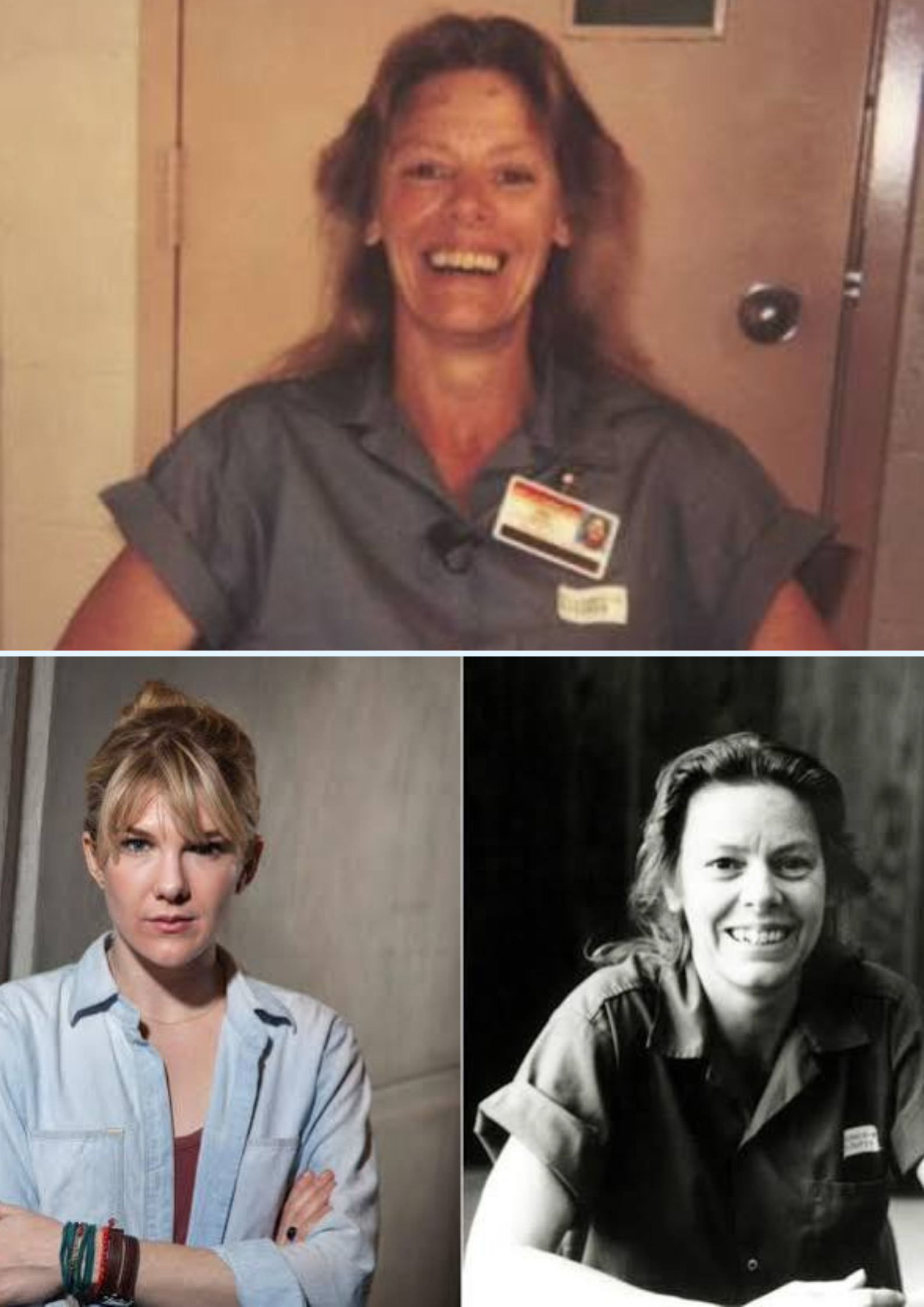
Aileen Wuornos became one of the most notorious female serial killers in American history.
But long before the headlines, courtroom cameras and death-row interviews, Wuornos had lived through years of instability, abandonment and trauma.
Netflix’s “Aileen: Queen of the Serial Killers” revisits her case through rare archival footage, police recordings and previously unseen conversations from her years on death row.
The documentary does not attempt to excuse the crimes for which Wuornos was convicted. Instead, director Emily Turner said the film was designed to explore the complicated person behind the headlines and allow viewers to confront the contradictions surrounding her life.
And there are parts of that story that deserve a closer look.
 A CHILDHOOD MARKED BY ABANDONMENT
Wuornos was born in Michigan in 1956 to teenage parents, Diane Wuornos and Leo Pittman.
Her parents separated before she was born, and Wuornos later said she never knew her father.
When she was about four years old, her mother left Aileen and her older brother, Keith, and the children were raised by their maternal grandparents.
Her father later served a life sentence after being convicted of raping a seven-year-old girl. He died by suicide while incarcerated in 1969.
Wuornos also made allegations of physical and sexual abuse during her childhood, including allegations involving her grandfather and her brother.
However, accounts of her upbringing were not always consistent. In some recorded interviews, Wuornos spoke differently about members of her family, which is one reason her childhood remains difficult to reconstruct with certainty.
Netflix’s documentary includes some of those conflicting accounts rather than presenting a simple explanation for what ultimately happened.
SHE BECAME A MOTHER AS A TEENAGER
One of the lesser-known parts of Wuornos’s life is that she became pregnant while still a teenager.
At around 14, she gave birth to a son in 1971.
Wuornos said she had been sexually assaulted by an acquaintance of her grandfather. Her account of the pregnancy was later discussed in documentaries and biographical accounts, although the circumstances surrounding it were never fully established through a criminal prosecution.
The child was ultimately placed for adoption.
Not long afterward, Wuornos’s life became increasingly unstable.
After the deaths of her grandparents in the early 1970s, she and Keith became wards of the state. She eventually left school and lived on the streets.
A NINE-WEEK MARRIAGE
In 1976, at the age of 20, Wuornos married Lewis Gratz Fell, a wealthy 69-year-old yachtsman in Florida.
The marriage lasted only about nine weeks.
Fell filed for a restraining order shortly after the wedding, alleging that Wuornos had a violent temper and had attacked him with his cane.
Wuornos denied his allegations and claimed that Fell had attacked her.
Their marriage was annulled in July 1976.
The short marriage became another largely forgotten chapter in the life of a woman who would later become internationally notorious.
HER BROTHER’S DEATH
The same year she married Fell, Wuornos suffered another major personal loss.
Her brother Keith died of cancer at just 21 years old.
His death came only a few years after the deaths of their grandparents, leaving Wuornos without many of the family connections that had shaped her early life.
THEN CAME THE MURDERS
Between 1989 and 1990, Wuornos killed seven men in Florida.
She later claimed that she had acted in self-defense, saying some of the men had attempted to sexually assault her while she was working as a sex worker.
She was ultimately convicted of murdering six men and received six death sentences.
She also admitted involvement in a seventh killing, although she was not charged in that case because the victim’s body was never found.
The case became one of the most heavily publicized criminal investigations of its era.
TYRIA MOORE AND THE CONFESSION
Wuornos’s relationship with Tyria Moore became a crucial part of the investigation.
Moore was Wuornos’s girlfriend during the period of the killings.
After the relationship broke down, Moore cooperated with investigators.
Police arranged recorded telephone conversations between Moore and Wuornos, with Moore encouraging Wuornos to talk about the crimes.
Wuornos eventually made admissions during those calls.
Moore later testified against her, and her cooperation became an important part of the prosecution’s case.
LIFE ON DEATH ROW
Wuornos spent approximately a decade on death row.
During those years, she became the subject of documentaries, interviews and intense media attention.
But the woman seen in those later interviews was very different from the young woman who had spent years living on the streets.
Netflix’s documentary includes previously unseen conversations between Wuornos and filmmaker Jasmine Hirst, recorded while Wuornos was incarcerated.
The footage provides a rare look at Wuornos during the final stage of her life and shows how she responded to the media attention surrounding her case.
HER FINAL YEARS WERE COMPLICATED
As the years passed, Wuornos increasingly struggled with the attention surrounding her story.
Her image had become bigger than the person herself.
She was portrayed in newspapers, documentaries and eventually fictionalized in the Oscar-winning 2003 film “Monster,” in which Charlize Theron portrayed her.
But the real Wuornos continued to insist on her own version of events, particularly her claims that she had been attacked by some of the men she killed.
The Netflix documentary deliberately leaves viewers with those contradictions rather than offering a single explanation for who Wuornos was.
EXECUTION IN 2002
After more than a decade on death row, Wuornos was executed by lethal injection in Florida on October 9, 2002.
She was 46 years old.
Her final years had been marked by legal proceedings, interviews and continued public fascination with her story.
Her execution did not end the debate surrounding her life.
Instead, interest in Wuornos has continued for decades.
WHY HER STORY STILL FASCINATES PEOPLE
The Netflix documentary’s director, Emily Turner, has emphasized that the goal was not to turn Wuornos into either a victim or an icon.
The film instead asks viewers to confront an uncomfortable contradiction: Wuornos experienced serious trauma and instability, while also being convicted of multiple killings.
Turner has said she wanted audiences to reach their own conclusions rather than being told exactly what to think.
That may be the most important part of Wuornos’s story.
Her childhood does not erase the crimes for which she was convicted.
And the crimes do not erase the documented trauma and instability that preceded them.
Both parts of the story can exist at the same time.
Before the headlines, before death row and before she became known around the world as Aileen Wuornos, there was a troubled childhood, a teenage pregnancy, a brief marriage, family losses and years spent struggling to survive.
Those chapters help explain why her story remains one of the most complicated and controversial true-crime cases in modern American history.