CHRISTA PIKE REMAINS UNCONSCIOUS ON VENTILATOR AS TENNESSEE PRISON CHIEF RESIGNS AFTER FAILED EXECUTION
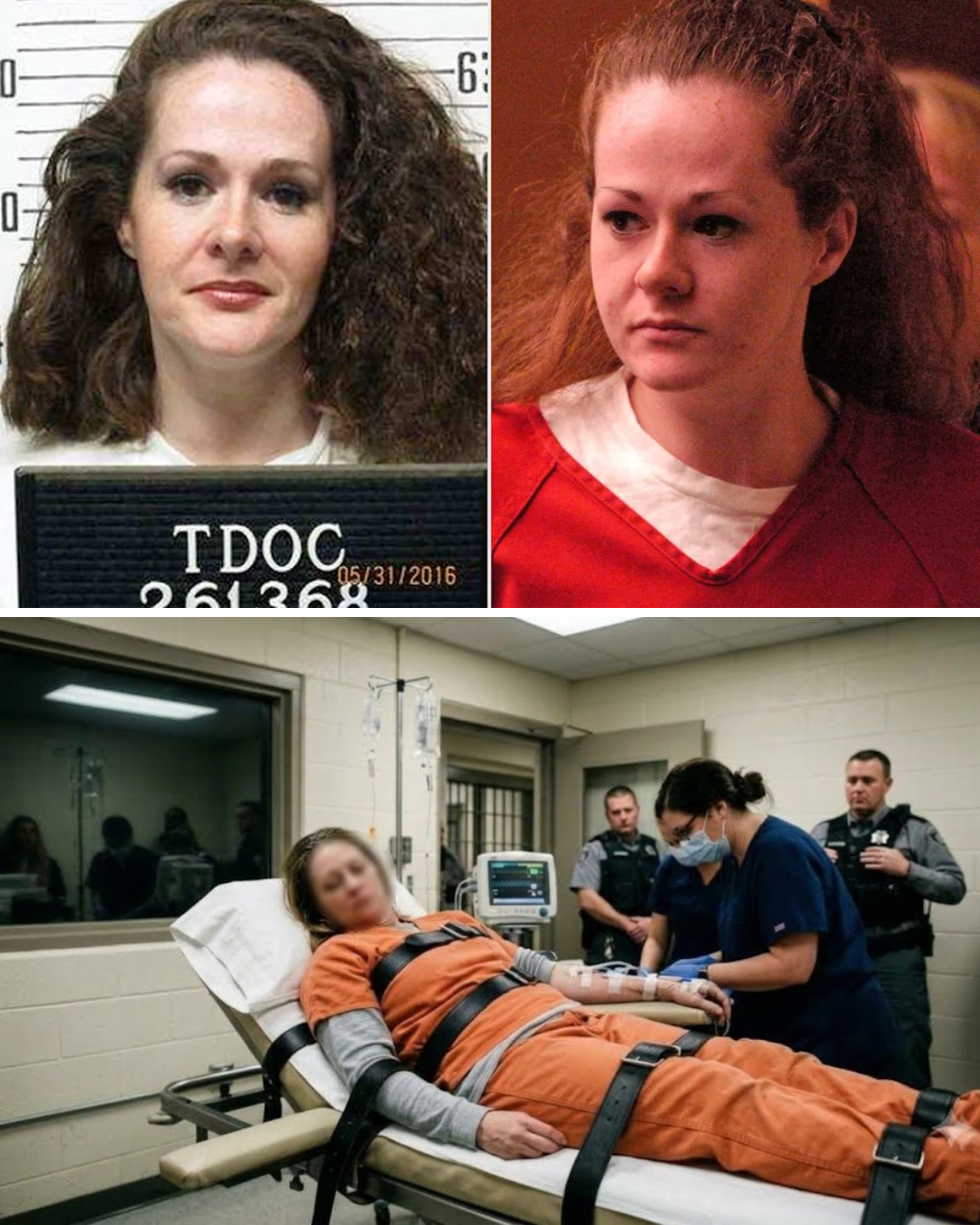
CHRISTA PIKE REMAINS UNCONSCIOUS ON VENTILATOR AS TENNESSEE PRISON CHIEF RESIGNS AFTER FAILED EXECUTION
Christa Pike remains critically ill and unconscious in a hospital days after Tennessee’s attempt to carry out her execution failed — as the state’s prison chief prepares to step down and an independent investigation begins.
Pike, 50, was scheduled to be executed by lethal injection at Riverbend Maximum Security Institution in Nashville on September 30.
Instead, two doses of pentobarbital were administered without resulting in her death.
Pike was later transported to a Nashville-area hospital, where her attorneys said she remained unconscious, intubated and on a ventilator. Medical staff were working to stabilize her condition and clear the drug from her system.
:max_bytes(150000):strip_icc():focal(751x410:753x412):format(webp)/christa-pike-10126-1633422cfb6a4d17a1f2455d3db629e1.jpg) A LETHAL INJECTION THAT DID NOT END HER LIFE
A LETHAL INJECTION THAT DID NOT END HER LIFE
The failed procedure has become one of the most closely watched execution cases in the United States.
According to Pike’s attorneys, the execution team encountered difficulties establishing intravenous access before the drugs were administered.
Her lawyers allege that the IV lines were improperly positioned or that her veins had failed, potentially preventing the pentobarbital from being delivered normally into her bloodstream.
They say the execution team proceeded with a second dose despite those problems.
These are allegations from Pike’s defense team and have not been established as the official cause of the failed execution. Tennessee officials have maintained that the Department of Correction followed its established execution protocol.
HER ATTORNEYS DESCRIBE A SERIOUS MEDICAL EMERGENCY
A court filing submitted by Pike’s attorneys provides new details about what happened inside the execution chamber.
According to the filing, the medical team used at least seven needles while attempting to establish IV access. One needle was reportedly removed bent at a sharp angle.
Her lawyers also said Pike arrived at the hospital with significant injuries to both arms.
The attorneys have asked the court to require Tennessee officials to preserve evidence from the execution, including materials that could help investigators determine exactly what happened.
The state has been asked to preserve evidence while the legal dispute continues.
:max_bytes(150000):strip_icc():focal(749x0:751x2):format(webp)/christa-pike-0100126-90e9a339238945e2b0028b6413b79208.jpg) TENNESSEE ORDERS AN INDEPENDENT REVIEW
TENNESSEE ORDERS AN INDEPENDENT REVIEW
The failed execution has already led Tennessee Governor Bill Lee to order an independent investigation.
Lee also halted the state’s remaining scheduled executions for the rest of 2026 while officials examine the circumstances surrounding Pike’s case.
The review is expected to focus on what happened during the procedure and whether the state’s established execution protocols were followed correctly.
The incident was Tennessee’s second failed execution attempt of 2026, increasing scrutiny of the state’s lethal-injection procedures.
TENNESSEE’S PRISON CHIEF IS STEPPING DOWN
On October 3, another major development emerged.
Frank Strada, commissioner of the Tennessee Department of Correction, announced that he would resign later this month.
Governor Bill Lee said he had accepted Strada’s resignation.
Strada said he believed the department had carried out its responsibilities according to established protocol, but said stepping aside was in the best interest of Tennesseans while the independent review moves forward.
Pike’s attorneys welcomed the resignation but argued that it does not change their client’s current medical condition.
The legal team said the events surrounding Pike’s execution reflected problems that they believe go beyond one individual.
WHY WAS CHRISTA PIKE ON DEATH ROW?
Pike was sentenced to death for the 1995 killing of 19-year-old Colleen Slemmer, a fellow student at the Job Corps Center in Knoxville.
Pike was 18 at the time of the crime.
She was convicted of first-degree murder and has spent decades on Tennessee’s death row.
Her defense has previously pointed to her age, childhood abuse and mental-health history as mitigating circumstances in her case.
Pike was the only woman currently on Tennessee’s death row and was expected to become the first woman executed by the state in more than two centuries.
THE EXECUTION WAS ALLOWED TO GO AHEAD
Pike’s execution faced last-minute legal challenges before September 30.
The U.S. Supreme Court ultimately allowed Tennessee to proceed after a lower court had temporarily blocked the execution.
The decision drew dissent from Justices Sonia Sotomayor, Elena Kagan and Ketanji Brown Jackson.
Pike was then taken to the execution chamber, where the state attempted to carry out the sentence.
But the procedure did not end as officials expected.
Pike survived.
HER DEATH SENTENCE HAS NOT AUTOMATICALLY BEEN OVERTURNED
Despite surviving the failed execution, Pike’s conviction and death sentence have not automatically been cancelled.
There has been no announcement that her conviction has been overturned or that she has been formally resentenced.
For now, her legal team is pursuing further court action while the state investigates what happened.
Her medical condition remains the immediate concern.
A CASE NOW RAISING BIGGER QUESTIONS
Pike’s case has moved beyond the question of whether Tennessee could carry out her sentence.
It now raises questions about the state’s execution procedures, medical safeguards and the oversight of lethal injections.
Why did two doses fail?
Were the IV lines properly established?
Were officials aware of the difficulties before the drugs were administered?
And how did a woman who was supposed to die in an execution chamber instead end up unconscious and dependent on a ventilator in a hospital?
Those questions remain unanswered.
The independent investigation is now expected to provide a clearer picture of what happened.
For now, Christa Pike remains critically ill, unconscious and on a ventilator, while Tennessee’s corrections system faces an unprecedented level of scrutiny.
And the woman whose execution was supposed to mark a historic moment in Tennessee is instead at the center of a growing investigation into how the state’s death-penalty system failed.