CHRISTA PIKE STILL UNCONSCIOUS AFTER FAILED EXECUTION — TENNESSEE PRISON CHIEF RESIGNS
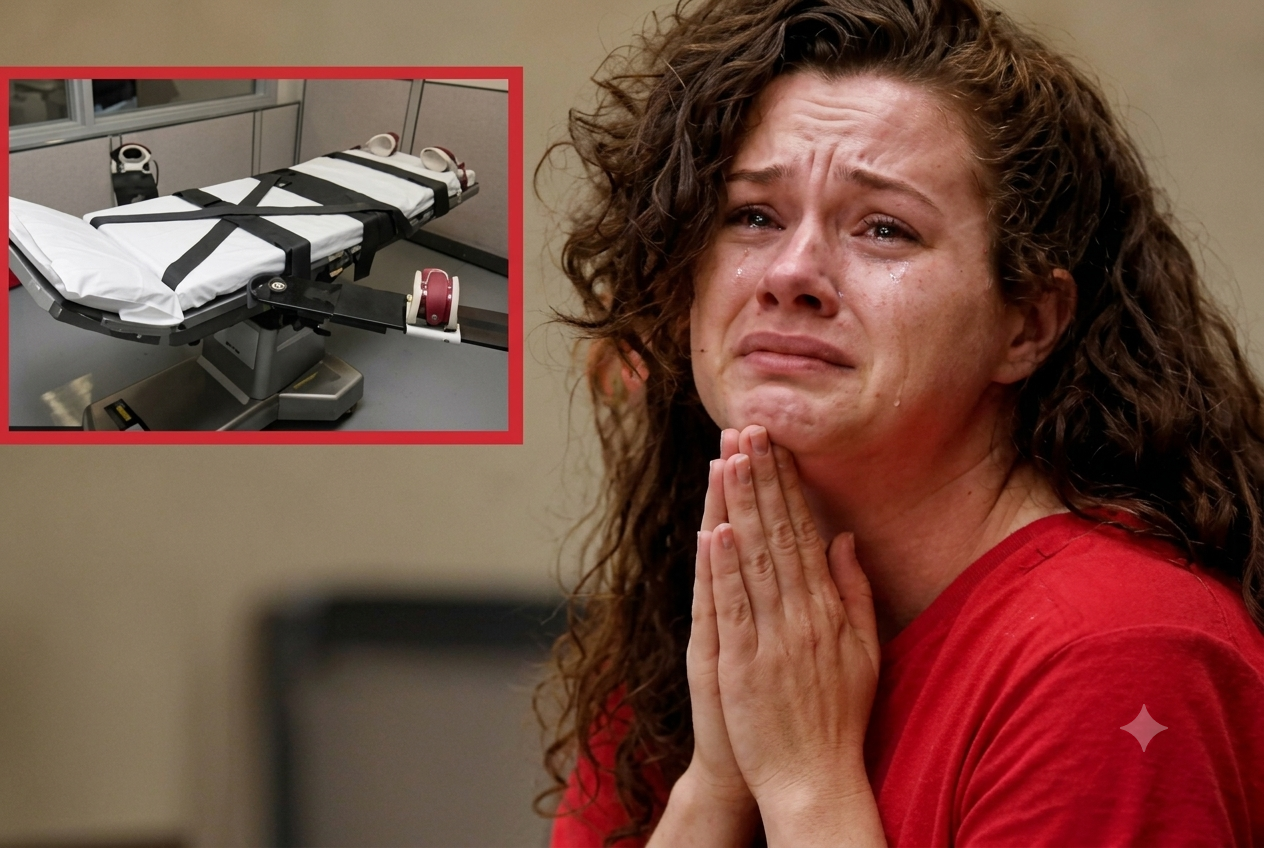
CHRISTA PIKE STILL UNCONSCIOUS AFTER FAILED EXECUTION — TENNESSEE PRISON CHIEF RESIGNS
Death-row inmate remains critically ill on a ventilator as Tennessee launches an independent review into what went wrong
Five days after Tennessee’s attempt to carry out the execution of Christa Pike, the 50-year-old death-row inmate remains unconscious and critically ill in a Nashville-area hospital.
Her attorney, Stephen Ferrell, said Sunday that Pike had not regained consciousness since the failed execution on September 30 and remains on a ventilator.
Her long-term prognosis is still uncertain, with her legal team warning that she may not fully recover and could face lasting health and cognitive consequences.
:max_bytes(150000):strip_icc():focal(742x452:744x454):format(webp)/Frank-Strada-Christa-Pike-100526-tout-44b2ea9c78b64b459294a881cc3b955d.jpg) THE EXECUTION THAT FAILED
THE EXECUTION THAT FAILED
Pike was scheduled to be executed by lethal injection at Tennessee’s Riverbend Maximum Security Institution on September 30.
She was administered two doses of pentobarbital, but the execution did not result in her death.
According to court filings from Pike’s attorneys, problems occurred while officials were attempting to establish intravenous access.
Her lawyers allege that the IV lines were not properly placed and that some of the drug may have entered surrounding tissue rather than the bloodstream.
They said Pike’s arms became severely swollen, burned and blistered.
The legal team also said witnesses could hear Pike crying, whimpering and breathing heavily during the procedure.
Tennessee officials have maintained that the Department of Correction followed the state’s established execution protocol.
The exact circumstances surrounding the failed procedure are now the subject of an independent investigation.
PIKE REMAINS IN A HOSPITAL
After the failed execution, Pike was transported to a hospital and placed on a ventilator.
Doctors have been treating her while also working to clear the pentobarbital from her system.
As of October 4, her attorney said she remained unconscious and critically ill.
When asked whether Pike had regained consciousness at any point since the execution attempt, Ferrell said he was not aware of any such moment.
For her family and attorneys, the immediate concern is now her survival and potential recovery rather than another execution date.
Her legal team has also urged Tennessee officials to commute her death sentence following the medical ordeal.
 TENNESSEE PRISON CHIEF TO STEP DOWN
The fallout has reached the top of Tennessee’s prison system.
Governor Bill Lee announced that Frank Strada, commissioner of the Tennessee Department of Correction, will resign later this month.
Strada said stepping aside was in the best interest of Tennesseans while an independent review takes place.
He also maintained that he believes the department carried out its responsibilities according to the established protocol.
Strada has served as Tennessee’s corrections commissioner since 2023.
His departure is the first major leadership change announced following Pike’s failed execution.
AN INDEPENDENT INVESTIGATION
Governor Lee has appointed former U.S. Attorney Ed Stanton to lead an independent review of the execution attempt.
The investigation is expected to examine whether Tennessee’s established procedures were followed and whether changes are necessary.
The governor’s office has said the review will determine what occurred during the execution and consider recommendations to ensure the state’s protocol remains lawful and effective.
Tennessee has also halted its remaining scheduled executions for the rest of 2026 while the review continues.
PIKE HAD WARNED ABOUT HER VEINS
The failed execution has drawn additional attention because Pike’s lawyers had previously raised concerns about difficulties accessing her veins.
Her legal team said she had small veins and a blood disorder known as thrombocytosis, which they argued could make intravenous access especially difficult.
A former attorney who represented Pike also said concerns about her veins had been raised in earlier legal filings.
Those warnings are now part of the broader debate over whether adequate preparations were made before the execution attempt.
However, the independent investigation has not yet reached a final conclusion about responsibility for the failed procedure.
A CASE THAT DATES BACK MORE THAN 30 YEARS
Pike’s death sentence stems from the 1995 killing of 19-year-old Colleen Slemmer, a fellow student at a Job Corps Center in Knoxville.
Pike was 18 at the time.
She was convicted of first-degree murder for her role in Slemmer’s killing and was sentenced to death.
Her former boyfriend, who was 17 at the time of the crime, was also convicted and received a life sentence with the possibility of parole.
Pike later became the only woman on Tennessee’s death row.
Her September 30 execution was expected to make her the first woman executed by Tennessee in more than two centuries.
Instead, the procedure ended with Pike alive but critically ill.
THE QUESTIONS NOW FACING TENNESSEE
The failed execution has raised questions about Tennessee’s lethal-injection procedures, medical preparation and oversight.
It was also the state’s second failed execution attempt in 2026.
In May, officials halted the scheduled execution of Tony DeWayne Carruthers after difficulties establishing an IV line.
The latest incident has therefore intensified scrutiny of the state’s execution system.
But many of the most important questions remain unanswered.
Did the execution team properly establish the IV lines?
Were previous concerns about Pike’s medical condition adequately addressed?
Was the state’s protocol followed at every stage?
And why did two doses of pentobarbital fail to produce the intended result?
Those questions will now be examined as part of the independent review.
HER FUTURE REMAINS UNCERTAIN
For now, Christa Pike remains unconscious in a hospital.
Her attorney says her prognosis remains unclear.
Meanwhile, Frank Strada is preparing to leave his position, Tennessee has paused executions for the remainder of 2026, and an independent investigation is underway.
The execution that was supposed to bring an end to Pike’s decades-long death sentence has instead created a new chapter in the case — one centered on medical uncertainty, questions about Tennessee’s execution procedures and an investigation that could determine what went wrong.
For Pike’s legal team, however, the most urgent question is no longer what happened inside the execution chamber.
It is what happens to Christa Pike now.