NEW PHONE TWIST IN THE NOLAN WELLS CASE — WHO REALLY HAD ACCESS TO HIS DEVICE?

NEW PHONE TWIST IN THE NOLAN WELLS CASE — WHO REALLY HAD ACCESS TO HIS DEVICE?
A phone recovered after Nolan Wells’ disappearance may hold one of the most important digital timelines in the case. But before investigators can determine what it reveals, they face a deceptively simple question: WHO could actually access it?
The mystery surrounding Nolan Wells has taken another unexpected turn.
For weeks, attention has focused on where the 18-year-old was during the final hours of his life, who he was with, what happened on Horn Island and why he never returned to the mainland with the friends who had accompanied him.
Now another object is receiving renewed attention:
Nolan’s phone.
It may look like an ordinary device.
But investigators know that a modern smartphone can contain something far more valuable than individual messages or photographs.
It can contain a chronology.
A record of communications.
A history of applications being opened.
Photographs and metadata.
Location information.
Calls.
Connections to wireless networks.
And, depending on what data remains available, clues about when the device was being used and potentially who had physical possession of it.
That is why one question has suddenly become so important:
WHO COULD GET INTO NOLAN’S PHONE?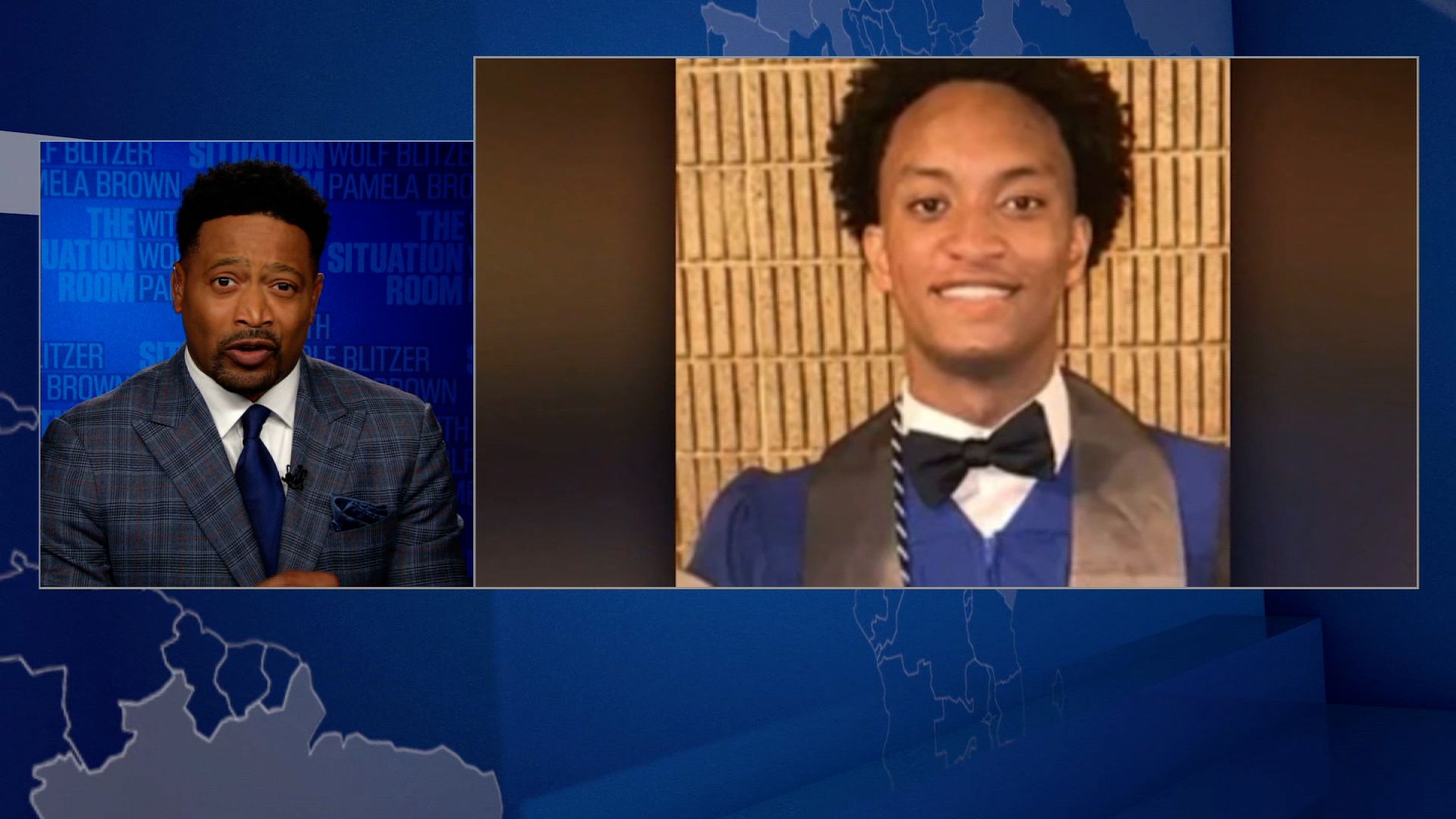
An online report says Warren Hudson reportedly maintained that nobody in the group knew Nolan’s password.
If that account is accurate, accessing the phone would presumably have been more difficult.
But a password is not necessarily the entire story.
Depending on the device and its settings, investigators may need to determine whether Nolan used biometric authentication, whether another person had previously been permitted to use the phone, whether the device was already unlocked at any point, and whether any linked accounts were accessible elsewhere.
The existence of another person who could potentially access a device does not prove that person actually did so.
That distinction is critical.
Potential access is not evidence of access.
And access is certainly not evidence of wrongdoing.
But it is a question investigators can test.
THE PHONE COULD BECOME A DIGITAL TIMELINE
Imagine investigators reconstructing the device’s activity minute by minute.
The last known unlock.
The final outgoing message.
The last photograph.
The final phone call.
The last known location.
The moment the device connected to a network.
The point at which it stopped communicating.
Each individual detail might appear insignificant.
Together, they could become much more important.
Suppose Nolan was known to be using the phone at a particular time.
If the device records activity immediately afterward, investigators can compare that activity with witness accounts.
Suppose someone says Nolan had already left an area.
A location record might support or contradict that statement.
Suppose a message was sent after Nolan was believed to have disappeared.
Investigators would want to know whether Nolan sent it, whether it was automated, whether another device was involved or whether there is another technical explanation.
That is the value of digital forensics.
It doesn’t simply ask what happened.
It can sometimes help determine when something happened.
BUT THERE IS A HUGE WARNING
A phone record should never be interpreted in isolation.
An application opening does not automatically mean the phone’s owner personally opened it.
A deleted message does not automatically mean someone was trying to hide evidence.
A location point does not necessarily establish the precise physical location of a person.
And an unfamiliar login does not automatically prove unauthorized access.
There can be technical explanations.
Cloud synchronization.
Automatic application activity.
Background processes.
Shared accounts.
Device settings.
Network anomalies.
And other possibilities investigators must eliminate before drawing conclusions.
That is why the original device matters.
THE REAL QUESTION: WHO POSSESSED THE PHONE?
There may be an even more important question than who knew Nolan’s password.
Who physically had the phone after Nolan disappeared?
That question could become crucial if investigators identify unusual activity during the critical period.
They would want to establish a chain of custody:
Where was the phone recovered?
Who found it?
Who first handled it?
When was it secured?
Who subsequently possessed it?
When was it transferred to investigators?
Was its condition documented?
Was the device powered on or off?
Was it already unlocked?
Were any changes detected?
These are ordinary but extremely important questions in a digital investigation.
If the case eventually reaches court, lawyers could scrutinize how the device was handled from the moment it was recovered.
THE FAMILY AND PROSECUTORS ARE NOW LOOKING AT THE PHONE
This is where the story moves beyond internet speculation.
Reporting indicates that Nolan’s family and the local prosecutor’s office agreed to work together to inspect the contents of his cellphone.
That development could prove important.
The goal would not simply be to find something sensational.
Investigators need to determine what the device can reliably establish.
And sometimes the most valuable evidence is evidence that eliminates a theory.
A phone record could confirm a witness account.
It could show that a suspected interaction never occurred.
It could establish that Nolan was somewhere investigators already believed he was.
It could also reveal an unexplained communication that requires further investigation.
The phone doesn’t automatically provide the answer.
It provides data that investigators can compare against the rest of the evidence.
SOCIAL MEDIA DATA COULD ADD ANOTHER LAYER
The investigation has now expanded beyond the physical phone itself.
Recent reporting says Nolan’s family has issued subpoenas to social-media companies seeking account information and digital records, following concerns about missing photos and videos from his Snapchat account after the phone was returned.
That could potentially be significant because information stored by a platform may differ from what remains visible on a physical device.
A deleted or missing item on a phone may still exist in a company’s records, depending on the platform’s retention policies.
Conversely, the absence of a particular record does not necessarily prove that someone deliberately deleted it.
Again, investigators have to establish the technical facts.
WHAT IF SOMETHING WAS DELETED?
This is one of the questions most likely to generate speculation.
But investigators would need to be extremely careful.
If a conversation is missing, they would need to determine:
Was it manually deleted?
When was it deleted?
From which device?
Was the account synchronized elsewhere?
Did the platform itself remove or expire the content?
Was the deletion made before or after Nolan disappeared?
Can the original data be recovered from another source?
Only after answering those questions could investigators begin determining whether the missing information has evidentiary significance.
A missing message alone does not prove a cover-up.
WHAT IF SOMEONE COULD UNLOCK IT?
This is the question at the heart of the latest online claims.
Suppose investigators determine that someone besides Nolan had the ability to unlock his phone.
That would not automatically mean anything suspicious happened.
People often share passwords with partners, close friends or family.
People sometimes allow others to use their phones.
Biometric authentication can also complicate assumptions about who technically had access.
The important issue would be whether that access was actually used during a relevant period.
That is something forensic analysis could potentially address.
Investigators could examine available system records, application activity, account logs and other digital traces.
If the evidence shows no unusual activity, the access question may ultimately lead nowhere.
If unusual activity appears, investigators would then need to determine who was physically present and whether there is an innocent explanation.
THE TIMELINE REMAINS THE KEY
Everything eventually returns to the same problem.
Nolan disappeared during a July 4 trip to Horn Island.
His friends returned to the mainland without him.
His body was found two days later.
Authorities initially suspected drowning and said there were no apparent signs of foul play, while Nolan’s family has continued to push for a broader investigation.
The uncertainty surrounding his final hours is what makes digital evidence potentially valuable.
If the phone can establish what Nolan was doing immediately before his disappearance, it could help narrow the timeline.
If it establishes where the device was afterward, investigators could compare that information with witness statements and other evidence.
If there is no useful activity, that itself becomes part of the evidentiary picture.
A PHONE CAN CONFIRM A STORY — OR CHALLENGE IT
This may be the most important point.
Digital evidence isn’t inherently “good news” or “bad news” for any particular person.
It can work in either direction.
If someone’s account is accurate, phone records might support it.
If an account contains an incorrect time or location, digital evidence could expose the discrepancy.
That is why investigators should not begin with a conclusion.
They should begin with the records.
Then ask:
What do the records actually show?
AND THEN THERE IS THE QUESTION OF NOLAN’S FINAL DIGITAL FOOTPRINT
What was the last thing Nolan did on his phone?
Who did he communicate with?
What was the last photograph?
What was his last location?
Did he receive a message shortly before disappearing?
Did he attempt to call someone?
Was there any activity after the period when witnesses believed he was no longer using the phone?
These questions are not proof of anything.
But they are exactly the kind of questions a digital forensic examination can potentially answer.
And if investigators discover that the phone became active at a time when Nolan could no longer reasonably have been using it, that would be a fact requiring explanation.
Not a verdict.
Not an accusation.
An investigative lead.
THE CASE HAS ALREADY BEEN FLOODED WITH MISINFORMATION
That caution is particularly important in Nolan’s case.
Authorities have already warned the public about a fraudulent toxicology report circulating online and have criticized the spread of fabricated or AI-generated material connected to the investigation.
That means every alleged screenshot, “leaked document” and supposed phone discovery should be treated carefully.
A dramatic claim can spread much faster than investigators can verify it.
And once an allegation becomes viral, separating fact from fiction becomes considerably harder.
The phone investigation therefore matters precisely because it can potentially move the conversation away from anonymous claims and toward verifiable digital evidence.
WHAT INVESTIGATORS SHOULD REALLY ESTABLISH
Before anyone draws conclusions, investigators need answers to a series of basic questions:
Who recovered Nolan’s phone?
Who possessed it immediately afterward?
Was the device secured?
Who had physical access to it?
Who knew the passcode?
Did Nolan use biometric authentication?
Was the phone unlocked after his disappearance?
When was the last verified activity?
Were any messages or files deleted?
Can deleted data be recovered?
Do platform records match the phone?
Does the digital timeline match witness statements?
Those answers could be far more meaningful than any social-media theory.
THE PERSON WHO “COULD ACCESS” THE PHONE MAY NOT BE THE PERSON WHO DID
This distinction deserves to be repeated.
The latest online discussion appears to revolve around the possibility that someone other than Nolan may have had the ability to access his device.
But the ability to access a phone does not establish that the person actually accessed it.
And even actual access does not automatically establish criminal behavior.
Investigators must determine what happened, when it happened and why.
That is the standard that matters.
ONE DEVICE. COUNTLESS QUESTIONS.
The Nolan Wells phone has now become much more than a personal possession.
Potentially, it is a digital witness.
It cannot speak.
It cannot explain what happened.
But its records may preserve fragments of a timeline.
A timestamp.
A message.
A photograph.
A location.
A call.
A connection.
A piece of information that existed before anyone knew Nolan would never come home.
And perhaps the most important question isn’t simply:
“What is on Nolan Wells’ phone?”
It may be:
“Who had access to it — and what happened to the device during the hours after Nolan disappeared?”
Those questions can only be answered through authenticated records and forensic examination.
For now, the identity of anyone who may have been capable of accessing Nolan’s device should not be treated as evidence of wrongdoing.
But if investigators can establish exactly who possessed the phone, when it was accessed and what activity occurred, they may finally be able to add another reliable layer to the timeline of Nolan Wells’ final hours.
The phone may not tell the whole story.
But it could tell investigators something the witnesses cannot: exactly when the digital trail changed.