Sterling K. Brown Opens Up About His Mother’s ALS Battle and the Painful This Is Us Parallel
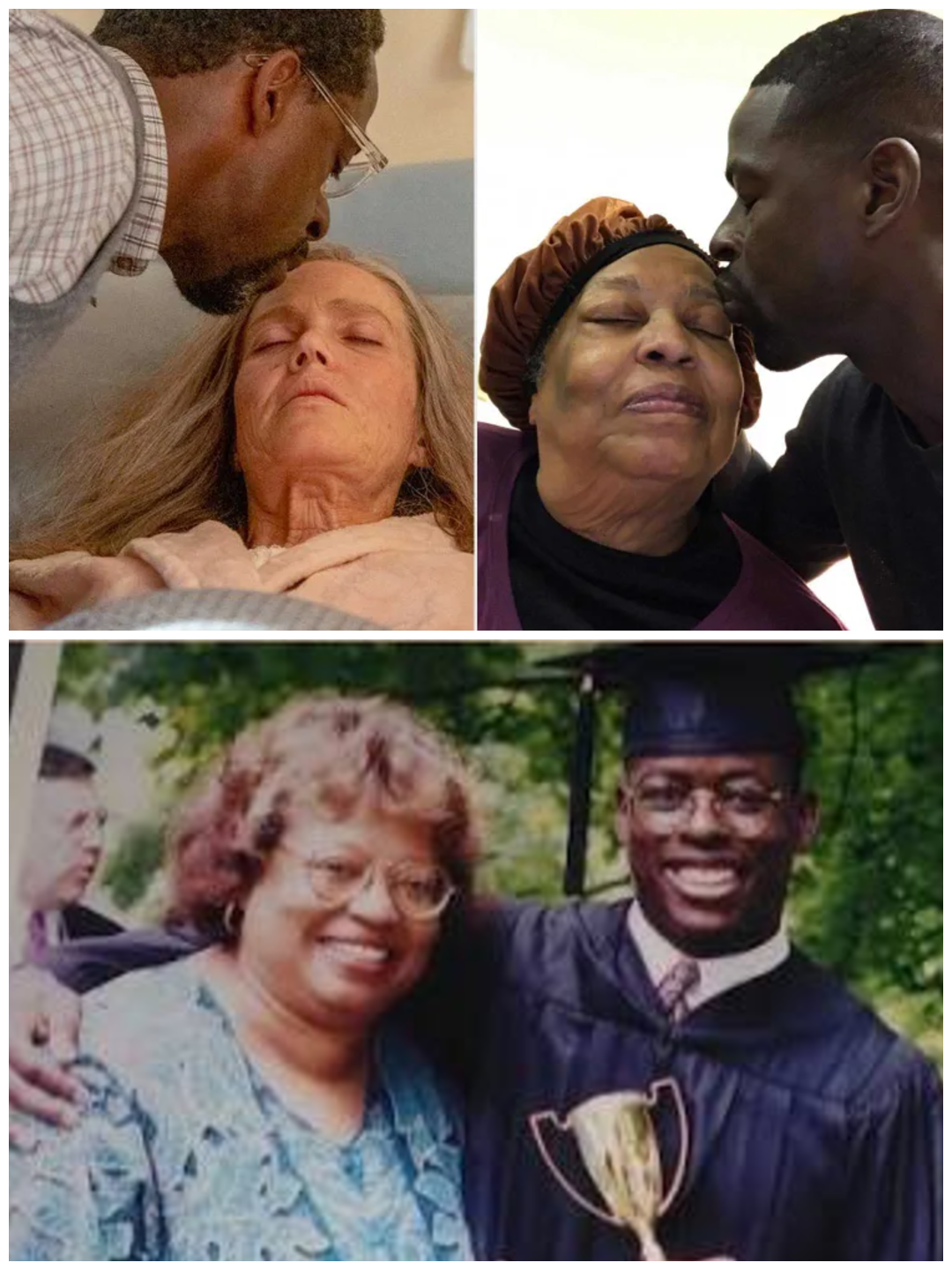
For years, Sterling K. Brown played a son trying to make the right decisions for an aging mother on This Is Us. Away from the cameras, however, an unsettlingly similar struggle was unfolding inside his own family.
Brown’s mother, Aralean, was diagnosed with ALS in 2018. Within months, she lost the ability to speak. As Brown and his siblings learned how to care for her and make difficult decisions while respecting what she wanted, the actor found himself returning to a television set where his character, Randall Pearson, was confronting many of the same emotional questions.
At one point, the overlap became so striking that Brown remembers walking into the show’s writers’ room and expressing a painful thought: he did not know whether he would lose his real mother or his television mother first.
It was a collision between fiction and reality that made the final chapters of This Is Us deeply personal.
Two Families Facing Similar Questions
Brown, 50, recently reflected on that period during an episode of the That Was Us rewatch podcast with former costars Chris Sullivan and Mandy Moore. The conversation, which also included caregiving advocate and storyteller Lydia Stori, focused on the caregiving themes that became central to the show’s final season.
On the series, Randall and his siblings — known collectively as the Big Three — were forced to navigate their mother Rebecca Pearson’s Alzheimer’s disease.
Brown, meanwhile, was helping care for Aralean as she lived with ALS.
The similarities went beyond illness itself.
Brown recalled disagreements with his own siblings over how certain situations involving their mother should be handled. Those conflicts echoed Randall’s struggles with his brother and sister as the Pearson family tried to determine what was best for Rebecca.
For Brown, the experience underscored how complicated caregiving can become even when everyone involved is motivated by love.:max_bytes(150000):strip_icc():focal(749x0:751x2):format(webp)/sterling-k-brown-mandy-moore-mother-082026-3cb240aeb13542488c3ce9287432e2fa.jpg)
Making Sure His Mother Still Has a Voice
Aralean has been unable to speak since a few months after her 2018 diagnosis, Brown explained. But losing speech has not meant losing her ability to think, understand or have preferences about her own life.
That distinction has become especially important to Brown and his siblings.
The family has developed other ways of communicating with her, and Brown said they have had to continually remind themselves that the goal is not simply to make decisions quickly or choose what they personally believe is best.
Instead, they try to determine what Aralean wants.
Her wishes may take longer to understand now, but Brown said taking that extra time matters.
“Her mind is still present,” he explained.
That reality has shaped the family’s approach throughout her illness. Even when communication is difficult, Brown said they try to keep his mother at the center of decisions affecting her life rather than allowing others to speak over her.
It is also one of the lessons he took from watching the Pearson siblings struggle with Rebecca’s care on This Is Us: loving someone can sometimes mean resisting the urge to take control and instead listening carefully to what that person wants.
Aralean Had Already Shaped Brown’s Life in Extraordinary Ways
Brown’s admiration for his mother stretches far beyond the way she has faced ALS.
In discussing her previously, he shared a remarkable chapter from their family history that revealed how readily Aralean stepped in when children needed her.
Her younger sister had been fostering a baby but disappeared for roughly two weeks while dealing with substance abuse struggles. The child, Robert, had been left with Aralean.
Rather than allowing the situation to remain uncertain, Aralean contacted the social worker and explained that the baby was with her. When she was asked whether she could continue caring for him, she agreed. Aralean became Robert’s foster parent.
Later, Robert’s birth mother was pregnant with twins, Ariel and Avery. Once again, a social worker approached Aralean and asked whether she would be willing to take the children.
Once again, she said yes.
The family eventually endured a devastating loss when Avery died from sudden infant death syndrome. Despite that heartbreak, Aralean continued caring for the children and ultimately formally adopted Robert and Ariel.
Brown has described his mother as an extraordinary person, and that history helps explain why her current illness carries such emotional weight for him.
She spent so much of her life making room for other people.
Now her children are trying to make sure they care for her with the same sense of devotion.:max_bytes(150000):strip_icc():focal(749x539:751x541)/This-Is-Us-0001-69fe0424ab704a7c82bdcd55578c5375.jpg)
Her Illness Has Not Taken Away Her Joy
ALS has changed almost every practical aspect of Aralean’s life, but Brown says one part of her has remained remarkably powerful.
Her joy.
He said his mother has lived far longer than doctors generally expected and continues to greet people with a warmth that has made a lasting impression on him. Despite living with what Brown described as an enormously debilitating illness, she can still smile at the people who enter her world.
For her son, that response has become a lesson.
Brown cannot control his mother’s diagnosis. Aralean cannot control many of the physical circumstances ALS has imposed on her. But he believes watching her has shown him that circumstances do not have to completely determine how a person meets the world.
There can still be choice in the response.
That idea appears to have stayed with Brown as strongly as any lesson he encountered while playing Randall Pearson.
For six seasons, This Is Us explored families trying to love one another through loss, disagreement, illness and change. During some of the show’s most painful storylines, Brown was returning home to a family experiencing its own version of those struggles.
The resemblance was sometimes difficult for him to carry.
Yet years after Aralean’s diagnosis, Brown’s reflections are not centered only on what ALS has taken from his mother.
They are also about what remains: her ability to communicate her wishes, the family determined to hear them, and the joy she continues to offer despite circumstances she never chose.
To Brown, his mother’s enduring warmth has become proof of something he learned both through life and through the story he helped tell on television — hardship may transform a family, but it does not have to erase the person at the center of it.