Mikaela Didn’t Live to See the Law Bearing Her Name. Now It Could Give Other Children the Chance She Fought For
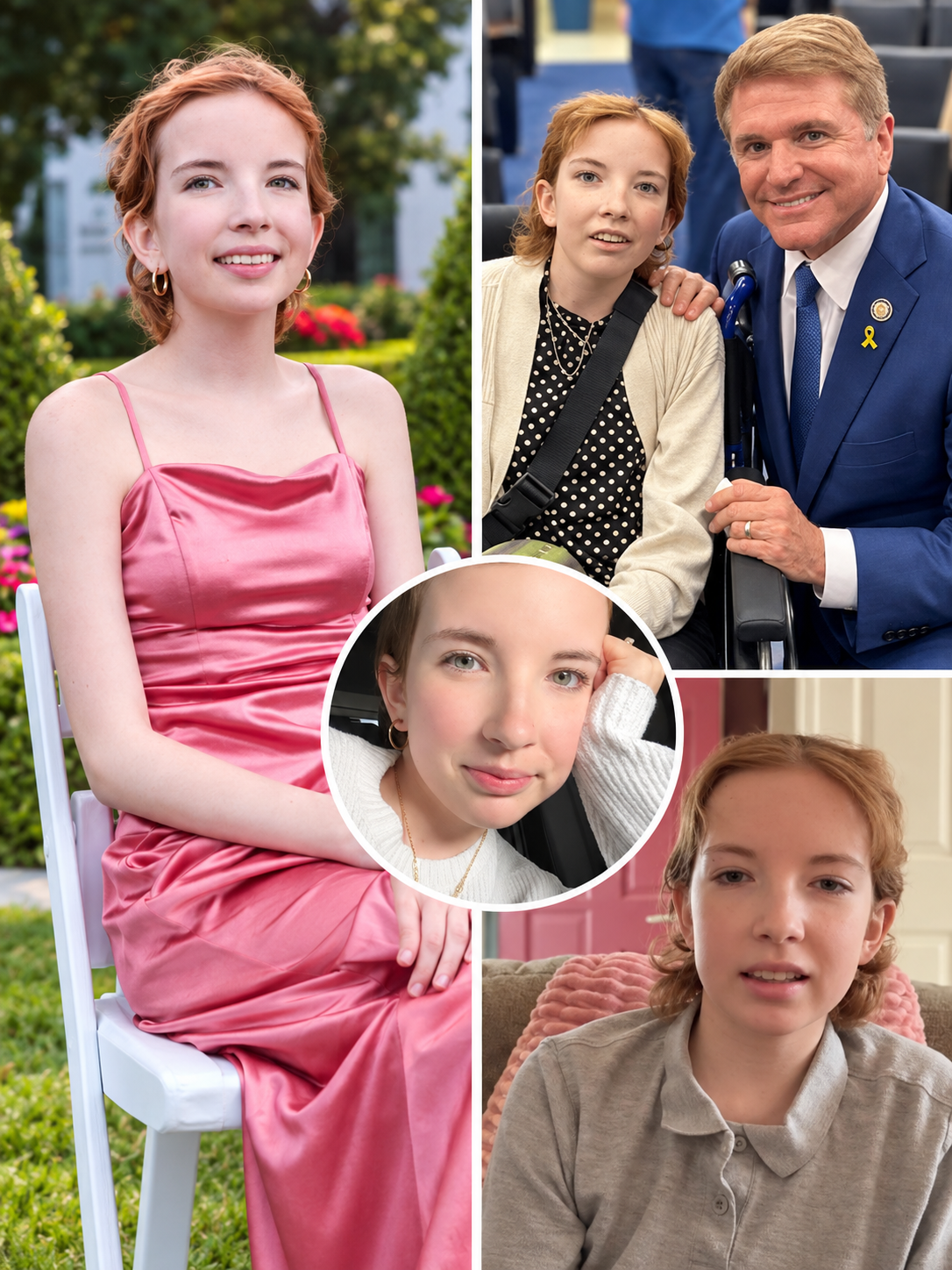
Mikaela Naylon knew the legislation she was fighting for might come too late for her.
She kept fighting for it anyway.
By the fall of 2025, the 16-year-old Colorado teenager had already spent nearly six years living with osteosarcoma, an aggressive form of bone cancer.
She had lost part of her left leg.
She had undergone multiple surgeries on her lungs.
She had traveled between major cancer centers in search of treatments.
And even as her own condition worsened, Mikaela was using what strength she had left to push lawmakers and federal officials to improve the way new cancer drugs are studied for children.
She died on October 29, 2025.
She never saw Congress finish the work.
But on February 3, 2026, President Donald Trump signed the Mikaela Naylon Give Kids a Chance Act into federal law — putting the name of a teenager who wanted to be known as more than “the cancer kid” onto legislation designed to expand and accelerate pediatric drug research.
For Mikaela’s friends and fellow young advocates, the moment carried a painful contradiction.
The law could not help her.
But it may help children who are diagnosed after her.
Cancer entered her life at 10
Mikaela was born on August 24, 2009, in Pueblo, Colorado.
She was 10 years old when doctors diagnosed her with osteosarcoma in July 2020.
The cancer began in her left ankle and had already spread to both lungs.
Treatment quickly became intense.
In October 2020, Mikaela underwent a below-the-knee amputation. Over the years that followed, she also endured repeated lung surgeries and received treatment at Children’s Hospital Colorado, MD Anderson Cancer Center and the Cleveland Clinic.
Those years made cancer an unavoidable part of her childhood.
But her obituary makes clear that Mikaela resisted allowing it to become her entire identity.
She loved playing tennis.
She snowboarded.
She followed Formula 1 and hockey.
She liked horror movies, cats and scrolling TikTok and Instagram.
She loved traveling and spending time with friends.
By her junior year at Central High School, she was already thinking about college and genuinely enjoyed going to school.
Above all, her family remembered that she wanted people to see her as a normal teenager rather than simply “the cancer kid.”
At the same time, Mikaela understood that her experience gave her something most teenagers did not have: firsthand knowledge of how slowly treatment options can move for children with rare cancers.
So she started speaking.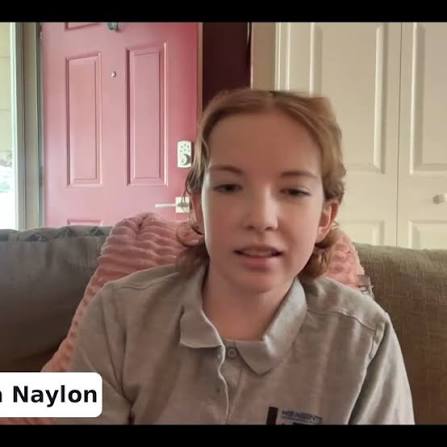
She turned her illness into advocacy
Mikaela joined the Junior Advisory Board of MIB Agents, an organization focused on osteosarcoma research, advocacy and patient support.
She appeared on radio and local television discussing childhood cancer.
She joined other young patients and survivors who traveled to Washington to meet lawmakers.
In September 2025, Mikaela was among young advocates pushing for passage of the Give Kids a Chance Act.
The central issue was one pediatric cancer families had been raising for years: drugs are often developed and studied first in adults, while children — especially those with rare cancers — can face far fewer treatment options.
The legislation sought to strengthen federal requirements surrounding pediatric studies and encourage research involving combinations of cancer drugs rather than studying certain treatments only one at a time. It also incorporated measures to extend incentives for developing therapies for rare pediatric diseases and to give the FDA stronger authority when companies fail to complete required pediatric studies.
For Mikaela, those policy details were not theoretical.
She had spent much of her childhood living with the consequences of limited options.
She went to Washington while seriously ill
One of the most striking accounts of Mikaela’s final months came later on the floor of the House of Representatives.
Rep. Michael McCaul recalled meeting her at a childhood cancer summit in 2025.
He said it was apparent that Mikaela was in the middle of an extremely difficult stage of her illness.
Yet she still came.
According to McCaul, it took considerable strength for her to attend, but Mikaela believed she needed to be there because she wanted her presence and her voice to help influence policy.
Her advocacy continued into October.
FDA materials from an October 2025 workshop still listed the 16-year-old as a patient advocate and described her history with osteosarcoma, amputation and repeated lung surgeries.
Then her health deteriorated rapidly.
During the December congressional debate, McCaul said Mikaela had to be placed on a ventilator only weeks after the summit.
Before she died, he told her that her story would not be forgotten and that her work would continue helping other children.
The House later took up the bill bearing her name.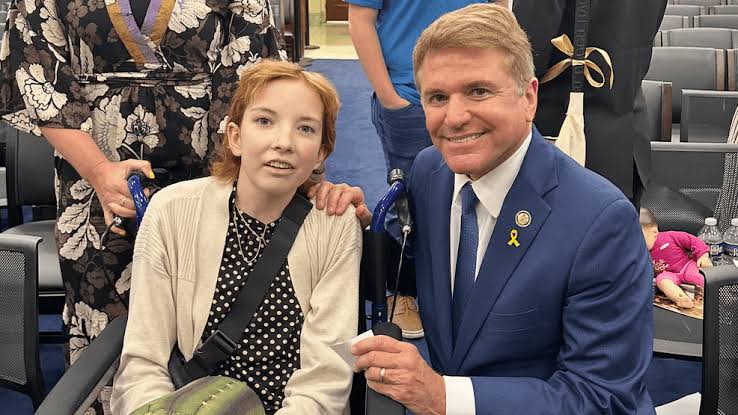
“Her impact would outlive all of us”
Mikaela died on October 29.
She was 16.
Weeks later, lawmakers gathered to consider legislation that had once been known simply as the Give Kids a Chance Act.
Now it carried her name.
During the December 1 House debate, lawmakers repeatedly spoke about Mikaela’s role in advocating for children with cancer.
Rep. Debbie Dingell described Mikaela as a teenager who had actively spoken to lawmakers about cancer research and the needs of children facing diseases like hers.
McCaul told the House that he had wanted Mikaela to understand before her death that her legacy could continue helping thousands of children.
The House passed the measure unanimously on December 1, 2025.
The legislation eventually moved forward as part of a broader appropriations package and was signed into law on February 3, 2026.
What the law changes
The law does not create an instant cure for childhood cancer.
Its purpose is to change parts of the system through which pediatric treatments are researched and developed.
Among its provisions, the legislation strengthens requirements involving molecularly targeted pediatric cancer investigations and pediatric drug studies.
It also gives the FDA additional authority to address situations in which drug companies do not fulfill pediatric study obligations.
Another major component supports research into combinations of therapies — important because many cancers are treated with multiple drugs working together rather than a single medication.
The legislation also renewed the Rare Pediatric Disease Priority Review Voucher program, an incentive intended to encourage companies to develop treatments for rare childhood diseases.
Supporters of the law argue that these changes can reduce delays between advances in adult cancer treatment and research into whether those advances could also benefit children.
How much difference the law ultimately makes will depend on implementation, research outcomes, regulatory decisions and the development of new therapies.
But for the young advocates who fought beside Mikaela, the law represents something concrete that survived her.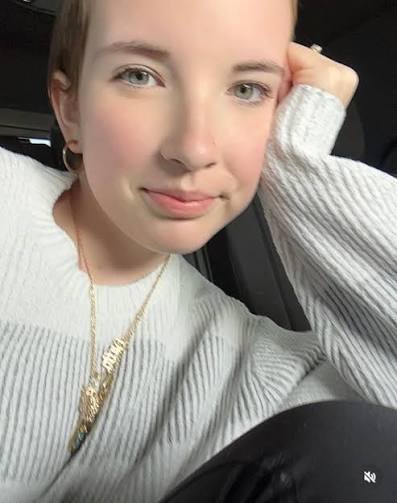
Her friends kept going after she could not
Mikaela was not alone in the campaign.
Other members of the MIB Agents Junior Advisory Board continued advocating after her death.
Some had survived osteosarcoma themselves.
Others had lost friends.
In early 2026, several of them described what it meant to see Mikaela’s name formally attached to the legislation.
Her friend Inaaya Shariq, who had met Mikaela at cancer camp when they were 13, said the law represented Mikaela’s resilience and empathy.
Another advocate, Sammy Ulloa, said Mikaela and other young patients had spent their remaining energy fighting for legislation they knew might never change their own outcomes.
“They knew it would not change their own outcomes,” Sammy said, “but they cared deeply about changing outcomes for others.”
That may be the clearest explanation of Mikaela’s legacy.
She was not advocating because she believed a new law would arrive in time to erase what cancer had already taken from her.
She was advocating because another child might come after her.
The life behind the name
It would be easy now to remember Mikaela only through legislation.
Her family did not want that either.
Before she was the name of a federal law, she was a teenager who played on her high school tennis team.
She loved snowboarding.
She laughed with friends.
She watched horror movies.
She thought about college.
She wanted to travel.
And despite years of surgeries, hospitals and treatment, she wanted to be seen as more than a diagnosis.
Cancer took away the future Mikaela had been planning for herself.
It did not erase the future she tried to make better for someone else.
She did not live to see the president sign the Mikaela Naylon Give Kids a Chance Act.
She did not get to watch the legislation move from advocacy meetings to the House floor and finally into federal law.
But on February 3, 2026, the work she had spent some of her final weeks fighting for became part of the law of the United States.
For Mikaela, it came too late.
For another child still waiting for a treatment, that is exactly what she had been trying to change.