August Was Diagnosed With a Brain Tumor at 5 Months Old. His Family Wants Him Remembered for the Joy He Carried Through It All
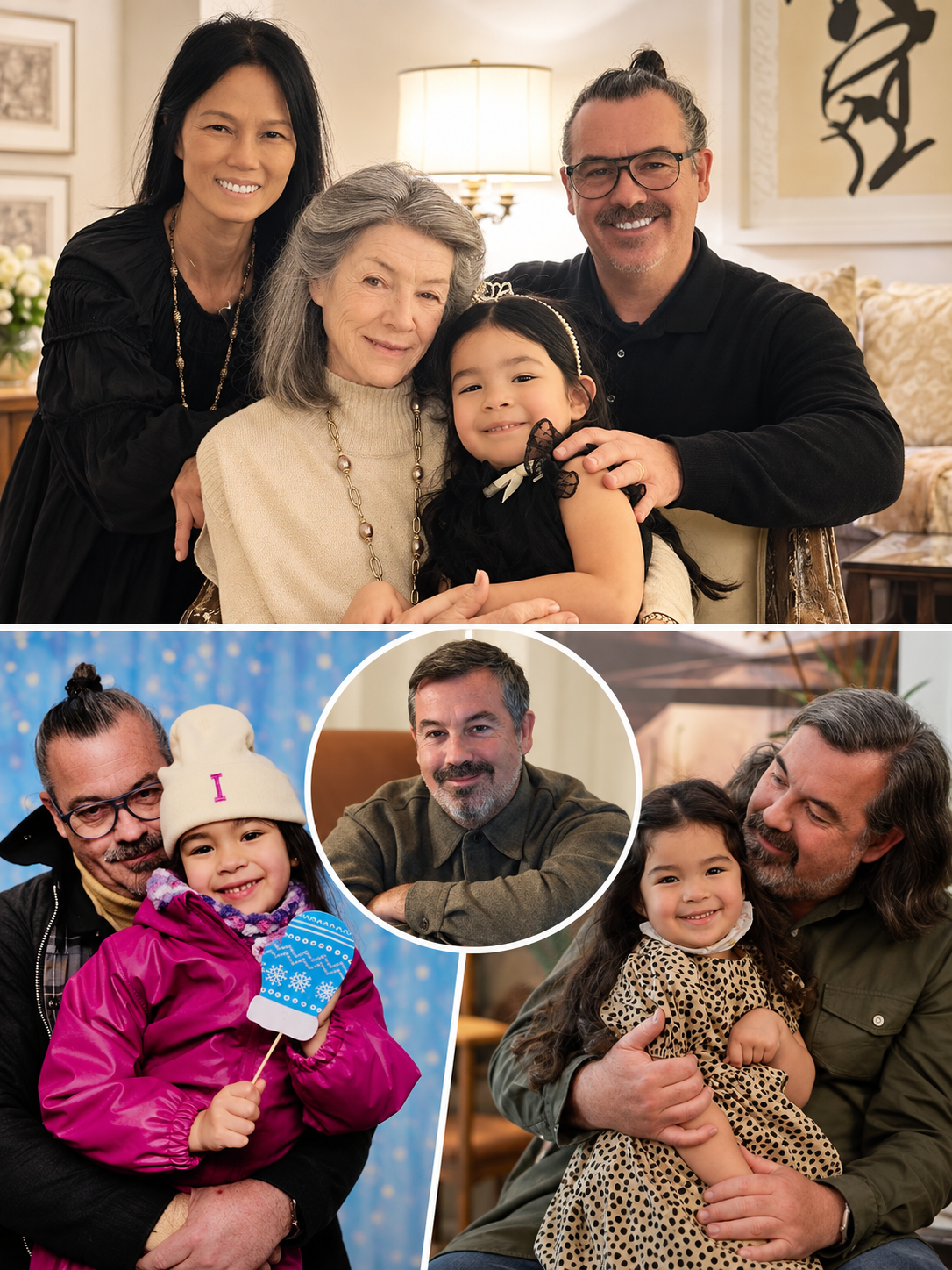
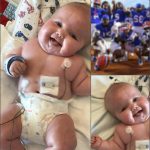
August “Auggie” Michael Johansen spent almost his entire life living alongside brain cancer.
He was only five months old when doctors discovered a brain tumor.
There would be surgeries.
There would be recurrences.
There would be a stroke, years of complex medical care and periods when August depended on a tracheostomy tube, a feeding tube and around-the-clock nursing.
But that is not how the people who loved him want his story to begin — or end.
They remember a little boy who told jokes.
A boy who loved soccer, baseball, Hot Wheels and video games.
A child who adored his older brother Bryant and spent hours drawing pictures and writing notes for people he loved, delivering them as though each one were precious mail.
And through years that gave his family more reasons to worry than most parents experience in a lifetime, August held onto a phrase that now follows his memory:
“Don’t worry about a thing, ’cause every little thing is gonna be alright.”
Today, Children’s Cancer Fund maintains a memorial page in August’s honor, accepting donations in his name and asking people to remember the joyful spirit that remained visible through everything his disease put him through.
Cancer arrived before he could even speak
August was born on November 30, 2018.
Five months later, his family entered a world of pediatric brain cancer that would shape nearly every part of his childhood.
According to Children’s Cancer Fund, August underwent multiple surgeries and experienced several tumor recurrences during the years that followed. His obituary later described him as a four-time brain cancer and stroke survivor.
His medical needs became extraordinarily complex.
At one stage, August was clinically nonverbal. He relied on a tracheostomy to breathe and a G-tube for nutrition, and he required 24-hour private-duty nursing.
A 2024 report on medically complex children in Texas described August as living with inoperable brain cancer. The effects of his illness included hearing loss in one ear, complications from a stroke and years of dependence on a tracheostomy. His mother, Erica Olenski, explained that Medicaid coverage was essential for medications, nursing and the extensive medical care he required.
Those details reveal the severity of what August endured.
But they also make what came next more remarkable.
From silence to song
August did things that once might have seemed impossible.
He learned to breathe independently.
He found his voice.
He went from communicating partly through signs to speaking in complete sentences.
By age 6, he was attending his neighborhood kindergarten alongside his older brother.
His life began expanding beyond hospitals and medical equipment.
His family remembers a boy obsessed with things recognizable to almost any young child: Lightning McQueen, Moana, Legos, MagnaTiles, scooters and music.
Children’s Cancer Fund remembers soccer, baseball, Hot Wheels and video games.
And jokes.
Lots of jokes.
August developed phrases that became part of his personality.
“Oh, you’ve got to be kidding me!” was one favorite.
Another, delivered with comic timing, was: “Oh, alright. I guess I’ll play golf.”
He also learned to sign “I love you” in American Sign Language — something his family says he did with his whole heart.
These are small details compared with the scale of his medical history.
That is precisely why they matter.
Cancer can reduce a child’s public story to diagnoses, procedures and survival statistics.
August’s family has worked to preserve everything that existed around those things.
He wanted to be where Bryant was
Among the most important people in August’s world was his older brother, Bryant.
Children’s Cancer Fund specifically notes how much August looked up to him.
The relationship took on particular meaning as August grew old enough to attend school.
After years in which medical care structured so much of his daily life, eventually going to neighborhood kindergarten with his brother represented more than a routine milestone.
It was childhood.
It was something ordinary.
For a family accustomed to surgeries, home nurses and medical crises, ordinary could become extraordinary.
August also had a younger sister, Phoenix, along with his mother Erica Olenski, father Aaron Johansen and stepfather Jake Downs. His obituary describes the family as surrounding him with love throughout his life.
Even losing health coverage became part of his fight
August’s story briefly became part of a much larger debate in Texas in 2024.
At age 5, he was among hundreds of thousands of children affected during a wave of Medicaid disenrollments after federal pandemic-era continuous coverage rules ended.
For August, however, Medicaid was not simply an insurance card.
It paid for services that helped make daily life possible.
Because of his medical complexity, he depended on private-duty nursing. His family also relied on coverage for medications and acute medical care.
After a paperwork problem, August temporarily lost coverage in December 2023. His mother was able to get him reinstated quickly, but the episode illustrated how even a short interruption could be frightening for families caring for children with severe medical needs.
It was another battle layered on top of a childhood already filled with them.
Still, the photographs and stories from those years rarely show August defined by fear.
He is remembered laughing.
Playing.
Making art.
Giving notes to people.
Living.
Six years of life, not six years of cancer
August died peacefully at home in McKinney on June 26, 2025.
He was 6 years old.
His family later wrote that despite his short life, he had reached thousands of people with what they described as his energy, imagination and perseverance.
Their description of his final years does not read like a list of everything cancer took away.
It reads like an account of everything August managed to build anyway.
He moved “from silence to song.”
From hospital rooms to playgrounds.
From signing words to speaking sentences.
He wrote letters.
He drew pictures.
He went to school.
He made people laugh.
And when his life ended, his family made another decision intended to ensure that even his disease could leave something useful behind.
His brain tumor became a final gift to research
After August died, his family donated tumor tissue from his brainstem to researchers through Gift from a Child, an initiative supporting postmortem pediatric brain tumor tissue donation.
For childhood brain cancer researchers, donated tumor tissue can provide information that scans, biopsies and treatment records cannot always reveal.
August’s family said the decision reflected the qualities they associated with him during his life: generosity, bravery and a desire to help others.
The tissue can now be studied in hopes of answering questions that might eventually lead to better treatment options for children diagnosed after him.
It transformed one final part of his cancer journey into an opportunity for discovery.
His parents also created August’s Artists, a nonprofit inspired by their experiences caring for him.
Its mission focuses on using art and advocacy to support medically complex children and families facing long-term hospital stays.
Meanwhile, Children’s Cancer Fund continues accepting gifts specifically in August’s memory.
His name now supports a fight he spent nearly his entire life living inside.
“Every little thing is gonna be alright”
There is an obvious sadness in those words now.
August’s family did not get the ending they wanted.
After surviving repeated brain tumors, surgeries and complications, he did not get to grow up alongside Bryant and Phoenix.
But his phrase survives because it seems to capture something larger than an assurance that his cancer would disappear.
It reflected the way his family says he approached life.
August could spend years surrounded by medical uncertainty and still find reasons to joke.
He could move through hospital halls and still make art for other people.
He could struggle to speak and eventually become the child delivering punch lines.
He could endure a childhood shaped by cancer and still be remembered first for joy.
That may be the most important distinction in the memorial his family and Children’s Cancer Fund have built around him.
August Johansen had brain cancer from the time he was five months old.
But brain cancer was never all that he was.
He was Bryant’s little brother.
He was Phoenix’s big brother.
He was a kindergarten student.
A soccer and baseball fan.
A Hot Wheels kid.
An artist.
A joker.
And now, through tissue donated for research, a family foundation and gifts made in his memory, pieces of August’s six years continue helping children whose stories are still being written.
For the people who loved him, that is why the sentence he repeated carries on after him:
Every little thing is gonna be alright.