“HELP! I’M LOST!” — 70-YEAR-OLD HIKER SURVIVES 11 DAYS ALONE IN THE WILDERNESS AFTER SHOUTING FOR HELP THOUSANDS OF TIMES
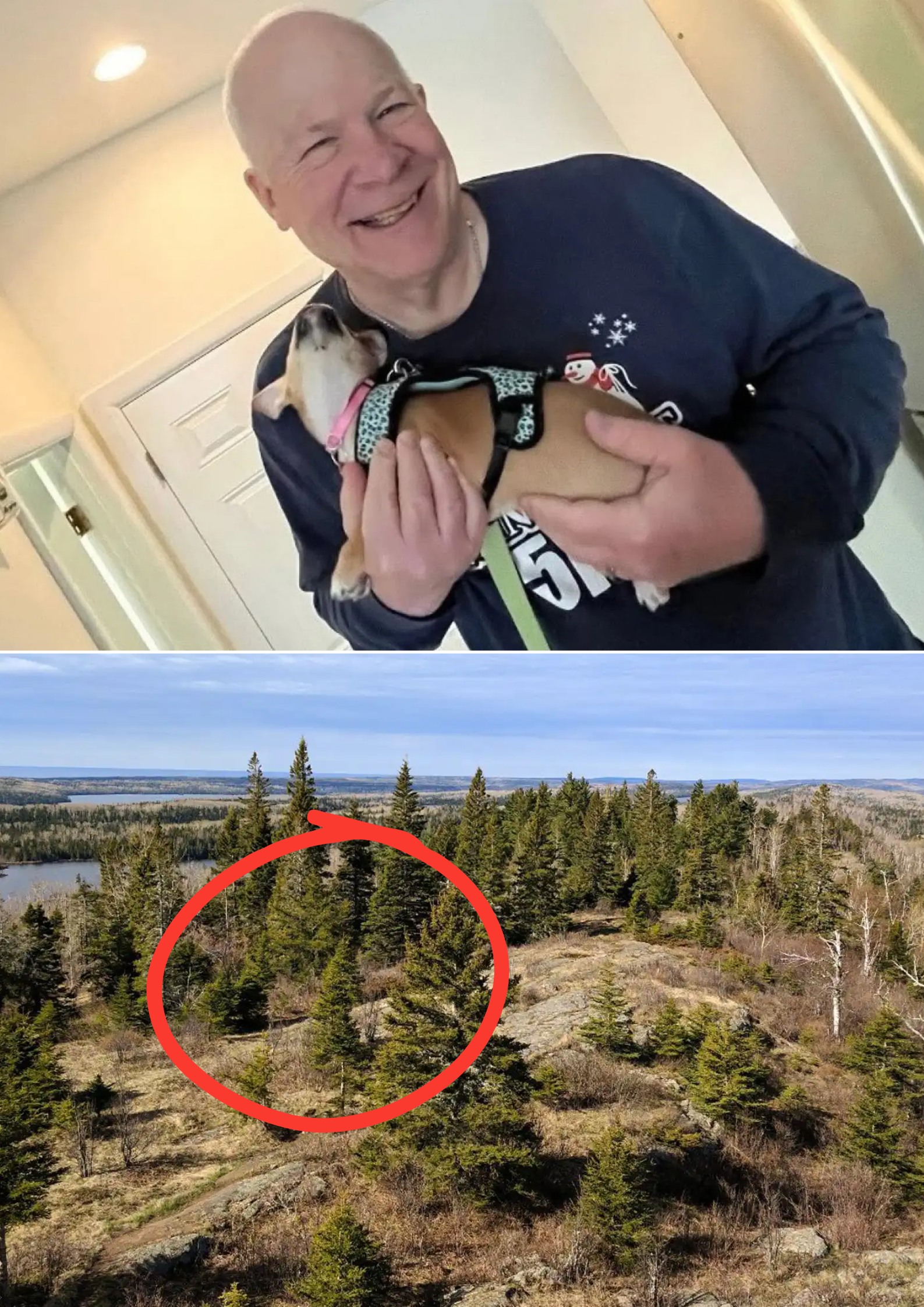
“HELP! I’M LOST!” — 70-YEAR-OLD HIKER SURVIVES 11 DAYS ALONE IN THE WILDERNESS AFTER SHOUTING FOR HELP THOUSANDS OF TIMES
ISLE ROYALE, MICHIGAN — Craig Berg had planned a week-long solo hiking adventure through one of the most remote national parks in the United States.
Instead, the 70-year-old retired engineer spent 11 days lost in the wilderness, without his phone, rationing food, searching for drinkable water and repeatedly shouting for someone to find him.
Berg now estimates that he yelled the words “Help! I’m lost!” around 10,000 times before two kayakers finally heard him.
He was eventually rescued alive, but the experience left him physically and emotionally shaken.
 A SOLO ADVENTURE GOES WRONG
Berg, from Royal Oak, Michigan, arrived at Isle Royale National Park on August 27, 2026, planning to spend several days hiking across the remote island in Lake Superior.
He had spent months preparing for the trip.
An experienced hiker, Berg had previously completed a solo trek at Pictured Rocks National Lakeshore and believed the Isle Royale trip would be a similar adventure.
He brought camping equipment, freeze-dried meals and a phone capable of satellite communication. He had also installed a hiking navigation app to help him follow the island’s trails.
His first three days went largely according to plan.
Then everything changed.
 HE WALKED INTO A SWAMP — AND LOST HIS PHONE
On the fourth day, Berg veered away from what he described as a poorly marked trail near Chickenbone Lake.
He soon found himself surrounded by wetlands.
The ground became increasingly unstable, and Berg eventually fell into the muddy terrain.
He described it as being “like quicksand.”
His clothes, backpack and food became soaked. His hiking boots came off, although he was able to recover them.
But his phone disappeared into the swamp.
That was a critical moment.
Without his phone, Berg lost both his digital navigation system and an important means of communication.
He spent approximately seven hours trying to find his way back to the trail before darkness approached.
Eventually, he realised he could no longer keep walking safely.
He found a small patch of higher ground with three trees and spent the night there in his sleeping bag.
He was wet, cold and frightened.
“I was just chattering,” Berg later recalled, describing how his teeth were shaking from the cold and the fear that he might not make it out.
HIS FAMILY DIDN’T KNOW HE WAS LOST
One of the most difficult aspects of Berg’s ordeal was that his family did not immediately know what had happened.
He had planned to return to Michigan’s Upper Peninsula and be home in time to run a 5K race with his son Evan on September 7.
When Berg failed to return, his family reported him overdue.
A large-scale search operation began.
His wife, Debbie, became increasingly worried as the days passed.
She later recalled fearing that she could become a widow, while also worrying about the dangers Berg might face in the remote wilderness.
She pushed authorities for additional search resources as the operation expanded.
BERG HAD TO LEARN HOW TO SURVIVE
Meanwhile, Berg was focused entirely on staying alive.
His supply of freeze-dried food was limited, so he began rationing it.
At times, he ate only every other day in an effort to make his food last longer.
Eventually, the fuel for his camping stove ran out.
Water became an even greater concern.
Berg found ponds and other sources of water and treated what he could with chlorine tablets.
He even drank water from a small pond that he believed was used by moose.
He later described it as “the most disgusting water that you could imagine.”
But staying hydrated was essential.
He also collected rainwater when possible and tried to conserve his strength rather than wasting energy searching aimlessly.
HE KEPT A JOURNAL IN CASE HE DIDN’T MAKE IT HOME
As the days passed, Berg began documenting his ordeal in a pocket journal.
He recorded what happened each day, partly because he wanted his family to understand what had happened to him if he failed to survive.
He continued marking his situation as he searched for a way out.
Despite the fear, Berg still believed someone would eventually find him.
He also tried to create small signs that might make him easier for searchers to spot.
At one point, he put up his bright-orange tent and cleared nearby vegetation in the hope that rescuers or aircraft might notice him.
But the dense wilderness made the search extremely difficult.
HE EVEN FOUND A WAY TO HEAR ANOTHER HUMAN VOICE
In an unusual attempt to reconnect with the outside world, Berg improvised a makeshift radio antenna using wires from his headphones and an old MP3 player.
The setup allowed him to pick up a station broadcasting from Thunder Bay, Ontario.
He listened for weather information and updates.
For someone completely isolated in the wilderness, simply hearing another human voice provided a small connection to the world beyond the island.
HE KEPT SHOUTING FOR HELP
Berg knew that shouting was one of the few ways he might attract attention.
Whenever he heard something that sounded like people nearby, he called out.
Again and again, he shouted:
“Help! I’m lost!”
By his own estimate, he repeated the phrase approximately 10,000 times during the ordeal.
But most of the time, there was no response.
The island’s dense forests, wetlands and remote lakes made it possible for a person’s cries to go unheard even when search teams were looking for him.
DAY 11: TWO KAYAKERS APPEAR
Then, after 11 days alone, Berg heard something different.
There were noises coming from a nearby lake.
He looked toward the water.
And then he saw two people in kayaks.
Berg immediately moved toward a clearing.
He began shouting.
“Help! I’m lost!”
This time, someone heard him.
The two kayakers came toward Berg and realised they had discovered the missing hiker.
They contacted officials involved in the search and provided his location.
The kayakers were later identified as two retired National Guard members who had been paddling on the lake.
They had not been expecting to encounter a missing person.
They had found Berg alive.
COAST GUARD HELICOPTER AIRLIFTS HIM TO SAFETY
Because of the remote location, authorities arranged a helicopter rescue.
A U.S. Coast Guard MH-60 Jayhawk crew from Air Station Traverse City flew to the area.
Berg was lifted aboard the helicopter using a rescue basket and transported to the mainland.
He was then taken to a hospital in Michigan.
Officials said he had been found injured and hypothermic, while subsequent reports said he was also treated for dehydration.
Despite spending 11 days alone in the wilderness, he survived.
HIS FAMILY FINALLY HEARS THE WORDS THEY HAD BEEN WAITING FOR
When the National Park Service contacted Debbie with the news, she finally heard the words she had desperately hoped for:
Berg had been found alive.
She immediately contacted their children and Berg’s elderly parents.
His son Evan travelled with his mother to the hospital.
When they were finally reunited, Berg became emotional.
“I was just bawling my eyes out,” he later said. “I’ve been crying a lot.”
For his family, the rescue ended more than a week of fear and uncertainty.
“PHYSICALLY, I’M OKAY”
Although Berg survived the ordeal, he said the experience had not simply disappeared now that he was home.
He acknowledged that he was still processing what happened to him.
“Physically, I’m okay. Mentally, I’m still processing. Emotionally, I’m getting there, but I have a ways to go still,” Berg said.
Looking back, he also said he wished he had carried a backup communication device or another way to transmit his location after losing his phone.
HE STILL WANTS TO HIKE AGAIN
Despite everything that happened, Berg has not completely abandoned hiking.
He told WXYZ that he would hike again.
But there would be one major difference.
This time, he would probably bring someone with him.
“I’d probably go with somebody, though,” he said.
Since returning home, Berg has also contacted agencies involved in the rescue to personally thank them.
He has praised the work of the search teams, National Park Service, Michigan State Police, Coast Guard and members of the public who helped locate him.
AN 11-DAY FIGHT TO BE FOUND
Craig Berg set out for Isle Royale expecting a challenging but manageable solo hiking trip.
Instead, a wrong turn, a swamp and the loss of his phone left him isolated far from established trails.
For 11 days, he rationed food, treated questionable water, endured cold nights and searched desperately for a way to attract attention.
He kept shouting the same three words:
“Help! I’m lost!”
He estimates he said them about 10,000 times.
On the 11th day, two kayakers finally heard him.
What began as a solo adventure ended with a Coast Guard helicopter carrying Berg away from the wilderness — alive, exhausted and facing the difficult process of recovering from an experience he says he is still trying to understand.