LUCY LETBY CASE FACES FRESH QUESTIONS AS NEW MEDICAL EVIDENCE AND UNDISCLOSED HOSPITAL RECORDS COME UNDER SCRUTINY
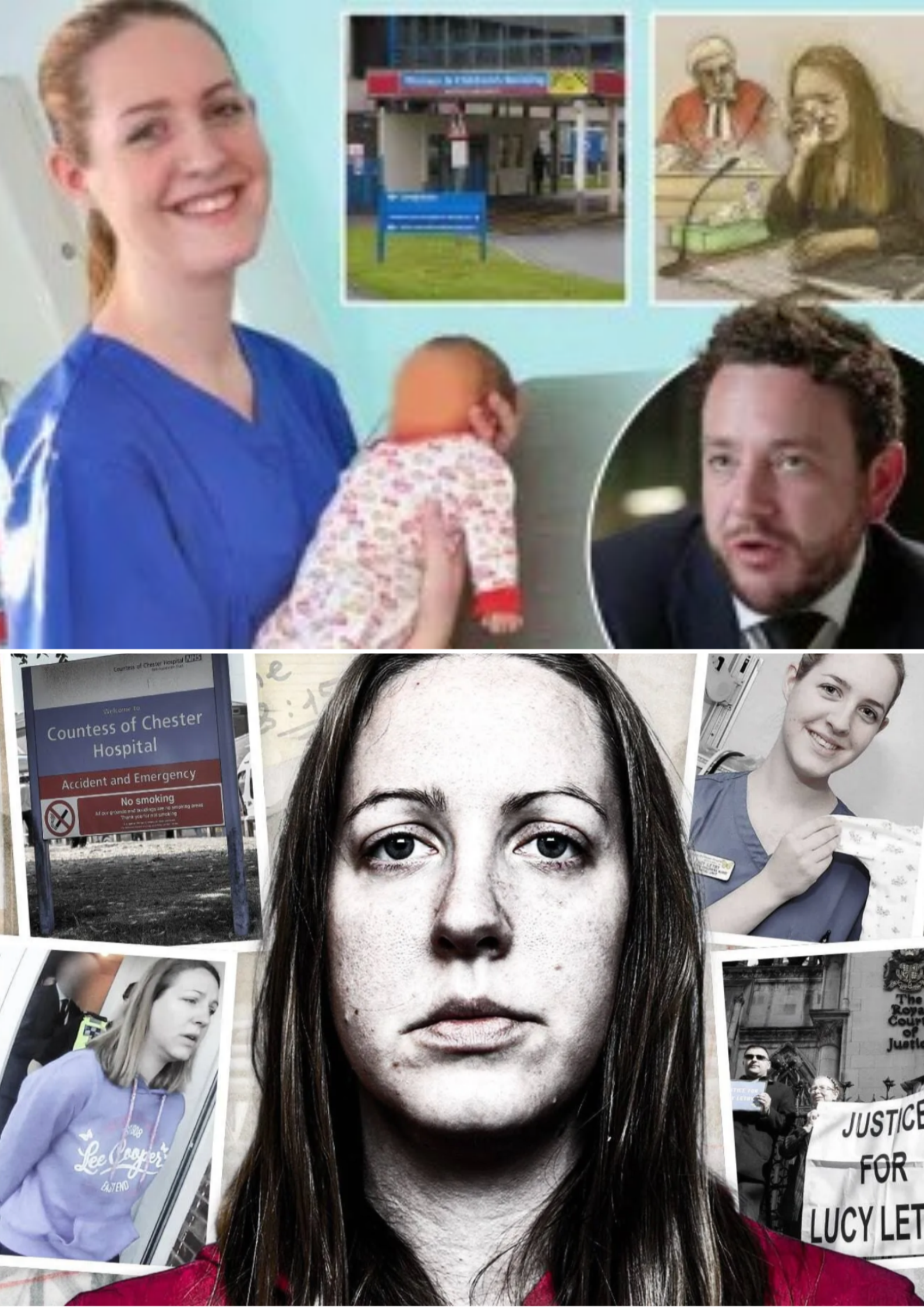
LUCY LETBY CASE FACES FRESH QUESTIONS AS NEW MEDICAL EVIDENCE AND UNDISCLOSED HOSPITAL RECORDS COME UNDER SCRUTINY
Former neonatal nurse Lucy Letby’s convictions are facing renewed scrutiny as previously undisclosed hospital records, new medical opinions and concerns about the evidence presented at her trials come under examination.
Letby remains convicted of murdering seven babies and attempting to murder seven others while working at the Countess of Chester Hospital in 2015 and 2016. She is serving 15 whole-life sentences and continues to maintain her innocence.
But her case is now being examined from several new angles, with the Criminal Cases Review Commission (CCRC) reviewing material submitted by her legal team.
The CCRC has made clear that it is not deciding whether Letby is innocent or guilty. Its task is to determine whether new evidence or arguments create a real possibility that a conviction could be overturned or a sentence reduced.
 HOSPITAL RECORDS THAT WERE NOT GIVEN TO THE DEFENCE
One of the most significant recent developments concerns maternity records belonging to babies involved in the case.
A BBC investigation reported that Cheshire Police seized maternity notes containing information about the mothers’ pregnancies, labour and births.
However, the records were not reviewed by the prosecution’s chief medical expert and were not disclosed to Letby’s defence before the original trial, despite evidence that the defence had requested them.
The Crown Prosecution Service said the records were not considered relevant because they were not used to build the prosecution’s case.
Dr Dewi Evans, the prosecution’s principal medical expert, said he had not seen the full obstetric records and believed they would not have changed his conclusions.
But other specialists have questioned whether neonatal deaths and collapses can properly be assessed without examining what happened during pregnancy and delivery.
Professor Phil Bennett, an obstetrics and gynaecology specialist at Imperial College London, told the BBC that maternity and neonatal care should normally be considered together when determining why a newborn became critically ill.
 ONE BABY’S CASE HAS BECOME A FOCUS
Baby O has emerged as one example in the renewed medical debate.
At trial, prosecutors argued that the triplet was born in good condition, remained stable for around two days and then suddenly collapsed after being deliberately harmed.
The prosecution alleged that Letby injected air and caused liver damage.
But Professor Bennett, who reviewed the case for Letby’s new legal team, proposed a different medical explanation.
He said the baby may have suffered a liver injury during a difficult Caesarean delivery, with the resulting condition capable of producing an apparently unexplained collapse after a period in which the baby initially appeared well.
He also said medical literature described similar cases.
The disagreement does not establish that the original conviction was wrong. It does, however, illustrate why the completeness and interpretation of the medical evidence have become central to the current review.
NEW EXPERT EVIDENCE IS BEING EXAMINED
The CCRC has received a substantial amount of new material from Letby’s legal team.
According to the commission, its preliminary application arrived in February 2025, followed by expert reports and additional submissions over the following year.
The CCRC confirmed that the review remains ongoing and said it will make its decision independently and on the evidence.
Some of the new medical arguments have focused on whether the babies’ collapses and deaths could have had natural or medical explanations rather than being the result of deliberate harm.
However, the new evidence itself has also become the subject of disagreement.
In September, two experts who had been involved with Letby’s appeal team withdrew from the wider legal case, saying some of the arguments being advanced by the defence had what they described as fundamental scientific problems.
The two experts nevertheless continued to support their own work challenging the insulin evidence used in two of the cases, saying it was very unlikely that those babies had been poisoned with insulin.
A DOCTOR WHO ONCE SUPPORTED THE CASE NOW HAS DOUBTS
Perhaps the most striking development came from Dr John Gibbs, a retired paediatrician whose evidence contributed to the investigation and prosecution case.
Gibbs has recently said he is no longer certain that Letby was responsible for the deaths and collapses attributed to her.
He has also said a retrial could be appropriate if substantial new evidence demonstrates that the original conclusions should be reconsidered.
Gibbs acknowledged that there remains a possibility that deliberate harm occurred, but said he now has a concern that some of the babies may not have been deliberately harmed at all.
His comments do not overturn Letby’s convictions, but they have added another prominent voice to the debate surrounding the medical evidence.
THE THIRLWALL INQUIRY ADDED ANOTHER LAYER
The controversy intensified after the publication of the final report of the Thirlwall Inquiry in September 2026.
The inquiry examined what happened at the Countess of Chester Hospital and the failures surrounding the deaths and collapses of babies.
Lady Justice Kathryn Thirlwall found serious failures in hospital management, governance and safeguarding.
Her final statement described dysfunctional management and failures to understand basic safeguarding procedures.
However, the inquiry made an important distinction.
It was not an investigation into Letby’s criminal convictions or her guilt or innocence.
Lady Justice Thirlwall explicitly said the inquiry should not second-guess the courts or interfere with the work of the CCRC.
That means the inquiry’s findings about hospital failures cannot, by themselves, overturn Letby’s convictions.
WAS THERE A “BURIED” STATISTICAL ERROR?
Claims circulating online have suggested that a crucial statistical error was deliberately hidden from the jury.
That allegation requires considerable caution.
There is now documented debate over the statistical and medical evidence used in the Letby case, and the CCRC is examining new arguments.
But there is no publicly established finding that the Crown Prosecution Service deliberately concealed a decisive statistical error from the jury.
Similarly, the discovery of maternity records that were not disclosed to the defence does not by itself prove that prosecutors intentionally suppressed evidence.
The CPS has maintained that Letby was convicted following two jury trials and that the Court of Appeal rejected arguments challenging the prosecution evidence.
The distinction is crucial: questions about evidence and disclosure can be investigated without assuming that misconduct has already been established.
WHAT HAPPENS NEXT?
The CCRC’s review is now one of the most important remaining legal avenues for Letby.
If the commission concludes that new evidence or legal arguments create a real possibility that her convictions would not be upheld, it can refer the case back to the Court of Appeal.
If it does not reach that threshold, the existing convictions remain in place.
For now, neither the Thirlwall Inquiry nor the new expert evidence has overturned Letby’s convictions.
But the case has entered a new phase.
Previously unseen medical records, competing expert interpretations, renewed questions about the statistical evidence and the changing views of some medical professionals have ensured that the evidence surrounding one of Britain’s most closely watched criminal cases remains under intense examination.
For the families of the babies involved, the debate carries enormous emotional consequences.
For Letby, it could determine whether the evidence that sent her to prison for life will withstand another round of scrutiny.
And for the CCRC, the central question is narrower than the arguments raging in public:
Do the new materials create a real possibility that the convictions could not be upheld?
That answer has not yet been given.